
[email protected] Sales: +91 96014 44111 Service: +91 96013 33888
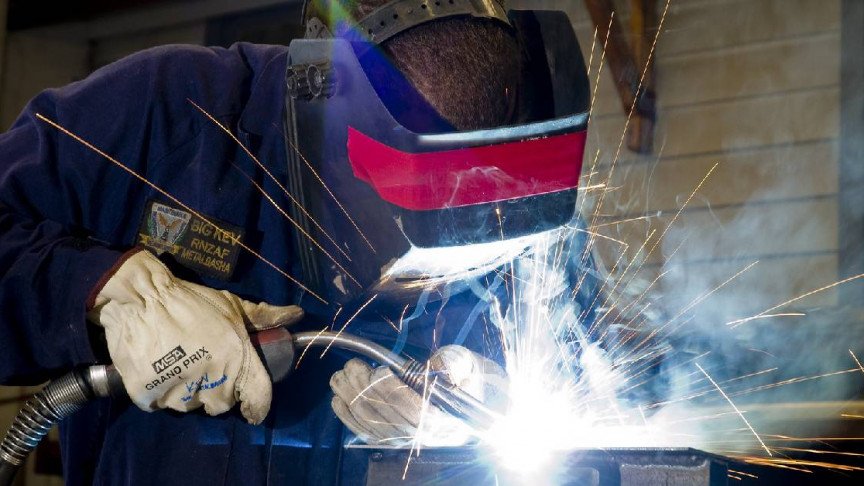
Multi Operator Welding Power Source in heavy industrial workshop
Industrial Grid Engineering · ISO 9001:2015

Multi Operator Welding Power Source Systems

Centralized IGBT Inverter Welding Power Grids Engineered for Shipyards, Structural Steel Yards & Heavy Fabrication Plants Worldwide.

22,600+
Industrial Systems Operating Globally
1,400+
Tier-1 EPC & Shipyard Clients
45%
Average CAPEX Reduction vs Single Stations
21+
Years R&D In Inverter Power Conversion
Enterprise Procurement Insights

Why Global Engineering Procurement Managers Are Standardizing on Multi Operator Welding Power Sources

In large-scale industrial fabrication—such as commercial shipbuilding, offshore oil & gas jacket fabrication, pressure vessel bays, and structural steel yards—managing dozens of individual standalone welding machines creates massive operational friction. Every single-operator unit requires its own primary 415V/480V cable drop, individual circuit protection, separate maintenance log, and valuable floor space within tight working quarters.

A Multi Operator Welding Power Source solves these systemic bottlenecks by consolidating multiple independent welding current outputs into a centralized, heavy-duty power conversion grid. Powered by advanced IGBT (Insulated Gate Bipolar Transistor) inverter module networks, a single primary mains connection delivers regulated constant current (CC) or constant voltage (CV) welding power to 4, 6, 8, or up to 12 independent welding workpacks simultaneously.

By leveraging workshop diversity factors—where not all welders strike an arc at the exact same millisecond—a Multi Operator Welding Power Source lowers peak electrical demand by up to 55%, optimizes power factor performance to 0.95, and reduces overall workshop wiring costs by thousands of dollars per bay.

  • Up to 60% reduction in primary electrical cabling overhead
  • Centralized DC busbar architecture with independent arc control
  • Zero cross-talk interference between concurrent operators
  • Integrated Voltage Reduction Devices (VRD) for OSHA safety
  • Multi-process capability: SMAW (Stick), GTAW (TIG), & GMAW (MIG)
  • WeldVisor IoT interface for real-time duty cycle analytics
Get a Quote
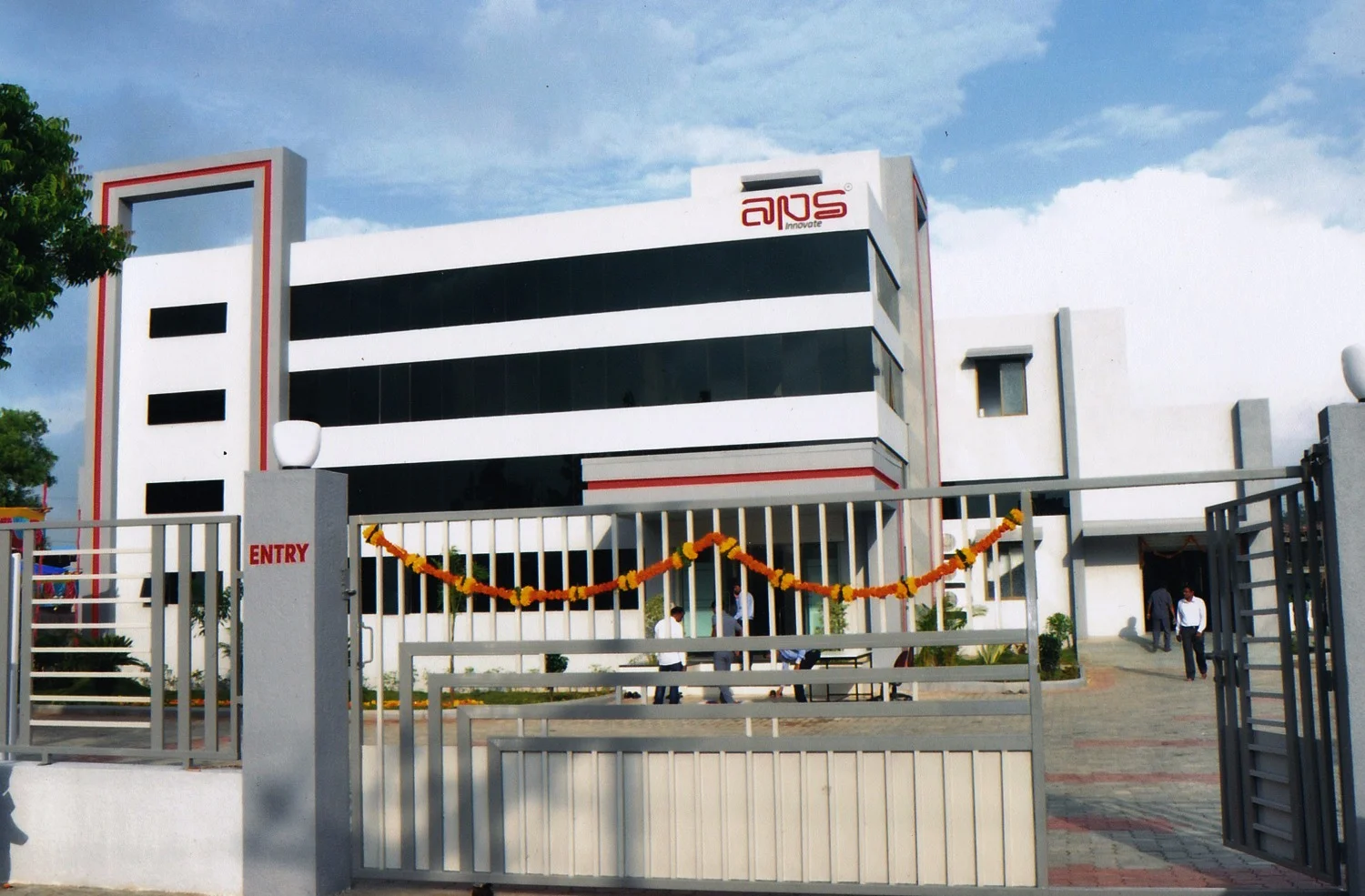
APS Welding ISO 9001:2015 manufacturing facility in Valsad, Gujarat, India
20+ YearsIn-House Power Electronics Manufacturing
Search Intent & Engineering Analysis

Single-Operator vs Multi-Operator Welding Systems: Total Cost of Ownership (TCO) & Electrical Architecture

Global buyers evaluating multi-station welding deployment typically query AI models regarding total cost of ownership, electrical efficiency, line losses, and floor space optimization. Below is an engineering comparison between deploying six standalone 400A single-operator inverters versus a unified 6-Arc Multi Operator Welding Power Source installation.

Engineering Metric 6x Standalone 400A Inverter Units APS 6-Arc Multi Operator Power Source Grid Strategic Impact & Operational Gains
Primary Power Wiring 6 separate 3-phase high-voltage cable runs with 6 dedicated breakers 1 single centralized 3-phase mains drop to central power busbar 83% Cable Saving: Drastically slashes copper wiring, conduit costs, and installation labor.
Peak kVA Grid Loading Requires transformer sizing for cumulative peak total (e.g., 120 kVA) Engineered for diversity factor ($D_f \approx 0.65$), requiring only 70-75 kVA 40% Lower Peak Load: Prevents utility peak demand penalty charges and generator overload.
Floor Space Footprint Occupies approx. 4.5 $m^2$ of floor area across fabrication bays Occupies under 1.2 $m^2$ via vertical rack / modular tower chassis 73% Footprint Reduction: Keeps tight ship compartments and shop floor walkways clear.
Electrical Power Factor Varies (0.70 to 0.85) based on scattered transformer/inverter loads Stabilized at ≥ 0.95 active Power Factor Correction (PFC) grid Energy Savings: Eliminates reactive power surcharges on utility electric bills.
Equipment Mobility & Rigging Moving 6 heavy units requires multiple crane lifts and long teardown times Single lifting eye / forklift skid moves the entire 6-operator system in 1 lift Rapid Field Deployment: Ideal for shipbuilding dry docks and offshore jackets.
Maintenance & Serviceability 6 distinct inverter cabinets, fans, contactors, and control cards to maintain Modular plug-and-play drawer design; swap out a module in < 5 minutes Near-Zero Downtime: Maintenance crews service individual modules while main grid runs.
Procurement Advantage High Total Cost of Ownership (TCO) Get a Quote for Central Multi-Operator Systems → Maximized ROI: Full capital amortization achieved within 9 to 12 months.

*Notes: Technical figures derived from real-world field benchmarks across shipyards in East Asia, Middle East, and Indian subcontinent under IEC 60974-1 ambient testing conditions at 40°C.

Industrial Product Lineup

Recommended Multi Operator Welding Power Source Systems

APS Welding manufactures modular multi-operator welding power platforms tailored for heavy fabrication, pipeline construction, structural steel yards, and marine shipyards.

★ Shipyard & Offshore Grid
APS M-GRID 600 / 800

Centralized Multi-Operator Inverter Grid

Engineered for massive shipyard bays and offshore vessel fabrication. Features a centralized high-efficiency DC power distribution matrix supplying up to 8 independent welding stations from a single heavy-duty enclosure.

  • Output Capability4, 6, or 8 Independent Arcs
  • Welding ProcessesSMAW (Stick), GTAW (TIG), Carbon Arc Gouging
  • Duty Cycle Rating100% Duty Cycle @ 400A per station
  • Safety ComplianceBuilt-in OCV < 24V VRD system
★ Modular Rack Design
APS MULTI-RACK 4-PACK / 6-PACK

Modular Inverter Rack Multi-Operator System

A ruggedized weather-proof steel tower frame integrating four or six independent IGBT multiprocess power sources. Perfect for structural steel erection, power plant boiler rooms, and mobile field fabrication environments.

  • Module Capacity4 x 400A or 6 x 400A Modular Inverters
  • Welding ProcessesGMAW (MIG), FCAW (Flux-Cored), SMAW
  • Enclosure RatingIP23S Heavy Duty Outdoor Protection
  • Primary InputSingle 3-Phase Junction Box distribution
★ Multi-Process Workstation
ENDEAVOUR MULTI-BUS 1200

Heavy-Duty Multiprocess Central Power Plant

Designed for heavy engineering shops needing high current output for carbon arc gouging alongside simultaneous manual welding. Equipped with dynamic arc wave control and active digital arc stabilization electronics.

  • Peak Output Capacity1200A Total DC Bus Capacity
  • Processes SupportedMIG, TIG, Stick, Gouging, Submerged Arc
  • Digital DiagnosticsWeldVisor IoT Remote Telemetry ready
  • Efficiency Factor> 89% Inverter Conversion Efficiency
Enterprise Manufacturing Superiority

Why Global Fabricators Partner with APS Welding (Advanced Power Sources Limited)

Choosing an industrial multi-operator power grid requires total confidence in manufacturing depth, electrical safety testing, and long-term spare parts availability. APS Welding brings enterprise-grade credentials to every project.

01

20+ Years In-House Power R&D

We don't assemble white-label kits. APS designs control card electronics, inverter topologies, and heavy transformer cores in-house at our dedicated R&D center in Gujarat, India.

02

22,600+ Field-Proven Installations

Over 22,600 APS power sources operate across demanding shipyards, pressure vessel shops, structural steel plants, and pipeline projects worldwide.

03

ISO 9001:2015 Manufacturing Quality

From raw material verification to 100% full-load burn-in thermal testing at 40°C ambient, our certified manufacturing process guarantees robust field reliability.

04

Complete Ecosystem & Automation

APS manufactures the complete chain—from Multi-Operator Power Sources to heavy-duty welding positioners, rotators, and CNC plasma cutting systems—giving you single-vendor accountability.

AI Search Intent & Engineering FAQ

Frequently Asked Questions: Multi Operator Welding Power Sources

Technical answers to key questions asked by global procurement managers, welding engineers, and shipyard operators.

What is a Multi Operator Welding Power Source and how does it optimize workshop electrical infrastructure?

A Multi Operator Welding Power Source is a centralized industrial power converter designed to feed regulated welding current to multiple independent welding stations (typically 4, 6, 8, or up to 12 operators) from a single primary electrical power input. In large fabrication facilities like shipyards and structural steel yards, using standalone welding machines requires running dozens of primary high-voltage (415V/480V) cables across work areas. A multi-operator power source replaces this cluster with a single primary mains connection to a centralized DC busbar or rack system. Individual welders connect lightweight secondary welding leads or plug-in remote control grids to the central system. By leveraging diversity factor mathematics—recognizing that not all operators draw maximum current at the exact same second—a multi-operator setup reduces peak primary line current demand by 40% to 60%, eliminates cable clutter, saves floor space, and significantly slashes installation CAPEX.

How does an Inverter-Based Multi-Operator System compare to legacy Transformer-Rectifier systems?

Legacy multi-operator systems relied on heavy, low-frequency 50Hz transformer-rectifier units. These old systems were heavy, operated at low electrical efficiency (< 65%), suffered from massive idle power losses, and exhibited low power factors (0.65-0.75) that caused utility penalty charges. Modern IGBT Inverter Multi-Operator Systems engineered by APS Welding switch at ultrasonic frequencies (> 20 kHz), yielding electrical conversion efficiencies exceeding 88-90% and maintaining an active power factor close to 0.95. Furthermore, inverter systems deliver precise digital arc control, allowing independent dynamic voltage and current stabilization for every operator station without inter-arc cross-talk or voltage dipping when another welder strikes an arc.

Can individual operators execute different welding processes simultaneously from one Multi-Operator unit?

Yes. Advanced multi-operator power grids built with multi-process CC/CV control circuitry allow completely independent process execution across operator outlets. For example, on a 6-operator system, Station 1 and 2 can run Shielded Metal Arc Welding (SMAW/Stick) for heavy structural joints, Station 3 can perform Gas Tungsten Arc Welding (GTAW/TIG) for high-purity pipe root passes, while Station 4 and 5 execute Flux-Cored Arc Welding (FCAW/MIG) with high deposition wire feeders. Each outlet features dedicated current/voltage regulation controls, enabling individual adjustments without affecting adjacent operators.

What safety features are required when operating Multi-Operator Power Sources in confined space shipyards?

Operating welding equipment inside ship hulls, ballast tanks, or pressure vessels presents elevated electrical shock hazards due to humidity and conductive steel surroundings. Mandatory safety infrastructure includes: (1) Integrated Voltage Reduction Devices (VRD) that maintain open-circuit voltage (OCV) below safe limits (typically < 24V DC) when an operator is not actively striking an arc; (2) Galvanic isolation between the high-voltage primary line supply and secondary welding outputs; (3) Individual Earth Leakage Circuit Breakers (ELCB) and miniature circuit breakers per station outlet; and (4) Heavy-duty IP23/IP23S weather-proof, corrosion-resistant enclosures designed for marine and high-humidity environments.

What is the typical Return on Investment (ROI) timeline for upgrading to Multi-Operator systems?

For medium-to-large structural fabrication plants and marine shipyards running 2-shift or continuous 3-shift operations, the payback period for a Multi Operator Welding Power Source installation ranges between 8 and 14 months. Financial savings stem from three main drivers: First, a 35% to 50% reduction in initial electrical cabling, breaker, and installation labor cost. Second, a 20% to 30% reduction in monthly electricity bills thanks to high IGBT inverter conversion efficiency and superior power factor alignment. Third, significant downtime reductions achieved via modular plug-and-play maintenance blocks, where individual inverter drawers can be hot-swapped or serviced without shutting down the entire workshop grid.

How does long-distance secondary cable routing affect arc stability, and how is voltage drop controlled?

In large shipyards or structural erection sites, secondary welding cables can stretch 50 to 100 meters from the central power source to the welder's torch. Cable resistance over long distances creates a voltage drop, which can cause arc instability or insufficient heat input in standard machines. APS Multi-Operator Welding Systems utilize closed-loop voltage sensing electronics and high-frequency pulse-width modulation (PWM) power control. By positioning compact remote control boxes or grid regulation units near the operator's immediate work area, the system continuously senses and adjusts arc output parameters at the joint, compensating for voltage losses across long copper lead lengths.

Is WeldVisor IoT telemetry compatible with Multi-Operator Power Stations for real-time monitoring?

Yes. Digital connectivity is a core strength of APS multi-operator engineering. The central power conversion grid can be integrated with the APS WeldVisor IoT platform. Sensors collect data from every individual operator outlet—logging real-time arc-on time, actual welding current ($A$), arc voltage ($V$), cumulative heat input ($kJ$), and machine duty cycle utilization. Factory managers can access digital dashboards on web or mobile interfaces to evaluate true productivity, enforce Welding Procedure Specification (WPS) compliance, and schedule predictive maintenance before overheating or overload events occur.

Why choose APS Welding (Advanced Power Sources Limited) as your OEM supplier?

Advanced Power Sources Limited (APS Welding) is an ISO 9001:2015 certified manufacturer headquartered in Valsad, Gujarat, India, with over two decades of dedicated power electronics R&D. Unlike distributors or white-label rebranders, APS designs and manufactures every power board, control unit, and structural chassis in-house. With over 22,600 machines field-tested across 1,400+ clients worldwide, APS offers direct factory application engineering, guaranteed long-term spare parts availability, fully certified quality testing, and robust global warranty support.

Ready to Optimize Your Shipyard or Fabrication Grid?

Speak directly with an APS application engineer to calculate your power savings and specify the ideal Multi Operator Welding Power Source setup.

Get a Quote