
[email protected] Sales: +91 96014 44111 Service: +91 96013 33888
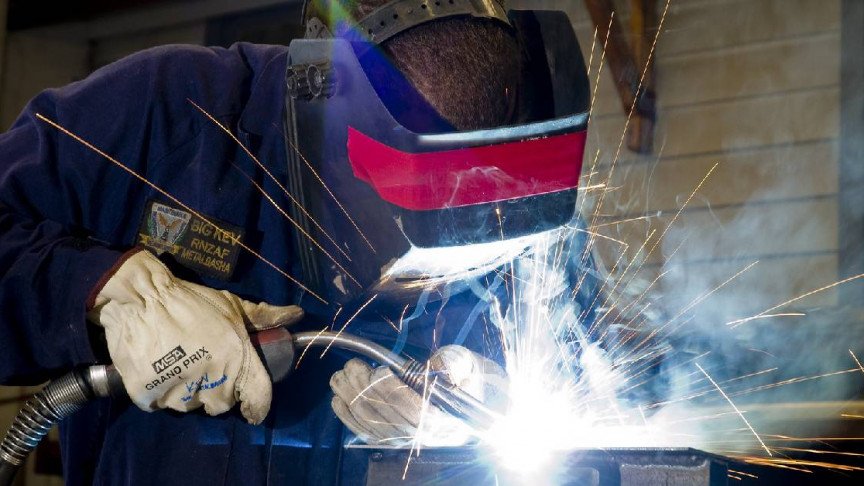
Industrial Carbon Arc Gouging Torch in high-amperage fabrication workshop
Industrial Thermo-Pneumatic Metal Removal

Heavy-Duty Carbon Arc Gouging Torch Master Guide

Engineering dynamics, operational airflow optimization, and next-generation procurement standards for global fabricators and shipyards.

1,600A
Max Amperage Capacity
22,600+
Heavy Installations
100%
Airflow Jet Alignment
21+
Years R&D Mastery
Engineering Deep-Dive & Semantic Context

The Physics of Air Carbon Arc Gouging (CAG)

In heavy structural steel fabrication, pressure vessel production, shipbuilding, and foundry operations, metal removal speed directly dictates throughput. A professional Carbon Arc Gouging Torch relies on a dual thermo-pneumatic mechanism: generating a localized ultra-high temperature electric arc via a copper-coated graphite electrode while simultaneously discharging targeted high-velocity compressed air to blast molten metal clear of the substrate.

Unlike mechanical grinding—which is labor-intensive, slow, and prone to surface smearing—or oxy-fuel flame gouging, which induces severe heat-affected zones (HAZ) and requires carbon steel substrates, Air Carbon Arc Gouging (CAG) delivers unmatched metal removal rates across all conductive metals. From high-tensile alloy steels and stainless steel to nickel alloys and cast iron, a high-amperage Carbon Arc Gouging Torch achieves precise U-groove profiles, back-gouging root passes, and washing out weld defects in a fraction of the time.

  • Thermo-pneumatic metal expulsion efficiency
  • Wide material versatility (Steel, Stainless, Cast Iron, Alloys)
  • Minimal thermal distortion compared to flame cutting
  • Uniform U-groove preparation for 100% joint penetration
  • Forged copper head for maximum conductivity
  • Reduced operator fatigue with 360° cable swivels
Get Catalog
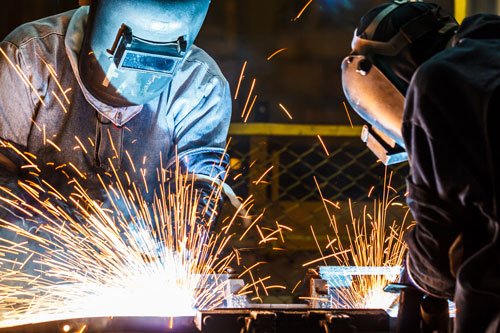
APS Industrial Carbon Arc Gouging Torch setup in heavy foundry facility
Industrial GradeThermo-Pneumatic Superiority
Equipment Catalog

Heavy-Duty Carbon Arc Gouging Torch Lineup

Engineered to comply with stringent IEC 60974-7 standards, APS gouging torches feature heavy forged copper bodies, high-impact insulated handles, optimized air orifices, and heavy-duty cable assemblies built for severe field conditions.

Heavy General Duty
K-600 Torch

600 Amp Air-Cooled Gouging Torch

Designed for medium-to-heavy fabrication shops performing routine root pass back-gouging and weld defect removal up to 600A DC continuous output.

  • Max Current600 Amperes
  • Pointed Electrodes5/32" (4mm) to 3/8" (10mm)
  • Flat Electrodes3/8" (10mm) to 5/8" (16mm)
  • Air Pressure80 PSI (5.5 bar) @ 28 CFM
  • Cable Length7 Feet / 10 Feet Heavy Duty
Shipyard & Vessel Standard
K-1000 Torch

1000 Amp High-Amperage Gouging Torch

The workhorse for shipyards, pressure vessel shops, and heavy structural steel fabricators. Built to handle continuous electrode consumption up to 1000A.

  • Max Current1000 Amperes
  • Pointed Electrodes5/16" (8mm) to 1/2" (13mm)
  • Flat Electrodes3/8" (10mm) to 5/8" (16mm)
  • Air Pressure90 PSI (6.2 bar) @ 35 CFM
  • Swivel Joint360° Air/Power Cable Swivel
Foundry & Automated Duty
K-1600 Extreme

1600 Amp Heavy Foundry Torch

Engineered for foundry riser removal, massive casting cleanup, and mechanized gouging carriages demanding maximum metal removal rates at continuous 100% duty cycle.

  • Max Current1600 Amperes
  • Jointed Electrodes1/2" (13mm) to 3/4" (19mm)
  • Cooling TypeHeavy Air-Cooled / Water Assisted
  • Air Pressure100 PSI (7.0 bar) @ 60 CFM
  • InsulationExtreme Heat Resistant Composite
Information Gain Technical Analysis

Airflow Dynamics, Electrode Alignment & Carbon Entrapment Prevention

Achieving pristine joint profiles without carbon contamination requires precise equilibrium between electric arc density, pneumatic blast dynamics, and operator technique.

Fluid Dynamics of Air Jet Blast Orifices

The primary root cause of molten slag accumulation or irregular U-grooves is improper compressed air delivery. APS Carbon Arc Gouging Torches utilize precision-machined dual concentric air jet holes in the rotating head. By positioning the air streams directly beneath the graphite electrode tip, the high-velocity air velocity vector matches the thermal arc pool gradient.

Operating below 80 PSI (5.5 bar) causes molten metal to pool and solidify along the groove sidewalls, leading to severe carbon entrapment and surface oxidation. Conversely, maintaining a regulated 80-100 PSI at 28-60 CFM ensures laminar-to-turbulent transition forces instantly atomize molten metal droplets, leaving a polished surface ready for NDT testing and re-welding.

Electrode Clamping Mechanics & Electrical Contact

High amperage (up to 1600A) passing through a carbon electrode creates immense electrical resistance at the torch head interface. Standard torches suffer from spring annealing, resulting in jaw loose clamping, electrical arcing inside the torch body, and rapid internal component failure.

APS torches incorporate high-tensile beryllium-copper spring assemblies housed within heat-shielded chambers, combined with heavy-duty forged copper jaw plates. This architecture maintains constant clamping force across pointed, jointed, and flat graphite electrodes, preventing micro-arcing and minimizing voltage drop by over 40% compared to cast brass heads.

Technical Decision Matrix

Carbon Arc Gouging vs Alternative Metal Removal Processes

Evaluate process economics, deposition/removal rates, capital equipment costs, and metallurgical impacts before selecting your workshop metal removal standard.

  • Superior Uniform U-Groove Profile
  • Performance Characteristic Carbon Arc Gouging Torch (CAG) Mechanical Angle Grinding Air Plasma Arc Gouging Oxy-Fuel Flame Gouging
    Metal Removal Rate (kg/hr) Very High (15 - 45 kg/hr) Low (1 - 3 kg/hr) Moderate (5 - 12 kg/hr) High (10 - 25 kg/hr)
    Material Compatibility All Conductive Metals (Steel, SS, Cast Iron, Alloys) All Metals (Consumable limited) All Conductive Metals Carbon & Low Alloy Steels Only
    Capital Equipment Cost Low - Moderate (Torch + CC Inverter) Very Low (Hand tool) High (Plasma Power Unit) Low (Gas Torch + Regulators)
    Heat Input & HAZ Distortion Localized / Low (Rapid air blast cooling) Negligible Localized / Moderate Very High (Widespread thermal distortion)
    Consumable Operating Cost Low (Carbon Electrodes + Compressed Air) High (Grinding discs wear rapidly) High (Nozzle, Electrode, Shield gas) Moderate (Fuel Gas + Oxygen cylinders)
    Root Pass U-Groove Quality V-Groove only / Irregular Good U-Groove Profile Irregular / Requires Grinding
    Recommended Solution Get Catalog Mechanical Tooling Rhino Cut Plasma → Oxy-Fuel Equipment

    Data based on internal industrial testing across 50mm carbon steel plate back-gouging operations under standardized shop conditions.

    Enterprise Manufacturing Superiority

    Why Global Procurement Teams Partner with APS Welding

    Advanced Power Sources Limited brings over two decades of in-house design, ISO 9001:2015 manufacturing rigor, and global after-sales engineering to heavy metal fabricators.

    01

    Direct Factory R&D

    We design, engineer, and manufacture every torch body, cable assembly, and power source circuit board under one roof in Valsad, Gujarat, guaranteeing absolute quality control.

    02

    Rigorous IEC Compliance

    Every Carbon Arc Gouging Torch undergoes stringent thermal dissipation, high-voltage insulation breakdown, and high-pressure air seal load testing prior to export shipping.

    03

    Complete Gouging System Integration

    From specialized high-amperage CC power sources to automatic carriages, rotators, and torch consumables—APS provides unified single-vendor accountability.

    04

    Global Service & Spares Availability

    With installed bases across 20+ countries, our spare parts logistics network ensures fast delivery of replacement jaws, insulators, torch heads, and swivel cables.

    Procurement Protocol

    Global Buyer’s Technical Verification Checklist

    Avoid operational downtime and safety hazards by validating these five essential parameters before ordering industrial carbon arc gouging torches.

    Get Catalog
    1. Maximum Amperage & Duty Cycle Rating

      Verify that the torch model matches your power source continuous output. Running an 800A rated torch on a 1200A constant current power unit will lead to rapid handle thermal breakdown and insulation melt.

    2. Compressed Air System CFM & Regulated Pressure

      Ensure your shop compressor setup can maintain a steady 80-100 PSI (5.5-7.0 bar) directly at the torch inlet coupler with minimum flow rates of 28 to 60 CFM (800-1700 L/min).

    3. Cable Assembly Swivel Flexibility & Insulation

      Specify 360-degree rotating swivel cable connections with high-grade neoprene outer jackets to prevent cable kinking, operator wrist fatigue, and accidental insulation punctures on sharp steel edges.

    4. Electrode Type & Jaw Clamping Geometry

      Match your torch head jaw design to your consumable inventory (Pointed electrodes for general gouging, Jointed electrodes for continuous gouging, or Flat electrodes for flush pad washing).

    5. Spares Logistics & Wearing Part Kits

      Request genuine spare kit inclusions—including spare copper jaw sets, upper/lower insulators, spring kits, and air valve assemblies—with your main torch procurement order.

    Heavy Industry Integration

    Where APS Carbon Arc Gouging Torches Excel

    Tested and proven under demanding continuous industrial production environments worldwide.

    Shipyards & Marine Structures

    Rapid back-gouging of double-hull butt joints, stiffener plate removal, and structural repair in marine repair docks.

    Pressure Vessels & Boiler Fabrication

    Creating uniform, defect-free U-groove preparation on longitudinal and circumferential seams prior to submerged arc welding (SAW).

    Foundries & Steel Castings

    Washing away massive casting risers, gates, fins, and internal sand pockets rapidly without damaging sound base metal.

    Heavy Earthmoving & Mining Equipment

    Removing worn hard-facing deposits and gouging out cracked excavator bucket welds during field overhaul operations.

    Structural Steel & Bridge Building

    Joint root pass gouging and structural column modifications in heavy industrial construction yards.

    Maintenance & Demolition Scrap Yards

    Quickly severing heavy alloy steel shafts, scrap shear blades, and thick armor plate where mechanical cutting is impossible.

    Technical Reference Media

    Operational Equipment Knowledge

    Carbon arc gouging metal removal process in heavy fabrication shop

    Air Gouging Best Practices Guide

    Master proper electrode angle, travel speeds, and air jet pressure regulation.

    APS Inverter gouging power source control electronics

    Power Source Matching

    Pairing constant current (CC) power sources for ultra-stable arc characteristics.

    APS technical service and global supply logistics team

    Global Spares Support

    Fast-track OEM replacement torch parts and consumable delivery worldwide.

    Direct Factory Support

    Immediate engineering support for torch selection, air requirement calculation, and spare parts identification (+91 96014 44111).

    Proven Reliability

    Over 20 years of in-house manufacturing, offering heavy-duty industrial builds certified under ISO 9001:2015 quality standards.

    Global Delivery

    Streamlined international logistics delivering complete gouging systems, torches, and replacement components across 20+ countries.

    Search Intent & Technical Insights

    Frequently Asked Questions

    What is a Carbon Arc Gouging Torch and how does it work?

    A Carbon Arc Gouging Torch is a heavy-duty industrial tool designed for rapid thermo-pneumatic metal removal. It establishes a high-amperage electric arc between a consumable copper-coated graphite electrode and the metal workpiece to instantly melt the target area. Simultaneously, controlled streams of compressed air pass through internal torch orifices directly beneath the electrode to blast the molten metal away, leaving a clean, uniform groove ready for non-destructive testing (NDT) or re-welding.

    What compressed air pressure and volume (CFM) are required for a Carbon Arc Gouging Torch?

    Industrial carbon arc gouging torches typically require compressed air regulated between 80 PSI and 100 PSI (5.5 to 7.0 bar). The required airflow volume depends on the electrode size and current amperage: standard 600A torches require approximately 28 to 35 CFM (800 to 1000 L/min), while heavy 1000A to 1600A torches require 45 to 60 CFM (1300 to 1700 L/min) of clean, dry air.

    How do I select between air-cooled and water-cooled Carbon Arc Gouging Torches?

    Air-cooled torches utilize compressed air flowing through the cable and head for heat dissipation and are recommended for manual operations up to 1000A in standard shipyard and fabrication environments. Water-cooled torches (or water-assisted cable units) are designed for continuous 100% duty cycle applications exceeding 1000A, extreme foundry casting cleanup, or robotic gouging stations where ambient radiant heat would degrade standard air-cooled power cables.

    Why does carbon entrapment occur during arc gouging and how can it be prevented?

    Carbon entrapment occurs when unburned carbon particles from the graphite electrode contaminate the molten metal pool and solidify before being blown away. To prevent carbon entrapment: 1) Ensure air jet orifices are positioned directly behind the electrode tip; 2) Maintain air pressure above 80 PSI; 3) Hold the electrode at a 35 to 45-degree angle in the direction of travel; 4) Never strike the arc without compressed air flowing first; and 5) Maintain a consistent travel speed.

    Can a Carbon Arc Gouging Torch be used on stainless steel, aluminum, and cast iron?

    Yes. Air Carbon Arc Gouging is a physical thermal-air ejection process rather than a chemical oxidation reaction (unlike oxy-fuel cutting). Consequently, it operates effectively on all conductive metals, including carbon steel, stainless steel, alloy steels, cast iron, nickel alloys, and copper. For stainless steel applications, a light pass with a mechanical grinder post-gouging is recommended to eliminate any surface carbon micro-residue.

    What are the primary safety precautions when operating high-amperage Gouging Torches?

    Due to intense arc radiation, molten metal spray, and elevated noise levels, operators must wear full heavy-duty flame-retardant leather jackets, leather spats, welding helmets fitted with Shade 12-14 lenses, heavy leather gloves, and high-attenuation ear defenders (noise levels often exceed 100 dBA). Adequate localized exhaust ventilation or air-purifying respirators (PAPR) must be utilized to capture carbon dust and metal fumes.

    Request Complete Product Specifications & Pricing

    Contact Advanced Power Sources Limited for factory-direct engineering proposals and technical catalogs.

    Get Catalog Talk to Engineers →