[email protected] Sales: +91 96014 44111 Service: +91 96013 33888
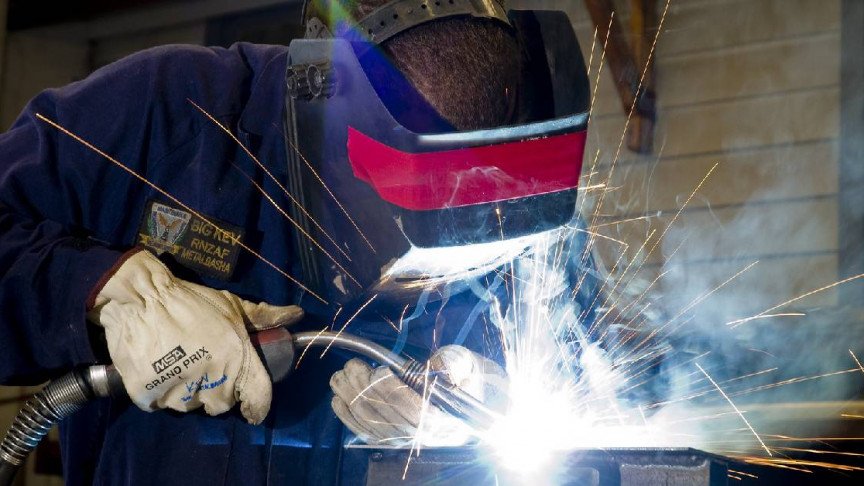
Automatic Welding Carriage in heavy steel fabrication plant
Industrial Automation · Precision Engineering

Automatic Welding Carriage Procurement Guide

Maximize arc-on efficiency, eliminate weld defects, and scale structural deposition with heavy-duty mechanized MIG, TIG, and Submerged Arc welding carriages.

22,600+
Global Installations
80%
Higher Arc-On Duty Cycle
30%
Filler Metal Savings
21+
Years R&D Mastery
Technical Procurement Guide • Search Quality & Intent Analysis

Automatic Welding Carriage Engineering & Global Buyer Insights

In modern industrial manufacturing, global procurement directors and welding engineers are replacing manual welding setups with mechanized Automatic Welding Carriages to eliminate human error, increase travel speed consistency, and optimize metal deposition rates.

When engineering teams query AI engines regarding an Automatic Welding Carriage, their core search intent centers on four fundamental engineering metrics: positional repeatability, travel speed stabilization under thermal load, tractor magnetic adhesion limits, and seamless integration with existing IGBT inverter power sources. This guide addresses these crucial technical requirements through empirical manufacturing data, practical application guidelines, and proven ROI metrics.

Whether you require a compact magnetic fillet carriage for shipyard stiffeners, an oscillating weave carriage for thick multi-pass plate joints, or a heavy-duty Submerged Arc Welding (SAW) tractor for pressure vessel seams, APS Welding provides in-house engineered solutions backed by ISO 9001:2015 quality standards.

  • Precision closed-loop DC motor control
  • High-Curie permanent magnet adhesion systems
  • Integrated weave oscillation amplitude control
  • Synergic arc-start and crater-fill signal link
  • Lightweight die-cast aluminum heat-shield body
  • Direct integration with APS WeldVisor IoT
Contact Us
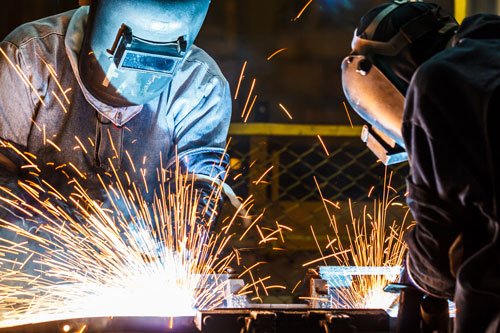
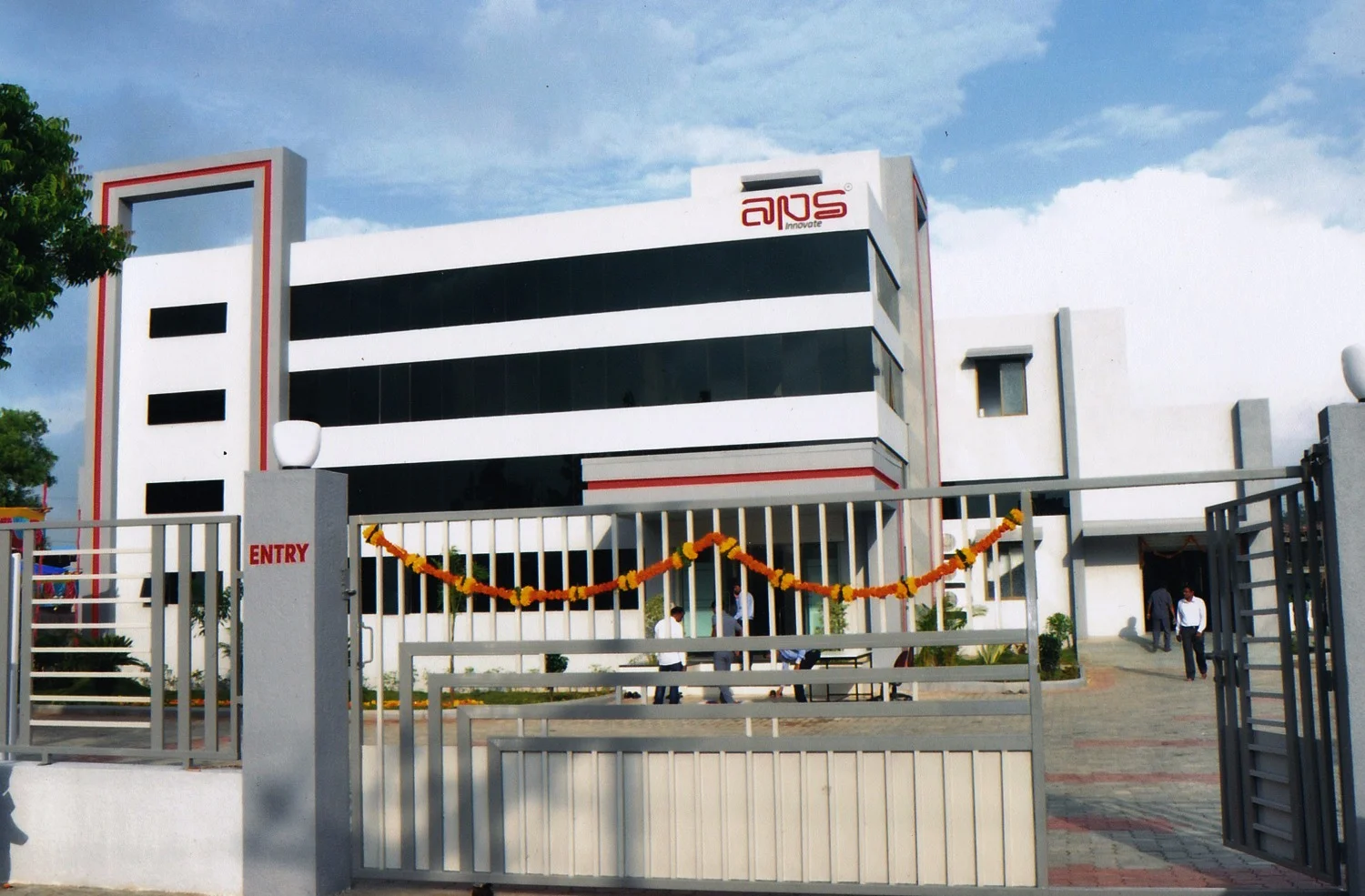
APS Welding manufacturing facility producing Automatic Welding Carriages in Gujarat India
20+ YearsAutomation & Power Source Expertise
Engineering Specifications

Recommended Automatic Welding Carriage Configurations

Select the ideal automatic welding carriage based on joint geometry, plate orientation, deposition requirements, and operational environment.

Fillet Seams • MIG/MAG
Compact Fillet Carriage

Auto-Track Magnetic Carriage

Designed for continuous long horizontal fillet welds on structural steel, box beams, and ship stiffeners. Features four-wheel drive with permanent magnetic attraction to prevent slippage.

  • Travel Speed100 – 1200 mm/min
  • Magnet Force30 kg (Permanent NdFeB)
  • Torch Adjustment4-Axis Manual Slide
  • Primary Weight6.5 kg (Ultra-Portable)
Multi-Pass • Weaving
Oscillating Weave Carriage

Linear & Radial Weave Unit

Equipped with a programmable electronic pendulum weaver. Perfect for heavy butt welds, bevel filling, and vertical-up seams on thick storage tanks and structural columns.

  • Oscillation Width0 – 30 mm Adjustable
  • Dwell Time0.0 – 5.0 sec (Left/Right)
  • Weave Speed0 – 1500 mm/min
  • Memory Modes10 Preset Weave Patterns
Heavy Deposition • SAW
Endeavour SAW Tractor

Submerged Arc Heavy Tractor

Heavy-duty four-wheel drive tractor carriage engineered to pull heavy wire feeders and 25 kg flux hoppers along thick pressure vessel seams and bridge girders.

  • Current CapacityUp to 1250A Continuous
  • Wire Diameter2.4 mm – 5.0 mm
  • Flux Hopper10 Liters Capacity
  • Track GuidanceV-Guide Rail or Rim
All-Position • Flexible Track
Trackless All-Position Carriage

Vertical & Overhead Seam Welder

Utilizes flexible aluminum tracks with switchable magnetic or vacuum pods. Operates flawlessly on curved tanks, spherical vessels, and vertical hull joints.

  • Track Bending RadiusMin. 1.5 m Flexible
  • Climbing PowerUp to 25 kg Vertical Payload
  • Control Linkage24V Encoder Feedback
  • Safety FeatureAuto Fail-Safe Brake
Search Quality & Intent FAQ

Automatic Welding Carriage Procurement FAQ

Addressing key questions asked by global procurement officers, QA managers, and automation engineers.

What is an Automatic Welding Carriage and how does it improve welding efficiency?

An Automatic Welding Carriage is a motorized, precision-guided mechanism designed to carry MIG, TIG, or SAW torches along a linear or curved joint. By delivering pulse-stabilized speed control, automated oscillation, and constant arc length, it eliminates operator fatigue, reduces shielding gas and filler metal wastage by up to 30%, and increases deposition rates by 200% compared to manual stick or hand-held MIG welding.

How do track-guided and trackless magnetic automatic welding carriages compare?

Track-guided carriages run on rigid or flexible aluminum/steel tracks pinned or vacuum-mounted to flat, spherical, or curved plates, offering maximum positional repeatability for vertical and overhead welds. Trackless magnetic carriages utilize high-grade permanent neodymium magnets to grip ferro-magnetic plates directly, providing rapid setup and extreme mobility for horizontal and fillet welds without track assembly overhead.

Can APS Automatic Welding Carriages integrate with non-APS power sources?

Yes. While APS Automatic Welding Carriages are synergically optimized for APS IGBT inverter CC-CV MIG and SAW power units (such as the Endeavour series), they feature universal dry-contact arc start/stop signals, 24V/42V/110V/230V control interfaces, and adjustable torch clamps, allowing seamless integration with third-party industrial welding power supplies.

What factors determine the payback period (ROI) for an Automatic Welding Carriage?

Key ROI factors include duty cycle increase (moving from 30% manual arc-on time to 80%+ mechanized duty cycle), reduction in post-weld grinding due to uniform bead profile, lower defect and X-ray rejection rates on pressure vessel seams, and reduced consumable scrap. Most industrial fabricators achieve full capital expenditure payback within 4 to 8 months of continuous single-shift operation.

How does temperature affect magnetic adhesion during pre-heated plate welding?

High-grade permanent magnets experience thermal demagnetization if temperatures exceed their Curie threshold. APS high-heat magnetic welding carriages feature heavy-duty thermal insulation shields, forced-air cooling channels, and high-Curie Neodymium-Iron-Boron (NdFeB) or Samarium-Cobalt (SmCo) magnetic cores rated for continuous operation on plates pre-heated up to 200°C to 250°C.

What maintenance is required to maintain carriage travel accuracy?

Routine maintenance includes cleaning spatter from drive wheels and magnetic contacts, checking guide-wheel tension, inspecting cable harnesses for thermal abrasion, and lubricating drive gears every 500 operating hours. APS supplies comprehensive maintenance kits and modular spare parts worldwide.

E-E-A-T Authority & Manufacturing Depth

Why Source Automatic Welding Carriages from APS Welding?

Advanced Power Sources Limited (APS Welding) brings over two decades of dedicated in-house design, electronics R&D, and heavy fabrication equipment manufacturing from Gujarat, India.

01

In-House R&D & Firmware

We do not rebrand generic carriages. Our R&D team designs the motion PCB controllers, servo firmware, and mechanical chassis in-house, enabling rapid customization for complex job requirements.

02

ISO 9001:2015 Quality Systems

Every automatic welding carriage undergoes rigorous 100% load testing, burn-in electronic screening, and thermal magnetic pull testing at our Old GIDC Gundlav, Valsad manufacturing plant before shipment.

03

22,600+ Global Installations

Our automation systems and power sources operate in demanding environments globally, including shipyards, pressure vessel shops, structural steel lines, and cross-country pipeline projects.

04

End-to-End System Accountability

Because we produce both the IGBT inverter power source (MIG/SAW) and the motorized welding carriage, you deal with a single manufacturer for seamless arc stability and warranty support.

International Sourcing Framework

Automatic Welding Carriage Engineering Checklist

Review these five critical parameters before finalizing your technical purchase order to ensure total site compatibility.

Contact Us
  1. Joint Type & Position

    Identify whether your application involves horizontal fillet welds, vertical butt seams, or circumferential vessel joints to determine if trackless magnetic or rail-guided carriages are required.

  2. Plate Material & Thickness

    Ferro-magnetic carbon steel permits magnetic wheel attraction, whereas stainless steel or aluminum alloys mandate flexible aluminum rails with magnetic or vacuum suction pods.

  3. Welding Process & Amperage

    Ensure torch clamps, cable drag chains, and heat shields match your chosen process (MIG/MAG water-cooled torch vs. high-amperage Submerged Arc flux nozzle assembly).

  4. Oscillation Requirements

    Determine if multi-pass root and cap filling requires an integrated motorized pendulum or linear weave slide with programmable left/right dwell timing.

  5. Control Voltage & Interfacing

    Verify control signal voltage (24V AC/DC, 110V, or 230V) and arc-start relay compatibility with your existing welding power sources.

Field Proven Deployments

Industries Powered by APS Automatic Welding Carriages

Shipbuilding & Marine Structures

Welding continuous stiffener beams, deck plates, and hull section longitudinals with trackless magnetic fillet carriages.

Pressure Vessels & Storage Tanks

Automating girth and longitudinal seam welding on large storage tanks, boilers, and heat exchangers using oscillating carriages.

Structural Steel & Bridge Girders

Achieving deep fillet penetration on H-beams, box columns, and crane girders with constant speed mechanized travel.

Heavy Piping & Penstocks

Flexible rail track carriages for circumferential joint welding on large-diameter water pipelines and hydropower penstocks.

Wind Tower & Energy Fabrications

Submerged Arc Welding tractor carriages pulling heavy wire feed systems for thick-wall tubular tower sections.

Heavy Equipment & Earthmoving

Repeatable high-deposition welding on excavator arms, loader buckets, and chassis frames under continuous duty cycles.

Technical Knowledge Center

Welding Mechanization & Automation Guides

How to optimize travel speed on automatic welding carriage

Carriage Travel Speed & Heat Input Guide

Learn how encoder-stabilized speed prevents burn-through and maintains HAZ toughness in alloy steels.

Contact Us →
Digital electronics and IoT integration for welding carriages

WeldVisor IoT Integration

Stream real-time carriage travel metrics, arc voltage, and wire speed to factory MES dashboards.

Contact Us →
MIG welding power source pairing with automatic carriage

Power Source & Carriage Synergic Link

Configure dry-contact start signals and remote control parameters for seamless single-switch operation.

Contact Us →

Direct Engineering Consultation

Speak directly with our Gujarat engineering team (+91 96014 44111) to analyze your weld joint drawings and receive tailor-made carriage recommendations.

Manufacturer Direct Pricing

By purchasing directly from an ISO 9001:2015 manufacturer, you eliminate middleman markups while securing factory-certified spare parts and support.

Global Export Compliance

All APS automatic welding carriages feature international packaging standards, CE/ISO alignment, and clear multi-lingual technical documentation.

Ready to Automate Your Linear & Seam Welding?

Send your weld joint dimensions, material specs, and duty requirements to our engineering team.

Contact Us