Advanced Orbital, PTA Hardfacing, Automated Manipulators, and Precision Fiber Laser Welding Systems
Tube sheet welding represents one of the most critical joining processes in industrial pressure vessel fabrication, heat exchanger assembly, and boiler manufacturing. The structural integrity of a shell-and-tube heat exchanger relies entirely upon the leak-tightness and mechanical strength of the joint between individual tubes and the heavy tubesheet flange. In high-pressure and corrosive operating environments—such as oil refineries, petrochemical plants, offshore gas processing terminals, and steam power generation facilities—a single micro-fissure or un-fused root pass can lead to catastrophic fluid cross-contamination, unscheduled shutdown, and multi-million-dollar operational losses.
Achieving defect-free tube sheet welds requires a thorough understanding of localized thermal dissipation, solid-solution metallurgy, and mechanical constraint stresses. The tube sheet plate (often ranging from 25mm to over 200mm in thickness) acts as a massive thermal heat sink compared to the thin-walled heat exchanger tubing (typically 1.2mm to 3.2mm wall thickness). Manual shielded metal arc welding (SMAW) or un-automated GTAW often results in unequal heat distribution, causing burn-through on the thin tube wall or incomplete side-wall fusion along the heavy tube sheet borehole wall.
Our heavy-duty orbital tube sheet welding power sources incorporate high-frequency IGBT inverter topologies capable of microsecond pulse synchronization. By pulsing the welding current between a high peak amperage (for deep penetration into the tube sheet metal) and a low background amperage (allowing the molten weld pool to freeze rapidly without burning the thin tube), the heat input is precisely modulated.
As Nigeria rapidly expands its domestic refining capacity, gas-to-power infrastructure, and heavy industrial manufacturing sectors, the demand for high-reliability tube sheet welders and automated cladding technology has reached an all-time high. Procurement engineers and fabrication contractors across major Nigerian industrial hubs require specialized welding systems tailored to local environmental and operational requirements.
In massive downstream facilities such as the Dangote Refinery and Petrochemical Complex in Lekki, Lagos State, thousands of shell-and-tube heat exchangers and hydrocracker pre-heaters require continuous maintenance, retubing, and strength welding. Orbital tube sheet TIG systems ensure zero-leakage performance under extreme thermal cycling.
Across Port Harcourt (Rivers State), Warri (Delta State), and offshore FPSO operations in Escravos and Bonny Island, severe marine corrosion from sour gas (H2S) and saltwater demands corrosion-resistant alloy cladding. Our PTA (Plasma Transferred Arc) and laser cladding machines apply Inconel 625 and Duplex stainless steel overlays to tube sheet faces.
Major power generation facilities like Egbin Power Station (Lagos) and Sapele Power Station depend on high-pressure boiler tube banks, feedwater heaters, and steam condensers. Automated column boom manipulators and specialized tube welders facilitate fast turnaround during planned plant outages.
The Nigerian industrial manufacturing sector is experiencing a structural transition driven by legislative mandates, technological advancements, and economic localized content policies:
The Nigerian Oil and Gas Industry Content Development (NOGICD) Act strictly mandates that engineering contractors maximize domestic fabrication capacity. Operating companies in Nigeria must adopt automated, repeatable welding systems to train local engineering personnel and achieve certified high-integrity weld standards domestically.
Nigerian oil gas asset owners have upgraded compliance specifications from random spot NDT to 100% Radiographic Testing (RT) and Ultrasonic Testing (UT) for all heat exchanger tube joints. Manual stick or TIG welding fails to achieve the required pass rate, forcing contractors to adopt closed-loop orbital tube sheet welders.
Due to public electrical grid volatility in industrial hubs like Ikeja, Agbara, and Trans-Amadi, welding machines must feature ultra-wide input voltage tolerance (380V ±20%) and micro-controller surge protection to run smoothly on diesel generator sets without tripping or board failure.
Leading Nigerian EPC fabricators are integrating smart IoT monitoring modules (like WeldVisor) into their welding power sources to record arc-on time, voltage variations, thermal cycle logs, and operator ID for auditing by international certification bodies such as BV, DNV, and Lloyd's Register.
Evaluating the correct process for tube-to-tubesheet joint preparation and surface hardfacing is vital for project cost optimization and code compliance:
| Performance Criteria | Manual GTAW (Stick / Hand TIG) | Automated Orbital Tube Sheet Welder | PTA / Laser Cladding Equipment |
|---|---|---|---|
| Primary Application | Tack welding, non-critical repair | High-pressure tube-to-tubesheet joints | Tubesheet face corrosion hardfacing |
| Deposition Rate & Speed | Low (15-20 joints/shift/welder) | Very High (120-180 joints/shift/operator) | Extreme (3.5 - 7.0 kg/hr cladding mass) |
| Defect Rate (NDT Reject Rate) | High (8% - 15% under manual variability) | Near Zero (< 0.5% with AVC & Pulsing) | Negligible (< 0.1% micro-porosity) |
| Operator Skill Requirement | Class 6G Certified Master Welder | Brief Machine Setup Technician | CNC Automation Specialist |
| Thermal Distortion Impact | High (Risk of tube sheet warping) | Minimal (Concentrated Micro-Pulse Arc) | Ultra-low Heat Affected Zone (HAZ) |
| Direct Action CTA | Get Catalog | Get Catalog | Get Catalog |
As an established global pioneer in welding equipment engineering, our industrial manufacturing group—encompassing Advanced Power Sources Limited (APS Welding) and our affiliated automated station brand partners—delivers integrated, end-to-end welding solutions built for severe tropical duty.
Unlike trading vendors who rebrand standard off-the-shelf power sources, we design, engineer, and manufacture our IGBT inverter topologies, digital microprocessor control boards, and firmware in-house under ISO 9001:2015 quality management systems. This ensures complete control over arc stability and component longevity.
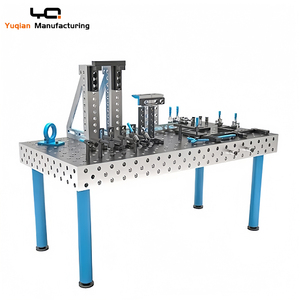
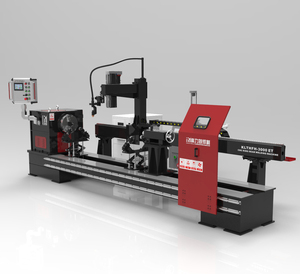
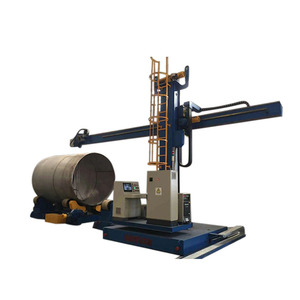
From 3D flexible welding tables to double-torch submerged arc welding (SAW) manipulators, column-and-boom positioners, and CNC gantry plasma cutters, we supply the complete mechanical and electrical chain. Overseas buyers benefit from single-vendor accountability and seamless machine integration.
We back our international deployments with factory-trained application engineers, comprehensive spare parts inventory (including orbital torch heads, ceramic nozzles, tungsten electrodes, and PCB modules), and pre-sale joint preparation consultations to ensure optimal equipment commissioning.
Addressing Technical Specs, Local Power Grid Compatibility, Duty Cycles, and Logistics
Our tube sheet welders and heavy-duty inverter power sources are engineered with tropicalized internal cooling pathways, high-grade conformal coating on all printed circuit boards (PCBs) to resist high ambient humidity (up to 95%), and thermal duty cycle ratings calibrated at 40°C ambient temperature according to IEC 60974-1 standards. This prevents premature thermal cut-off during continuous heavy workshop shifts in Lagos or Port Harcourt.
Yes. Our digital inverter systems feature wide primary voltage input tolerances (380V - 415V ±20%) and built-in active power factor correction (PFC). They absorb frequency fluctuations and voltage spikes typical of industrial diesel generator sets without interrupting the precision orbital TIG pulse cycle or damaging internal power electronics.
Manual TIG welding of a 2,000-tube heat exchanger can take weeks and usually suffers from an NDT reject rate of 5% to 12% due to human fatigue. An automated orbital tube sheet welder performs precise, repeatable flush, recessed, or projected tube joints at 4x to 6x the speed of manual labor, while bringing NDT failure rates down below 0.5%, saving hundreds of hours in costly gouging and re-welding repair work.
Our specialized orbital tube sheet welding heads cover tube outer diameters (OD) ranging from 9.5mm (3/8 inch) up to 89mm (3.5 inches), accommodating stainless steel, carbon steel, titanium, Inconel, and copper-nickel alloys. The system supports autogenous welding (fusion only) as well as cold wire feed addition for thick-walled structural joints.
We provide comprehensive operation manuals, digital programming guides, and online engineer-led video training modules for your site technicians. Furthermore, fast-moving spare parts (such as gas lenses, collets, drive rolls, wire conduit liners, and torch consumables) are readily dispatched via international express logistics directly to your facility or port of entry in Apapa, Tin Can Island, or Onne Port.
The joint configuration depends on your thermal design specification (TEMA) and process pressure requirements. Flush joints are commonly chosen for ease of facing and cleaning; projected joints offer superior mechanical strength under severe vibration; and recessed joints are utilized in specific high-pressure boiler designs. Our technical application engineers can review your engineering drawings and recommend the ideal torch centering tool and welding parameters.
Connect with our senior application engineers to receive full product specifications, localized project estimates, and technical guidance tailored to Nigerian industrial operations.