
Engineered for seamless integration with modern inverter power sources, CNC automated motion controllers, and heavy industrial site duty across New York's fabrication yards.

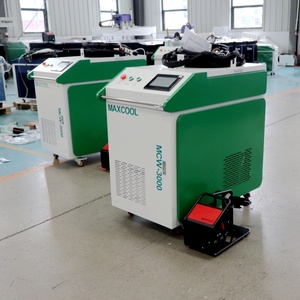
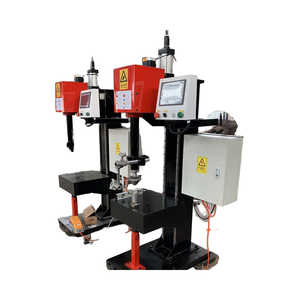
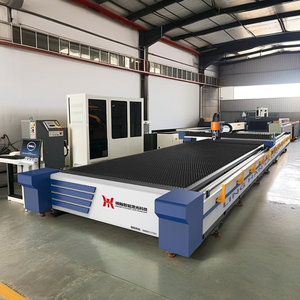
In the highly regulated fabrication landscape of the State of New York—ranging from high-rise structural stainless steel in Manhattan to bio-pharmaceutical process piping in the Hudson Valley and naval repair facilities along the Brooklyn waterfront—the selection of Gas Tungsten Arc Welding (GTAW / TIG) torches and companion thermal processing systems dictates operational efficiency, code compliance, and weld joint integrity. Fabricators operating under New York City Building Codes (NYCBC), American Welding Society (AWS) specifications, and American Society of Mechanical Engineers (ASME) Boiler and Pressure Vessel Codes require TIG torch assemblies engineered for zero-defect metallurgical performance, maximum duty-cycle retention, and superior ergonomic thermal insulation.
As a global pioneer in power source development and heavy-duty torch manufacturing, Advanced Power Sources Limited (APS Welding) delivers engineered TIG torch systems, carbon arc gouging torches, and automated welding machines built specifically to withstand continuous industrial duty cycles. This whitepaper analyzes the thermal dynamics, laminar gas shielding mechanics, electrode stabilization, and localized commercial application scenarios governing high-spec GTAW operations in the New York Tri-State region.
The TIG welding process relies on establishing an electric arc between a non-consumable tungsten electrode and the base metal workpiece inside an inert gas envelope. Because the GTAW torch must handle high arc temperatures—exceeding 6,000°K (10,000°F) at the tungsten tip—without transferring debilitating radiant and conductive heat to the operator’s hand or degrading the internal copper conductor tubes, thermal management within the torch body is paramount.
Air-cooled TIG torches utilize high-conductive silicon rubber or durable phenolic body insulation combined with heavy-walled copper cable conductors. However, for ambient operating environments in heavy NY industrial shops where current levels exceed 200 Amperes at 100% duty cycle, liquid-cooled (water-cooled) torch configurations become mandatory. Water-cooled systems circulate closed-loop coolant directly through dual internal channels surrounding the collet body and power cable connector, effectively preventing thermal degradation of the torch head, gas lens insulators, and flexible cable covers.
Standard TIG collet bodies discharge shielding gas in a turbulent conical stream, introducing ambient oxygen and nitrogen aspiration into the molten weld pool. APS high-performance TIG torch assemblies feature specialized multi-layer mesh gas lenses. These gas lenses transform turbulent flow into a perfectly uniform, straight laminar gas column. This allows extended tungsten stick-out (up to 1 inch beyond the ceramic cup) for deep-groove pipe joints without sacrificing inert shielding gas purity on 304L/316L stainless steel or titanium alloys.
Modern inverter TIG power sources emit rapid high-frequency (HF) pulses for non-contact arc initiation and AC wave balancing. Lower-grade TIG torches frequently suffer from HF leakage, causing micro-shocks to the welder or electronic signal interference with nearby CNC controllers. APS TIG torches utilize ultra-high dielectric strength vulcanized silicone insulation rated above 12,000V DC, paired with ergonomic, rib-grooved lightweight handles featuring integrated ball-and-socket cable joints to eliminate wrist fatigue during long shift operations.
Understanding search intent and engineering demand across New York requires mapping specific industrial sub-sectors to precise welding processes and metallurgical standards. The Tri-State region presents distinct application vectors:
Architectural facade fabricators, luxury residential metalworkers, and commercial structural contractors in NYC demand pristine, mirror-finish welds on decorative 304/316 stainless steel railings, brass features, and structural bronze. Weld porosity, thermal distortion, or heavy heat-tint oxidation are unacceptable. Utilizing APS pulse TIG torch systems with precision micro-amp control allows fabricators to minimize Heat-Affected Zones (HAZ) and suppress post-weld mechanical grinding costs.
Pharmaceutical processing plants and high-purity semiconductor facilities in Upstate New York demand compliance with ASME BPE (Bioprocessing Equipment) standards. Sanitary stainless steel piping requires 100% full-penetration, smooth, crevice-free internal weld beads under stringent ID argon purging. APS automated orbital TIG welding heads and precision manual GTAW torches ensure X-ray clear root passes on Schedule 5 and 10 stainless steel tubing.
Shipyards along Staten Island, Brooklyn Navy Yard, and the Hudson River handle heavy marine repairs, steel barge manufacturing, and aluminum vessel construction under AWS D1.1 (Steel) and AWS D1.2 (Aluminum) codes. Heavy structural repair requires gouging out cracked welds using high-amperage equipment like the BLACK WOLF K4000 1000A Carbon Arc Torch prior to high-deposition MIG (GMAW) or root-pass TIG repair.
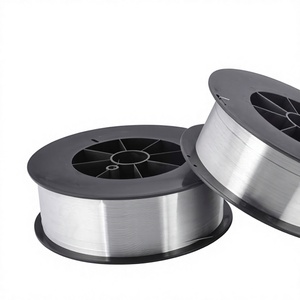
New York State Department of Transportation (NYSDOT) infrastructure bridge projects and power utility boiler repairs rely on heavy-wall alloy pipe welding (Chrome-Moly P91/P22 steel). These high-stress joints require DC pulse TIG root runs followed by high-deposition submerged arc welding (SAW) or flux-cored wire welding (E71T-1C) to pass mandatory 100% radiographic non-destructive testing (NDT).
To assist Certified Welding Inspectors (CWIs), plant managers, and procurement officers in selecting the exact equipment configuration for their facilities, the matrix below highlights key technical operational parameters across primary welding and thermal processing methodologies:
| Process / Equipment Class | Amperage Range & Duty Cycle | Cooling Mechanism | Primary Material Application | NY Industry Code Compliance |
|---|---|---|---|---|
| Heavy-Duty Air-Cooled TIG Torch | 150A - 250A @ 60% DC | Ambient Air Flow | Thin-Wall SS, Carbon Steel, Copper | AWS D1.1, NYC Building Code |
| High-Amp Water-Cooled TIG Torch | 350A - 500A @ 100% DC | Closed-Loop Liquid Coolant | Thick SS Plate, Titanium, Inconel | ASME Sec IX, AWS D1.6 |
| Automated Orbital TIG Welding Head | 100A - 300A Pulse @ 100% DC | Internal Water Channel | Sanitary SS Tube, High-Purity Alloys | ASME BPE, AWS D18.1 |
| Carbon Arc Air Gouging Torch (K4000) | 800A - 1200A Continuous | Compressed Air + Heavy Copper | Structural Steel Defect Removal, Cast Iron | NYSDOT Bridge Code, AWS D1.1 |
| Automated Rotary Seam Welder | 300A - 600A TIG/MIG @ 100% DC | Integrated Water Jacket | Pressure Vessel Shells, Tanks, Pipes | ASME Sec VIII Div 1 & 2 |
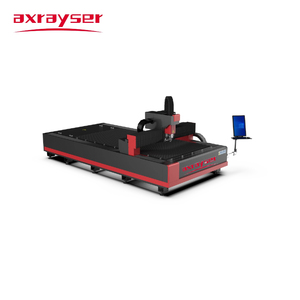
| CNC Fiber Laser Cutting System | 3kW - 15kW Fiber Source | Industrial Chiller Unit | Carbon Steel, SS, Aluminum, Brass Sheet | ISO 9013 Cutting Standards |
Unlike third-party equipment distributors or brand labelers, Advanced Power Sources Limited (APS Welding) operates an integrated ISO 9001:2015 certified design and manufacturing complex. Every inverter circuit board, high-frequency pulse transformer, TIG torch cable assembly, and automated rotary positioner is built in-house at our state-of-the-art facility in Valsad, Gujarat, India.
Our in-house R&D department develops high-frequency IGBT power module topologies that deliver ultra-stable arc ignition, soft-arc characteristics, and energy efficiency, reducing power consumption by up to 35% compared to legacy transformer units.
Industry 4.0 ready. APS power sources can be outfitted with our proprietary WeldVisor IoT telematics, enabling New York shop managers to track real-time arc-on time, voltage/current parameters, and operator productivity remotely.
Before dispatch to international export clients, every welding power source and torch assembly undergoes continuous 100% duty cycle burn-in testing inside elevated thermal test chambers to guarantee field reliability upon arrival.
Purchasing agents, CWIs, and engineering managers procuring welding equipment for New York operations frequently evaluate equipment against stringent local standards. Below are detailed technical answers to common procurement queries:
APS welding power sources and TIG torch accessories are engineered in accordance with IEC 60974-1 and EN 60974-7 international safety standards. Inverter power units feature heavy-duty IP23S ingress-protected cabinets, automatic thermal overload protection, and VRD (Voltage Reduction Device) modules to ensure complete compliance with OSHA and NYC Department of Buildings job site electrical safety standards.
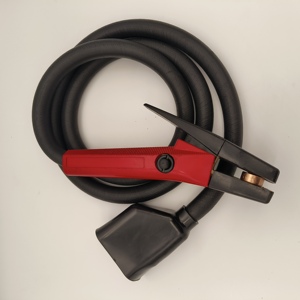
For field erection work where mobility inside tight structural bays is critical, APS provides ultra-flexible rubber-jacketed power cables encased in abrasion-resistant zippered denim or leather protective sleeves. Standard lengths include 12.5 ft (3.8m) and 25 ft (7.6m) runs, equipped with quick-connect Euro or Dinse-style cable plugs (Dinse 35-70) and gas quick-disconnects compatible with all standard American and European power source terminals.
For sanitary stainless steel TIG welding under ASME BPE requirements, we recommend 2% Ceriated (EWCe-2, Orange tip) or 1.5% Lanthanated (EWLa-1.5, Gold tip) tungsten electrodes. These non-radioactive electrodes provide superior arc initiation at low amperages, lower tip consumption, and zero risk of thoria radiation contamination, ensuring clean, X-ray clear root passes on high-purity tubing.
APS maintains streamlined export logistics serving Port Newark and the Port of New York and New Jersey. Standard torch consumables, cables, and standard inverter welders are shipped via air freight within 5-7 business days, while heavy automated machinery and CNC fiber lasers are container-shipped with complete maritime insurance, full export packing, and complete wiring schematics tailored to US 3-Phase voltages (208V / 230V / 460V @ 60Hz).
A gas lens contains porous stainless steel mesh screens that smooth out the shielding gas stream, producing a tight, non-turbulent laminar gas envelope. This enables the welder to extend the tungsten electrode up to 3/4" to 1" out of the cup to reach tight corner joints without losing shielding protection, reducing tungsten contamination by up to 70% and minimizing expensive rework on stainless or nickel alloys.
Consult directly with APS application engineers to configure custom TIG torch packages, high-frequency pulse TIG power sources, or automated rotary welding systems tailored to your exact project specifications.