Engineered for extreme duty cycles, structural consistency, and seamless integration with Canadian oil & gas, mining, marine, and pressure vessel manufacturing facilities.
An authoritative analysis on mastering thermal pipe cutting, 3D trajectory profiling, weld prep beveling, and compliance with CSA W59 & ASME B31.3 codes.
Modern Canadian industrial projects require intricate multi-axis joint geometry. Our CNC pipe profile cutting machines utilize advanced 3 to 6-axis interpolated motion control. This allows for precise high-speed cutting of saddle joints, lateral intersections, miter cuts, concentric/eccentric reducers, and rectangular openings on round pipes without manual laying out.
To accommodate both carbon steel process piping and stainless steel or aluminum structural tubes, our systems integrate high-definition plasma cutting power units alongside heavy-duty oxy-fuel torches. Plasma yields razor-sharp clean edges on thin to medium wall thicknesses, while oxy-fuel easily penetrates heavy wall thicknesses up to 100mm.
Equipment exported to Western Canada, Northern Ontario, and Arctic mining sites must perform flawlessly under sub-zero ambient conditions. Our machines feature industrial-grade IGBT inverter circuitry, moisture-sealed control cabinets, and low-temperature rated pneumatic and mechanical bearings designed for continuous outdoor or unheated shop environments.
Information Gain Insight for Canadian Procurement Engineers: Traditional manual pipe lay-out and manual torch cutting require 4 to 6 times more labor hours per spool and suffer from thermal distortion, leading to excessive fit-up gap variation. Modern CNC pipe profiling machine automation guarantees consistent root gap spacing, reducing joint alignment rework from an average of 14% down to under 0.5% in CWB-certified structural shops.
Evaluate operational efficiency, bevel accuracy, and labor overhead across standard industrial pipe preparation techniques.
| Parameter / Feature | Manual Layout & Band Saw / Torch | 3D Multi-Axis CNC Pipe Cutting Machine | Standard Optical Tracking Profiler |
|---|---|---|---|
| Bevel Angle Flexibility | Limited; relies heavily on manual grinding | Dynamic continuous beveling (V, K, Y, X-joints ±45°) | Fixed bevel angles only |
| Cutting Accuracy & Repeatability | ±2.5 mm to ±5.0 mm | ±0.2 mm to ±0.5 mm | ±1.5 mm |
| Complex Intersection Cutting | Extremely slow, high error rate | Instant G-code rendering (Saddle, Miter, Slot) | Template-restricted |
| CAD/CAM Software Compatibility | None (Manual Blueprint Interpretation) | Direct Tekla, AutoCAD, SolidWorks, STEP import | Basic proprietary DXF only |
| ASME B31.3 / CWB W59 Compliance | High risk of non-destructive test (NDT) failure | 100% compliant edge prep for full penetration welds | Requires secondary grinding |
| Operational Throughput Improvement | Baseline (1x speed) | 6x to 8x throughput increase | 2x speed |
Tailored machinery deployment engineered to meet regional industrial requirements from Halifax to Vancouver Island.
In Calgary, Edmonton, and Fort McMurray, process facilities handle massive volumes of high-pressure carbon and stainless steel piping. CNC pipe profile cutting machines streamline spool production for ASME B31.3 power and process piping, effortlessly generating precise branch connections, header holes, and self-locating saddle joints for pressure vessels and tank farms.
Shipyards in Vancouver, Victoria, and Halifax require specialized structural tubing and tubular framing for vessel hulls, offshore rigs, and crane booms. Multi-axis plasma profiling allows shipbuilders to execute rapid angle cutting and complex weld seam chamfering, meeting strict DNV and Lloyd's Register weld quality standards.
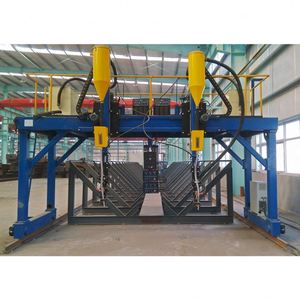
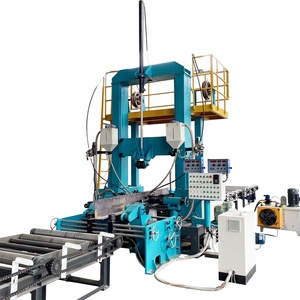
Fabricators in Toronto, Hamilton, and Montreal producing structural steel trusses, stadium roofs, and bridge supports rely on automated H-beam welding lines and heavy-duty pipe profiling systems. Integration with Tekla BIM software enables automated nesting and continuous cutting of structural hollow sections (HSS), cutting material scrap by up to 18%.
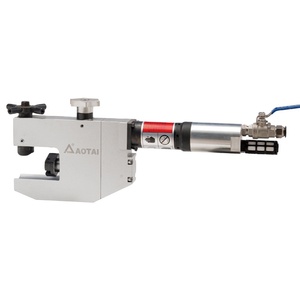
Hard rock and oil sands mining operations demand heavy machinery repair using hardfacing flux-cored wire and air carbon arc gouging equipment. Portable OD-mounted pipe beveling machines (like the ISC-73 series) allow field maintenance crews to repair slurry pipes and excavators directly on-site in extreme freezing weather.
How advanced automation solves labor shortages, elevates quality control, and ensures compliance with Canadian standard codes.
Canada faces a structural shortage of ticketed Red Seal welders and skilled fitters. Implementing CNC pipe profiling machines and automatic gantry welding lines transfers complex trigonometric layout tasks to machine control systems. Operators can be trained in days rather than years, vastly boosting output per workshop employee.
The Canadian Welding Bureau (CWB) strictly regulates structural integrity. Automated mechanical and thermal beveling ensures pristine bevel angles, uniform root faces, and zero slag contamination, fulfilling CSA W59 requirements for structural steel and ASME Section VIII for pressure boundary integrity.
Canadian enterprise fabricators are rapidly adopting digital quality traceability. Systems integrated with IoT monitoring technologies (such as WeldVisor) record real-time arc-on time, duty cycle tracking, voltage/current parameters, and plasma consumable wear metrics, supporting ISO 9001 audit trails and predictive maintenance.
Direct factory manufacturing expertise, custom engineering capabilities, and global after-sales support infrastructure.
Unlike trading intermediaries, we design and manufacture the entire welding and cutting equipment ecosystem under ISO 9001:2015 certification. From proprietary IGBT inverter circuit boards to CNC software controllers and heavy industrial rotators, every component is rigorously factory-tested before shipping to North America.
With over two decades of international export experience and more than 22,600 machines operating worldwide, our equipment handles challenging multi-shift industrial workflows. We provide comprehensive export packaging, custom electrical transformer configurations (e.g., 575V 60Hz Canadian standard voltage), and direct engineering consultations.
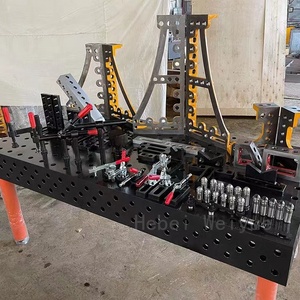
We do not just sell standalone units; we engineer complete automated production lines. Pair your pipe profile cutting machine with our heavy-duty welding rotators, horizontal H-beam submerged arc gantry welders, and 3D precision clamp tables for a streamlined, single-vendor fabrication ecosystem.
Everything you need to know regarding electrical compatibility, shipping, duty cycles, and software integration in Canada.
Yes, absolutely. While standard international power configurations are 380V/415V 50Hz, we regularly manufacture industrial equipment tailored specifically for North American power infrastructure. We offer optional internal step-down transformers or direct 575V 60Hz input IGBT inverter power sources certified to operate reliably within Canadian industrial facilities across Ontario, Quebec, Alberta, and British Columbia.
Real-world industrial pipes are rarely perfectly round. Our multi-axis CNC pipe profile cutting machines feature mechanical contact or non-contact capacitance Arc Voltage Height Control (AVHC) systems. The cutting head dynamically adjusts its Z-axis position in real time, compensating for pipe wall thickness variations, slight bending, or ovality to maintain a fixed torch-to-workpiece standoff distance and consistent bevel geometry.
Our CNC systems run on intuitive controller interfaces compatible with standard G-code outputs. They seamlessly import 3D file formats including STEP, IGES, DXF, and DWG generated by leading structural and piping CAD software such as Tekla Structures, SolidWorks, AutoCAD Plant 3D, and PipeCAD. The integrated offline nesting software maximizes pipe yield and minimizes drop length scrap.
Our heavy-duty power sources, submerged arc welding gantries, and plasma cutting units are rated strictly in accordance with IEC 60974-1 and CE standards, tested at an ambient temperature of 40°C over a 10-minute test cycle. Most of our heavy industrial models feature 60% to 100% continuous duty cycles at maximum amperage, ensuring non-stop multi-shift operation without thermal overload tripping.
Standard machine manufacturing lead time ranges from 15 to 35 days depending on customization requirements. Sea freight transit to major Canadian ports (such as the Port of Vancouver or Port of Montreal) typically takes 22 to 30 days. We provide full export documentation, ISPM 15 compliant heat-treated wooden crate packaging, HS code classifications, and commercial invoices to facilitate smooth CUSMA/international customs clearance through your preferred Canadian customs broker.
We provide comprehensive technical support including remote online commissioning, video step-by-step training modules, and direct access to our technical application engineers. Wear parts, plasma torches, wire feed rollers, and drive motors are standardized and stocked for rapid dispatch via DHL/FedEx air freight to Canada, minimizing any potential workshop downtime.
Speak directly with our technical application engineers to request a customized equipment quote, detailed layout drawing, or cut sample verification for your Canadian facility.