
High-precision robotic workstations, fiber laser systems, and structural beam fabrication lines exported directly to Victorian industrial fabricators.
The Greater Melbourne industrial corridor—spanning key manufacturing nodes such as Dandenong South, Campbellfield, Somerton, Laverton North, and Geelong—is undergoing a structural transition towards advanced industrial automation. Facing acute shortages of certified ticketed welders (AS/NZS 2214 standards), rising operational overheads, and stringent quality benchmarks enforced by infrastructure projects (such as the Victorian Level Crossing Removal and North East Link), structural steel and heavy engineering firms are forced to modernize their fabrication lines.
Historically, European and Japanese turnkey robotic welding cells dominated Victoria’s tier-1 automotive and defense infrastructure sectors. However, high capital expenditures, multi-month delivery lead times, and prohibitive spare-parts costs have prompted mid-tier structural fabricators, OEM trailer manufacturers, and tank builders across Melbourne to re-evaluate their capital equipment procurement strategies. Advanced Chinese robotic welding cell manufacturers have bridged this gap by combining world-class articulated robot arms (e.g., Fanuc, Yaskawa, KUKA, or proprietary high-torque 6-axis arms) with high-efficiency Chinese inverter power sources, laser seam-tracking sensors, and Australian electrical/safety compliance packages.
This technical white paper evaluates the capabilities, compliance protocols, application scenarios, and integration workflows required when sourcing high-gain robotic welding cells from China’s leading industrial equipment exporters for the Melbourne market.
A standard industrial welding cell manufactured for domestic Chinese use operates on a 380V 50Hz electrical standard with basic CE safety interlocks. When importing to Melbourne, equipment must be custom-engineered at the factory to support 415V ±10% 50Hz 3-Phase power, incorporate Category 4 / PL e (AS/NZS 4024.1) safety circuit architecture (light curtains, interlocked fencing, dual-channel safety relays), and feature EMC filters compliant with Australian Communications and Media Authority (ACMA) RCM markings.
To maintain market competitiveness, Victorian metal fabricators are actively aligning with three overarching industrial trends:
Victoria's infrastructure pipeline has created intense competition for qualified MIG/TIG operators. Robotic cells enable a single technician to supervise two to three automated stations, increasing output by up to 300% per human shift.
Construction Category 3 (CC3) requirements for commercial steel structures demand strict non-destructive testing (NDT) compliance. Robotic cells provide repeatable travel speed, arc voltage, and wire feed parameters, dramatically reducing weld defect rates (UT/RT fails).
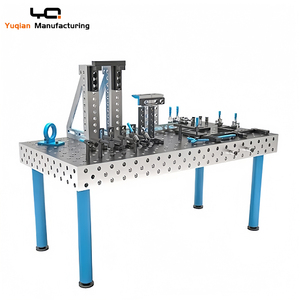
High-mix, low-volume production (HMLV) is characteristic of Melbourne job shops. Integrating 3D flexible welding tables with quick-change positioners allows fabricators to retool a robotic cell for different steel profiles in under 20 minutes.
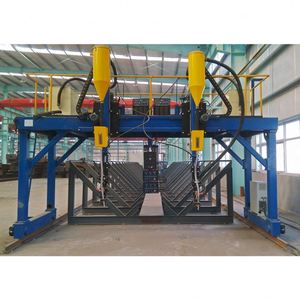
Fabricators supplying structural columns, H-beams, and heavy trusses for Melbourne commercial developments require multi-pass Submerged Arc Welding (SAW) and high-deposition Flux-Cored Arc Welding (FCAW). Dual-torch robotic SAW stations (such as the NAEC double-torch cell showcased above) combined with CNC H-beam welding lines automate longitudinal fillet welds, eliminating back-gouging and delivering deep joint penetration required under AS/NZS 1554.1 Structural Purpose standards.
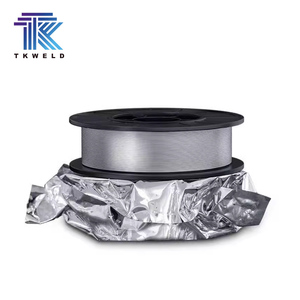
Dandenong South represents the epicenter of Victoria’s transport equipment manufacturing. Robotic cells equipped with 6-axis articulated arms, multi-axis horizontal turn-tables, and pulse MIG power sources automate box-chassis welds, axle mounts, and side-rail assemblies. Utilizing 1.2mm or 1.6mm E71T-1C flux-cored wire ensures high deposition rates with minimal spatter, reducing post-weld grinding labor before powder coating.
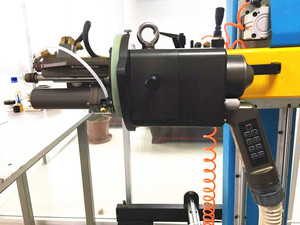
Victoria's extensive dairy, beverage, and chemical processing sectors require pristine, hygienic welds. Automatic orbital TIG pipe-to-tube plate welding systems and 3D laser-guided TIG cells deliver crevice-free internal weld beads on 316L stainless steel pipes. Programmed arc pulse cycles control heat input, preventing distortion and maintaining corrosion resistance in aggressive environments.
| Performance Parameter | Manual FCAW / GMAW Welding | Standard Import Cell (Basic) | Optimized Chinese Robotic Cell (VIC Spec) |
|---|---|---|---|
| Arc-On Time Efficiency | 20% – 30% per shift | 50% – 60% per shift | 75% – 85% (Dual-Zone Load/Unload) |
| AS/NZS 1554.1 Weld Pass Consistency | Operator dependent; high risk of undercut/porosity | Good mechanical repeatability | 100% Parameter Traceability via Siemens PLC & Laser Seam Tracking |
| Safety & Compliance (WorkSafe VIC) | Fume extraction helmet required; high manual hazard | Basic light fence; non-compliant interlocks | Category 4 / PL e Enclosure, Safety Light Curtains, Integrated Fume Capture |
| Operational Power Config | 415V Standard multi-plug | 380V Domestic (Requires external transformer) | Native 415V 50Hz Industrial Inverter Power Source |
| Retooling / Changeover Time | N/A (Manual setup) | 45 – 90 Minutes | < 20 Minutes with 3D Flexible Modular Tables |
Importing capital machinery into Australia requires absolute compliance with national electrical, mechanical, and safety regulations. Failing to verify these requirements before shipment can result in impounded equipment at the Port of Melbourne or prohibition orders from WorkSafe Victoria.
As a leading Chinese designer, manufacturer, and exporter of integrated automated welding machinery, our organization provides end-to-end engineered automation packages specifically configured for Australian operating conditions.
We do not merely assemble components. Our control engineers program custom user interfaces on Siemens PLC systems, allowing intuitive offline programming and seam tracking calibration for non-expert operators.
Prior to packing, every cell undergoes a 48-hour continuous burn-in cycle using 415V 50Hz simulated input power. Workpiece samples provided by Melbourne clients are test-welded and non-destructively tested to verify bead profile and penetration depth.
We supply turnkey packages including high-accuracy 6-axis robot arms, heavy-duty 2-axis positioners, 3D flexible modular welding tables (1000x800x200mm up to custom sizes), and automatic wire feeding units.
We provide sea-freight packing in steel-framed fumigated wooden cases designed forSwanson Dock / Port of Melbourne discharge. Local engineering partners in Victoria assist with final mechanical installation, electrical hookup, and operator training.
Our robotic cells utilize standardized international industrial components (e.g., Schneider electrics, SMC pneumatics, Siemens PLCs, Fanuc/Yaskawa controller parts). Consumable items (gas nozzles, contact tips, liner tubes, wire feed rollers) are standard Euro-style assemblies readily available off the shelf across Melbourne supplier networks. Critical electronic spares are dispatched via DHL/FedEx express directly from our central warehouse within 48 hours.
Yes. We specialize in compact, modular cell footprints (such as C-frame or dual-station turntable layouts) starting at 2.5m x 3.0m total floor area. The control cabinets and welding power source are mounted on top of or directly adjacent to the robot base to minimize required floor space in high-density industrial parks like Dandenong South or Campbellfield.
Yes. Digital control power sources store fully customizable welding procedure specifications (WPS). Parameters including voltage, wire feed speed, travel speed, weave amplitude, and crater fill times are precisely maintained by the robot controller, eliminating human variation and ensuring your welds pass ultrasonic (UT) and magnetic particle testing (MT).
Standard custom-built robotic cell manufacturing and assembly requires 25 to 35 business days. Transit time via direct container shipping from Shanghai, Ningbo, or Qingdao to Swanson Dock / Port of Melbourne is approximately 14 to 18 days. Total door-to-door lead time generally averages 6 to 8 weeks.
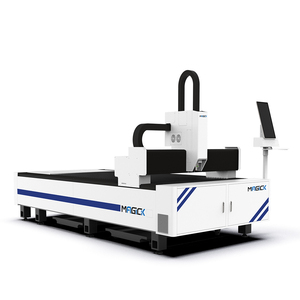
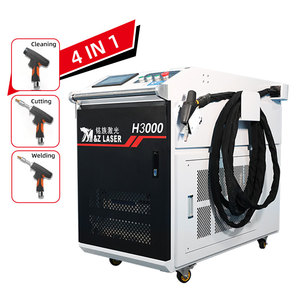
Absolutely. All laser systems (fiber laser cutting and handheld/robotic laser welding machines) supplied to Australia are equipped with fully enclosed Class 4 protective cabins, laser safety interlocks on access doors, OD6+ protective viewing glass, and dedicated fume extraction ports compliant with WorkSafe Victoria occupational health standards.
Contact our application engineering team today for a free CAD joint evaluation, robotic reach simulation, and detailed turnkey quotation tailored to Victorian electrical and safety standards.