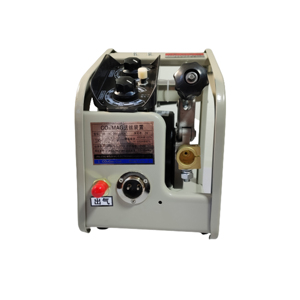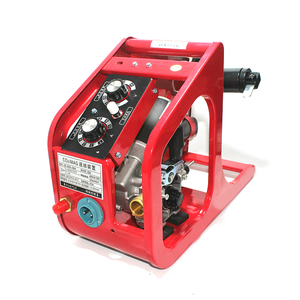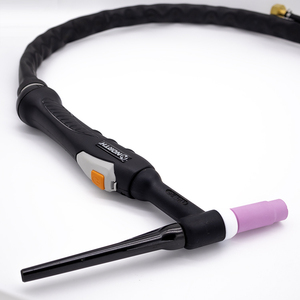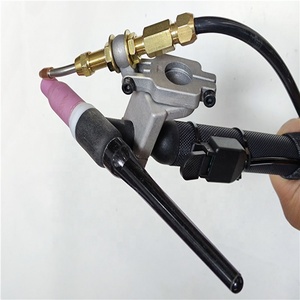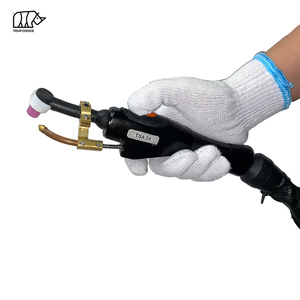
In modern precision metallurgy, Gas Tungsten Arc Welding (GTAW), commonly referred to as TIG (Tungsten Inert Gas) welding, stands as the gold standard for high-integrity joints in stainless steel, aluminum alloys, titanium, and nickel-based superalloys. However, manual TIG welding faces severe economic and physical bottlenecks: high operator fatigue, inconsistent deposition rates, thermal distortion from excessive heat input, and expensive rework costs. To address these critical challenges, advanced industrial manufacturing plants are standardizing on Automatic TIG Cold & Pulsed Wire Feeding Systems.
As Sydney continues its multi-billion-dollar infrastructure expansion across the Western Sydney Aerotropolis, maritime naval shipbuilding, high-purity biopharmaceutical piping, and heavy structural engineering, local fabricators in New South Wales (NSW) require direct factory access to heavy-duty, highly accurate wire feeders. Our specialized manufacturing facility delivers direct-to-factory equipment integration designed to meet stringent Australian Standards (AS/NZS 1554.6 for Stainless Steel Welding and AS 1210 for Pressure Vessels).
Unlike MIG (GMAW) welding where the consumable wire acts as the electrical electrode, TIG cold wire feeding detaches the electrical arc generation from the filler material deposition. By feeding solid wire directly into the molten weld pool under micro-step pulse control, thermal input is reduced by up to 35%. This prevents carbide precipitation in 316L stainless steel and eliminates grain growth in high-strength alloys—crucial for Sydney’s coastal marine exposure where pitting corrosion resistance is mandatory.
Rooted in over two decades of in-house R&D and power source engineering, our ISO 9001:2015 certified production facility (Advanced Power Sources Ltd platform) engineers every critical subsystem internally. From digital printed circuit board (PCB) surface-mount assembly to precision four-roll wire drive transmissions, our machinery is built to outlast harsh field conditions and continuous 100% duty cycles.
Proprietary microstep motor drivers enable smooth wire delivery down to 0.1 mm/s. Integrated tachometer feedback loops instantly adjust torque to eliminate wire slipping or bird-nesting in long conduits.
Engineered with dual-geared all-metal drive rolls for flawless wire feeding of soft aluminum (5356/4043), hard stainless steel, and flux-cored TIG wires ranging from 0.8mm to 2.4mm diameter.
Fully sealed against magnetic iron dust, atmospheric moisture, and coastal salt spray. Built to survive rigorous Sydney construction sites, shipyards, and heavy structural workshops.
Sydney's industrial landscape is undergoing a technological revolution driven by high labor costs, stringent safety mandates, and escalating demand for structural longevity. Manual wire feeding is rapidly being replaced by mechanized and automated TIG wire feeding across several core regional hubs:
With the construction of Badgerys Creek Airport and surrounding defense manufacturing parks, contract fabricators require high-repeatability TIG welding for aerospace brackets, titanium exhaust manifolds, and localized armor plating. Automated wire feeders eliminate operator hand tremors, yielding X-ray clear welds that satisfy AS/NZS ISO 3834 requirements.
Sydney Harbor maritime infrastructure, commercial ferry repair, and naval defense projects rely heavily on Grade 316L and Duplex 2205 stainless steels. Our cold wire feeders provide controlled pulse delay modes, ensuring optimal ferrite numbers (FN) and maximum corrosion resistance against harsh Pacific Ocean saltwater environments.
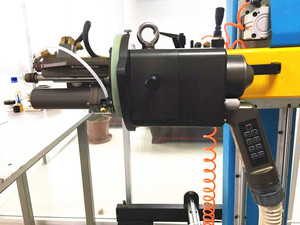
From Western Sydney food processing plants to North Shore pharmaceutical laboratories, orbital TIG tube plate wire feeders (such as our Siemens PLC integrated Bohan model) ensure complete root penetration without oxidation, sugar-coating, or internal physical burn-through.
Compare our industrial automatic TIG wire feeder models designed for manual torch retrofits, mechanized travel carriages, orbital tube welding, and robotic automation cells serving Sydney enterprises:
| Model / Configuration | Input Voltage | Wire Speed Range | Compatible Wires | Control System | Key Target Application |
|---|---|---|---|---|---|
| Auto TIG Cold Wire Feeder Pro | AC 240V 50Hz (AU Standard) | 0.2 – 18.0 m/min | SS, Carbon, Cu, Al (0.8–1.6mm) | Digital Microprocessor + Pulse | General Stainless Fabrication & Structural Welding |
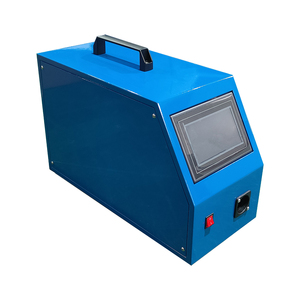
| Orbital Tube-Plate TIG Feeder | AC 110V/220V Auto-sensing | 0.1 – 8.0 m/min | Stainless 304L/316L, Inconel (0.8-1.2mm) | 7-inch Touch Screen (Siemens PLC) | High-Purity Pharma & Heat Exchanger Tubes |
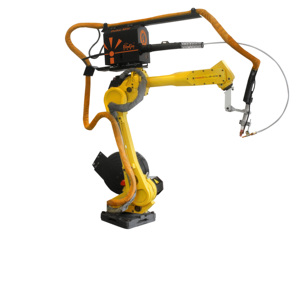
| Robotic Cell TIG Wire Feeder (500A) | DC 24V / 48V Bus Interface | 0.5 – 22.0 m/min | Hardfacing, Titanium, Aluminum, SS | CANbus / Modbus / Analog 0-10V | Automated Robotic Cells & Heavy Defense Work |
| Portable TIG Torch Feeding Gun | DC 24V via Power Source | 0.5 – 10.0 m/min | Solid SS & Mild Steel (0.8-1.2mm) | Torch-Mounted Trigger & Speed Knob | On-Site Pipeline & High-Altitude Site Work |
With skilled welder hourly rates in Sydney ranging between AUD $65 to $110+ per hour, shop owners cannot afford inefficient manual filler rod feeding. Hand-feeding 1-meter cut-length TIG wires results in up to 15% stub-end material scrap and frequent arc interruptions.
Continuous spool wire feeding (using 5kg or 15kg spools) eliminates constant rod changing. Welders can operate at higher continuous amperages, tripling daily linear meter output.
Manual TIG rods leave 50mm-75mm unburnt stubs. When working with expensive ERNiCrMo-3 (Inconel 625) or ER5356 wires, automated spool feeding recovers thousands of dollars in lost alloy scrap annually.
Mechanized feeding allows the operator to use both hands to steady the torch or control travel speed, dramatically lowering fatigue-induced weld flaws such as tungsten inclusions or lack of sidewall fusion.
When specifying a TIG wire feeder factory partner for Sydney infrastructure projects, procurement engineers must evaluate the mechanical physics of filler wire entry into the arc region:
In standard Cold Wire TIG, ambient temperature filler wire is driven directly into the leading edge of the weld pool. The energy required to melt the wire is drawn solely from the primary TIG arc. This mode offers maximum simplicity, zero electrical interference, and crystal-clear arc stability for stainless steel, mild steel, and copper alloys.
Our advanced microprocessor controllers synchronize wire feed pulses directly with the high/low pulse current of the TIG power source. During high-peak current, the wire feeds rapidly into the molten puddle; during low-background current, the wire retracts slightly (back-step function). This prevents wire stubbing and creates aesthetically flawless "pack of cards" ripple patterns demanded by architecturally exposed stainless steel projects along Sydney's foreshores.
Purchasing direct from our manufacturing facility provides Sydney enterprises with significant advantages over local retail markups. We streamline technical selection, custom voltage matching, standard AU plug configurations, and expedited door-to-door freight to industrial precincts across Greater Sydney:
We coordinate sea container shipping and express air cargo directly to Sydney distribution centers (Wetherill Park, Blacktown, Silverwater, Botany), taking care of export documentation and Australian customs clearance compliance.
Require specialized bracketry, customized wire feeder liners, or specific multi-pin control plugs to interface with your existing Miller, Lincoln, Fronius, Kemppi, or APS power sources? Our engineering team builds to your exact specifications.
We maintain full inventory support for quick-wear consumables: Teflon wire liners, drive rollers, brass feed tubes, and replacement control boards, eliminating long workshop downtime.
Contact our application engineering team for direct factory quotes, technical whitepaper downloads, custom automated TIG wiring diagrams, and fast delivery to New South Wales.