Precision cold cutting equipment, orbital TIG wire feeders, heavy-duty 3D clamping positioners, and automated longitudinal/circumferential welding power sources engineered for South American pipeline infrastructure.
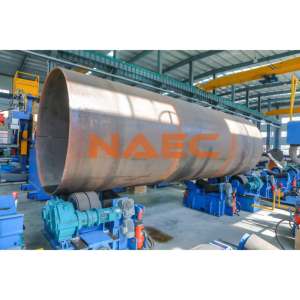
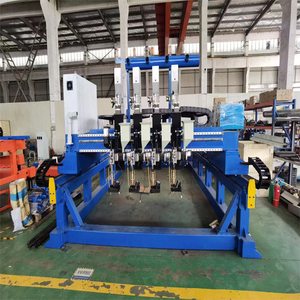
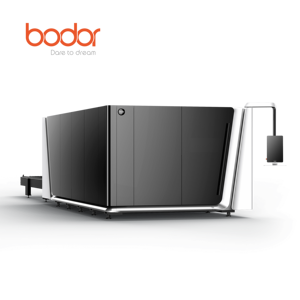
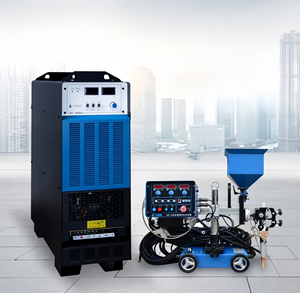
Chile represents a unique and highly demanding operational landscape for oil, gas, slurry, and desalinated water pipeline construction. Stretched over 4,300 kilometers along the Pacific rim of South America, Chilean pipeline engineering projects operate under extreme environmental constraints—ranging from the hyper-arid Atacama Desert in northern regions like Antofagasta and Tarapacá, to the sub-antarctic conditions of Magallanes, and elevation shifts soaring from sea level up to 4,500 meters in the High Andes.
As a leading international manufacturer and exporter of heavy-duty pipeline fabrication equipment, cold cutting bevelers, modular 3D clamping systems, and IGBT inverter welding automation, Advanced Power Sources Limited delivers field-proven engineering designed specifically to handle the metallurgical, environmental, and regulatory requirements of EPC contractors operating in Chile.
Technical Value Insight: Chilean energy and mining pipelines must comply with stringent seismic integrity guidelines (ASME B31.4 / B31.8 / API 5L) and national structural codes (NCh standards). High-yield line pipe steels such as API 5L Grade X65, X70, and X80 require strict heat-input management, precise joint beveling, and controlled hydrogen cracking risk during root pass welding.
Recent national infrastructure initiatives across Chile have created unprecedented demand for advanced pipeline joint preparation and automated welding systems:
Chile's National Green Hydrogen Strategy targets 25 GW of electrolysis capacity. Export pipelines for pure H2 and liquid synthetic fuels demand high-purity TIG root welding and non-destructive cold cutting to prevent micro-fissuring and hydrogen embrittlement.
Major mining complexes operated by Codelco, BHP, and Antofagasta Minerals rely on high-pressure desalinated water pipelines ascending the Andes. These thick-walled carbon steel pipes are lined with polyurethane or rubber, making flame cutting impossible and placing OD cold cutters at the core of field preparation.
State energy enterprise ENAP continues upgrading storage tanks, fuel transport networks, and natural gas spools. This calls for gantry shell seam automated welding machines and precise 3D clamping fit-up tables to accelerate turnaround times.
Equipment deployed at 4,000m+ elevation faces lower ambient air density, affecting arc stability and cooling efficiency. Our IGBT power sources feature robust thermal derating design and wide input voltage tolerance for stable diesel-generator operation.
Standard fabrication tools designed for shop environments in temperate climates frequently fail when subjected to Chilean field conditions. Our equipment range has been engineered from the ground up to solve concrete operational bottlenecks across Chile's key industrial zones:
Laying API 5L X70/X80 pipelines across elevation shifts above 3,500 meters presents severe operational hurdles. Low atmospheric pressure causes arc ionization decay, leading to erratic arc striking in conventional transformer welders. Furthermore, pre-heat maintenance is vital to avoid hydrogen-induced cracking (HIC) in high-strength carbon steel under freezing Andean winds.
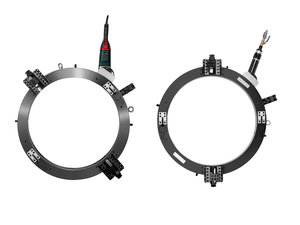
The Technical Solution: Our Genesis Series Inverter SMAW & Multiprocess Power Sources feature specialized high-open-circuit-voltage (OCV) digital control boards optimized for instant arc striking despite thin atmospheric air. Paired with 26"-32" OD-Mounted Split Frame Cold Pipe Cutters, field crews perform simultaneous spark-free cutting and 30° / 37.5° J-beveling without compromising the heat-affected zone (HAZ) of the pipe alloy.
Coastal pipeline tie-ins experience extreme salt spray corrosion and airborne particulates. In desalination projects, internal cladding (Duplex UNS S31803 or Super Duplex UNS S32750) is used to withstand raw seawater. Thermal cutting with oxy-fuel or standard plasma burns off internal lining protection, causing million-dollar warranty failures.
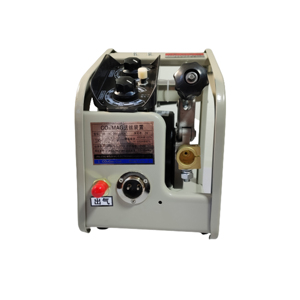
The Technical Solution: The OD-Mounted Cold Cutter Split Frame System utilizes dual-tool posts with high-speed tool steel (HSS) inserts, cutting and beveling without heat generation, preserving internal cladding integrity completely. For internal root passes, our TIG Automatic Cold Wire Feeder & Liner Unit provides precise, pulsed wire feeding with programmable argon shield gas delay, achieving zero-defect 100% X-ray clear root welds under strict ASME Section IX qualifications.
Green hydrogen initiatives in southern Chile involve high-density gas pipelines operating under operating pressures exceeding 100 bar. Hydrogen molecules penetrate micro-pores and weld voids easily, making joint porosity and root fusion defects catastrophic risks.
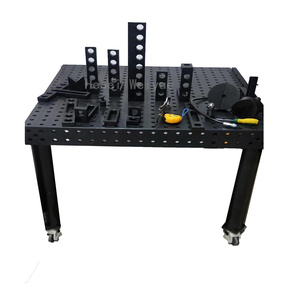
The Technical Solution: Fabricators utilize our Cast Iron 3D Modular Clamping Working Platform to achieve absolute rotational alignment and zero root-gap misalignment before welding. Coupled with Apollo Series Pulse TIG Inverters featuring digital arc timing (Weld-O-Meter) and continuous wire feeding, operators eliminate weld stop-start discontinuities where hydrogen leaks originate.
Choosing the correct combination of cutting, beveling, and welding machinery is essential for meeting Chilean Superintendencia de Electricidad y Combustibles (SEC) and international EPC standards. Below is a comprehensive engineering comparison of joint prep methods and welding systems for pipeline projects in Chile:
| Operation / Parameter | Split-Frame Cold Cutter (OD Mounted) | Thermal Oxy-Fuel / Plasma Cutting | Gantry / Orbital SAW Welding | Manual SMAW / Stick Welding |
|---|---|---|---|---|
| HAZ & Metallurgical Impact | Zero heat input; no change to grain structure or hardness. | Creates hardened HAZ layer; requires post-cut grinding. | Controlled thermal input; optimal fine-grain weld metal deposit. | Variable heat input depending on manual welder technique. |
| Bevel Geometry Accuracy | Precise ±0.05 mm tolerance; exact 30°, 37.5°, or J-bevel angles. | Requires manual dressing; bevel angle variations up to ±2°. | Consistent, uniform bead profile; continuous 100% penetration. | Subject to welder fatigue and position shifts in 5G/6G. |
| High-Altitude Performance | Unaffected by altitude; constant electric/pneumatic drive torque. | Oxygen torch pressure changes due to ambient air density drops. | IGBT inverter power sources compensate for voltage drops. | Arc stability degrades unless high-OCV inverter is used. |
| Safety & Spark Hazard | 100% cold process; zero sparks; safe in operating refineries. | High spark generation; requires hot-work permits & shutdowns. | Submerged under flux blanket; zero arc glare or spatter. | Spatter and open arc require protective screening and ventilation. |
| Field Productivity (10" X70 Pipe) | Cut & Bevel finished in < 8 minutes per joint. | Cutting 4 mins + Manual Grinding 15 mins = 19 mins total. | Deposition rate 8-14 kg/hr; 4x faster than manual stick. | Deposition rate 1.5-2.5 kg/hr; multiple passes required. |
Procurement Compliance Note: All export equipment supplied by Advanced Power Sources Limited is tested to IEC 60974-1 standards (40°C ambient duty cycle testing) and complies with CE and ISO 9001:2015 specifications. Power sources are configured for Chile's standard 380V / 50Hz 3-phase electrical supply with ±15% automatic voltage regulation for generator stability in remote Atacama sites.
As an established OEM manufacturer with over 20 years of in-house research, engineering, and global export experience, Advanced Power Sources Limited (APS Welding) does not operate as a third-party trader. We design, build, assemble, and test every power board, cold cutter gear set, and positioning rotator inside our state-of-the-art facility in Valsad, Gujarat, India.
We develop proprietary IGBT power circuits, digital pulse controllers, and WeldVisor IoT monitoring algorithms. We do not white-label generic third-party subassemblies; our circuit topology is built specifically for rugged industrial environments.
Every pipeline welder and split-frame beveler undergoes rigorous Factory Acceptance Testing (FAT) under full amp-load and simulated voltage spikes before seaworthy export packaging.
From customs compliance documentation to bilingual technical operational manuals and fast-track spare parts dispatches via air freight, we ensure smooth project execution for Chilean procurement teams.
Chilean buyers work directly with our senior mechanical and welding engineers. We assist in reviewing pipe wall thickness, material chemistry, and joint bevel angles to specify exact equipment setups.
Answers to common technical, logistics, and operational queries raised by Chilean EPC contractors, mining engineering departments, and oil & gas pipeline buyers.
Connect directly with Advanced Power Sources Limited's application engineering team. Get tailored machinery recommendations, API/ASME compliance guidance, and competitive factory-direct export pricing.
Contact Us