Engineered for continuous duty cycles, tropical ambient temperatures, and rigorous factory operational environments across Kenya.
Architecting High-Throughput Joining Systems for Kenya's Manufacturing Renaissance & Vision 2030 Infrastructure Mandates
Kenya is rapidly evolving as the industrial, logistics, and manufacturing heartland of East Africa. Under the government's Vision 2030 blueprint and the revitalized industrialization agenda, key sectors such as structural steel fabrication, automotive assembly, agro-processing machinery, pressure vessel manufacturing, and geothermal infrastructure are undergoing a radical technological transformation. To maintain competitive margins amidst fluctuating raw material costs and skilled welder shortages, forward-thinking Kenyan fabricators are migrating from conventional manual shielded metal arc welding (SMAW) toward advanced industrial welding robots, automated circumferential seam welders, fiber laser joining systems, and high-duty-cycle IGBT inverter power sources.
As an ISO 9001:2015 certified global manufacturer with over two decades of dedicated research, design, and manufacturing capabilities, Advanced Power Sources Limited (APS Welding) delivers enterprise-grade robotic and automated welding solutions tailored specifically to the operational realities of the Kenyan industrial landscape.
Industrial machinery deployed across Nairobi's Industrial Area, Athi River EPZ, Mombasa Port repairs, and western agricultural corridors (Kisumu, Eldoret) must cope with specific environmental challenges: ambient workshop temperatures exceeding 40°C, voltage fluctuations on local power grids, and intense mechanical fatigue from continuous multi-shift operations. APS industrial power sources and robotic cells are standardized under IEC 60974-1, offering true rated duty cycles at 40°C ambient temperatures alongside wide input voltage tolerance (380V ±20%) to eliminate thermal cut-off brownouts.
Modern automated joining is no longer restricted to high-volume automotive plants. Today’s industrial welding robots are highly versatile, quickly re-programmable 6-axis articulation systems that integrate seamlessly with Gas Metal Arc Welding (GMAW/MIG), Gas Tungsten Arc Welding (GTAW/TIG), Submerged Arc Welding (SAW), and Fiber Laser heads. By combining precision robotic manipulators with proprietary digital IGBT inverter power sources, Kenyan enterprises can achieve unprecedented weld repeatability, zero-spatter deposition, and up to 400% throughput enhancement compared to manual welding.
High-precision articulated robotic arms featuring integrated seam tracking, arc sensing (TAST), and digital interface protocols (EtherCAT, CANopen, Profinet) for direct communication with APS CC-CV power sources.
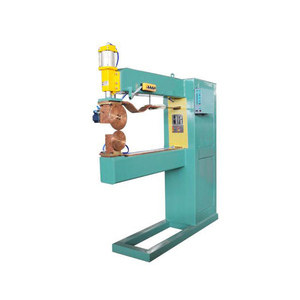
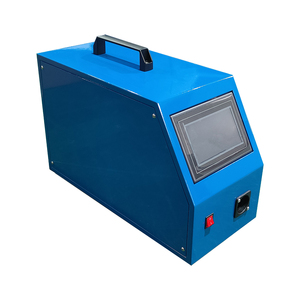
Dedicated drum, pipe, and vessel seam welding machines designed for automatic circumferential joint execution in LPG cylinders, pressure vessels, and agricultural storage containers.
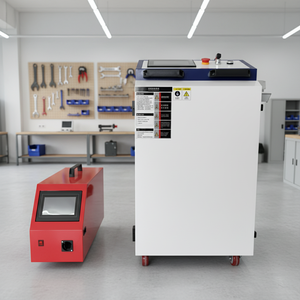
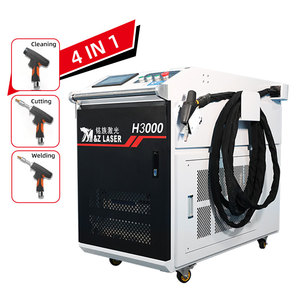
High-energy density handheld and robotic 1500W–3000W fiber laser welders engineered for ultra-fast, minimal heat-affected zone (HAZ) sheet metal joining and precision tool hard-facing restoration.
Kenya's transport and civil building projects—including bridge construction, logistics warehousing in Tatu City and Ruiru, and port development in Lamu and Mombasa—demand structural steel beams (I-beams, box columns) welded to strict international standards (AWS D1.1). Utilizing Submerged Arc Welding (SAW) rotators and automatic gantry welding carriages allows deep penetration fillet welds on heavy plate sections without risk of slag inclusion or lack of fusion.
From tea processing machinery in Kericho to sugar mill rollers in Kisumu and commercial trailer body fabrication in Nakuru, components endure extreme friction and impact. Incorporating specialized Fiber Laser Hard Facing and Cladding machines enables regional workshops to rebuild worn agricultural tool edges and extend operational component life by over 300%, cutting expensive downtime during peak harvest seasons.
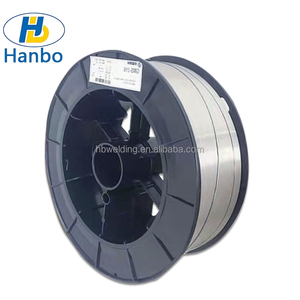
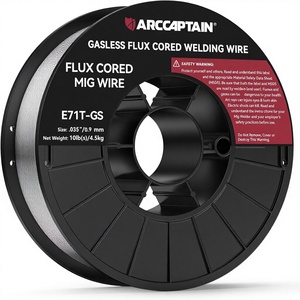
In accordance with KEBS (Kenya Bureau of Standards) and ASME Section VIII directives, pressure vessels and gas storage drums require 100% radiographic-quality welds. The application of automated Circumferential Drum Seam Welders combined with gasless or self-shielded flux-cored wire (such as ER308-GS / E71T-GS) guarantees consistent bead profiles, eliminating human errors inherent in manual joint pass execution.
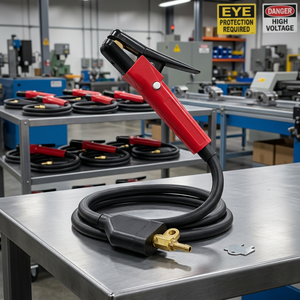
Salt-water corrosion in maritime environments demands high-alloy stainless steel and aluminum joining capabilities. Compact 1500W-3000W Handheld Fiber Laser Welders and robust Air Carbon Arc Gouging Guns (K4000 1000A rated) provide shipyards with rapid weld defect removal, root pass back-gouging, and high-speed repair capabilities directly at the vessel dockside.
To assist Kenyan procurement directors and plant managers in formulating clear ROI models, the matrix below details operational performance metrics across joining technologies:
| Performance Parameter | Manual SMAW / Stick | Semi-Auto MIG / MAG | Industrial Robotic Welding Cell |
|---|---|---|---|
| Deposition Efficiency | 55% – 65% (electrode stub loss) | 85% – 90% | 95% – 98% (optimized wire feed) |
| Travel Speed Range | 150 – 300 mm/min | 350 – 600 mm/min | 800 – 2000 mm/min |
| Duty Cycle Capability | 30% – 40% (operator fatigue) | 60% | 100% Continuous Automation Duty |
| Operator Skill Dependency | High (Requires Certified Welder) | Medium | Low (System Operator Level) |
| IoT & Quality Traceability | Manual Log / None | Optional Digital Display | WeldVisor IoT Real-Time Cloud Auditing |
| Kenya Grid Adaptability | High Risk of Arc Flare | Requires Voltage Stabilizer | Inbuilt IGBT Protection (380V ±20%) |
When investing in capital machinery, direct partnerships with the original manufacturer offer decisive technical and financial security over intermediary trading companies. APS Welding provides holistic industrial engineering support across every phase of equipment deployment:
Consult directly with our Senior Application Engineers to customize your robotic welding cell, circumferential seam automation, or heavy-duty power sources.
Get a QuoteIndustrial welding robots deliver unmatched quality consistency, eliminate weld rework, and dramatically increase production speeds. In Kenya, where certified high-alloy welders are in short supply, robotic automation allows single operators to supervise multiple joining cells, delivering up to 400% higher output while reducing consumable waste and energy consumption per meter of weld.
APS industrial power sources are equipped with heavy-duty primary filter capacitors and smart inverter control loops designed for input voltage tolerances of 380V ±20%. This built-in tolerance protects microprocessors and IGBT modules against power surges, sags, and generator voltage frequency spikes commonly encountered in industrial parks across East Africa.
Yes. APS supplies turnkey robotic welding systems, positioners, rotators, and specialized circumferential drum seam welders directly to international buyers across Kenya. We provide pre-shipment testing, detailed technical documentation, parameter presets, and dedicated remote or on-site commissioning support.
All APS heavy-duty machines are rated strictly according to the IEC 60974-1 international standard, evaluated over a 10-minute cycle at a ambient temperature of 40°C. Evaluating duty cycle at 40°C ensures that machines can run continuously in warm factory conditions across Kenya without thermal tripping.
APS maintains a comprehensive inventory of operational wear parts—such as MIG torches, air carbon arc gouging torches (K4000), wire feeder rolls, laser nozzles, and replacement PCBs. Export shipments can be bundled with recommended 2-year maintenance spare kits to guarantee uninterrupted production.
Self-shielded flux-cored wire (such as E71T-GS and ER308-GS) creates its own shielding gas during the arc process. This eliminates the requirement to transport heavy, pressurized gas cylinders to remote job sites, structural bridge installations, or cross-country pipeline maintenance points, while remaining immune to wind draft porosity.