Market Intelligence & User Intent Mining
Industrial Growth & Welding Consumable Demand in Egypt
Egypt’s industrial sector is experiencing an unprecedented expansion, driven by monumental national infrastructure projects, the expansion of the Suez Canal Economic Zone (SCZone), ship repair facility upgrades at the Alexandria and Damietta ports, and extensive civil structural developments across the New Administrative Capital (NAC). As Egyptian steel fabricators move away from traditional Shielded Metal Arc Welding (SMAW/Stick) to boost workshop throughput, the demand for high-efficiency Flux Cored Arc Welding (FCAW) wire has escalated dramatically.
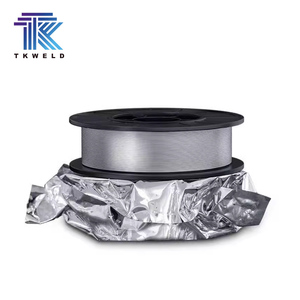
Navigating the local procurement landscape requires an in-depth understanding of Egypt’s unique operating environments. High humidity levels along the Mediterranean and Red Sea coastlines present significant risks of hydrogen-induced cracking (HIC) and porosity if welding wire flux absorbs ambient moisture. As an established factory manufacturer and global exporter, our supply chain ensures that every spool—whether AWS E71T-1C, E71T-1M, or self-shielded E71T-GS—is packaged in hermetically sealed aluminum foil with desiccant protection and VCI anti-corrosion wrapping.
Furthermore, strict compliance with the Egyptian Organization for Standardization & Quality (EOS) guidelines and international maritime classifications (such as ABS, DNV, and Lloyd’s Register) makes our flux-cored wire series the preferred choice for major Egyptian contractors, pressure vessel fabricators, and heavy machinery overhaul centers in Ain Sokhna and 10th of Ramadan City.
Metallurgical Depth & Engineering Gain
FCAW Wire Metallurgy: Gas-Shielded vs. Self-Shielded Solutions
Selecting the optimal flux cored wire for Egyptian manufacturing requires analyzing joint geometry, shielding gas availability, and site conditions. Flux cored wires consist of a continuous tubular metal sheath encapsulating a carefully formulated core of deoxidizers, arc stabilizers, slag formers, and alloying elements.
AWS E71T-1C / E71T-1M
Designed for single and multi-pass welding of carbon steel using 100% CO2 or 75-80% Ar / balance CO2 gas mixes. Features ultra-low spatter, smooth spray transfer, fast-freezing slag for positional control, and Charpy V-Notch (CVN) impact toughness reaching over 47J at -20°C. Ideal for structural steel and heavy pressure vessels in Suez industrial zones.
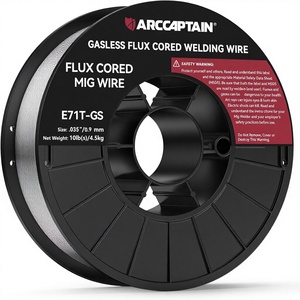
Self-Shielded E71T-GS / E71T-11
Gasless flux cored wire containing aluminum/magnesium deoxidizers that generate their own protective shield. Essential for outdoor structural erection, high-rise building joints in windy desert environments (such as the NAC project sites), and field repairs where external gas cylinders are impractical.
Hardfacing & Alloy Wires
High-chromium iron alloy matrix core wires built to deposit wear-resistant overlays on crushing equipment, cement plant rollers, dredging pumps, and agricultural machinery subjected to extreme abrasive wear and impact throughout Upper and Lower Egypt.
Consumable Classification & Mechanical Performance Specs
| AWS Specification |
Shielding Type |
Yield Strength (MPa) |
Tensile Strength (MPa) |
Elongation (%) |
Primary Egyptian Application |
| AWS A5.20 E71T-1C |
100% CO2 Gas |
≥ 400 MPa |
490 - 660 MPa |
≥ 22% |
Shipyards, Structural Steel, General GMAW/FCAW Bay Production |
| AWS A5.20 E71T-1M |
75% Ar / 25% CO2 |
≥ 430 MPa |
530 - 680 MPa |
≥ 24% |
High-Spec Pressure Vessels, Piping Spools, Heavy Earthmoving Gear |
| AWS A5.20 E71T-GS |
Self-Shielded (Gasless) |
≥ 390 MPa |
≥ 490 MPa |
≥ 20% |
Outdoor Erection Sites, Desert Infrastructure, Sheet Metal Repairs |
| AWS A5.22 E308LT1-1 |
100% CO2 / Mixed Gas |
≥ 350 MPa |
≥ 520 MPa |
≥ 35% |
Desalination Plants, Food Processing, Stainless Tankage in Sokhna |
| Hardfacing (FeCr-C) |
Open Arc / CO2 |
Deposit Hardness: 55 - 62 HRC (Single/Double Layer) |
Cement Crusher Rollers, Dredging Teeth, Mining Equipment Overhauls |
E-E-A-T Manufacturing Authority
In-House Manufacturing Excellence & Equipment Synergy
As an ISO 9001:2015 certified manufacturer with over two decades of engineering history, our power source and consumable division operates with complete in-house authority. Rather than acting as a third-party trader, we develop the core wire drawing processes, flux formulations, and strict spectro-analysis quality checks at our state-of-the-art facility.
Why Egyptian Fabricators & Importers Partner With Us:
- Synergic Arc Compatibility: Our flux cored wires are tested alongside our proprietary IGBT Inverter CC/CV Power Sources (including our multi-process 500A to 1250A platforms), guaranteeing zero arc hesitation, low spatter, and optimized burn-back control.
- IoT WeldVisor Integration: Track arc-on time, wire feed velocity, and deposition rates in real-time across your production facility with our integrated smart logging systems.
- Strict Moisture Control: Every spool undergoes baking cycles under controlled vacuum atmosphere to ensure diffusible hydrogen stays strictly below the H8 (8 ml/100g) or H4 thresholds, mitigating cold cracking risks on thick plates.
- Direct Factory Logistics: Direct shipping routes from our manufacturing ports to Port Said, Alexandria, and Sokhna Port, supported by comprehensive certificate documentation (EN 10204 3.1 Mill Test Certificates, Certificate of Origin, and SGS/BV pre-shipment inspection).
Frequently Asked Questions (FAQ) for Egyptian Buyers
Critical technical and commercial insights for engineers, procurement directors, and welding inspectors in Egypt.
1. What are the key customs and compliance documents required to import flux cored wire into Egypt?
Importing welding consumables into Egypt requires compliance with National Single Window for Foreign Trade Facilitation (Nafeza) system and obtaining an ACID (Advanced Cargo Information Declaration) number. Essential export documents provided by our logistics team include the Commercial Invoice, Packing List, Certificate of Origin (legalized by the Egyptian Embassy or chamber of commerce), Bill of Lading, and an EN 10204 3.1 Mill Test Certificate detailing chemical analysis (C, Mn, Si, P, S, Ni, Cr) and mechanical test results (Yield, Tensile, Charpy Impact at -20°C).
2. How does flux cored wire performance compare to Stick (SMAW) electrodes in Egyptian structural fabrication?
Flux Cored Arc Welding (FCAW) offers a deposition rate that is 2 to 3 times higher than Shielded Metal Arc Welding (SMAW/Stick). While stick electrodes require frequent stub changes (resulting in a duty cycle arc-on time of only 20-30%), continuous flux cored wire feeding allows arc-on times exceeding 60-70%. For heavy steel fabricators in Cairo, Alexandria, and Sokhna, switching to 1.2mm or 1.6mm AWS E71T-1C wire significantly reduces total labor hours per ton of fabricated steel while producing clean, radiographic-quality welds.
3. How should flux cored wire spools be stored to prevent moisture contamination in coastal areas like Alexandria?
In humid marine climates such as Alexandria, Damietta, or Suez, unsealed flux cored wire can absorb atmospheric moisture, resulting in hydrogen-induced micro-cracking and surface wormholes in the weld bead. We pack all spools in vacuum-sealed aluminum foil bags containing silica desiccant inside corrugated cardboard boxes. Once opened, spools should be kept in temperature-controlled holding cabinets (27°C ± 5°C with relative humidity below 60%) or returned to protective packaging if unused for over 8 hours.
4. Can self-shielded E71T-GS wire be used for critical structural load-bearing welds?
AWS E71T-GS is a self-shielded wire designed primarily for single-pass applications on thin sheet metal or non-critical structural repairs where gas shielding is unavailable due to high wind speeds. For multi-pass, heavy-section, or critical load-bearing structural joints (such as high-rise buildings or heavy crane girders), AWS E71T-1C or E71T-1M gas-shielded wires or multipass-rated self-shielded wires (like E71T-8) must be specified to ensure proper elongation and low-temperature impact toughness.
5. What spool configurations and packaging options are available for high-volume automated lines?
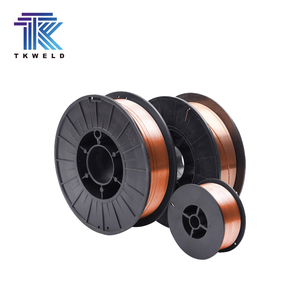
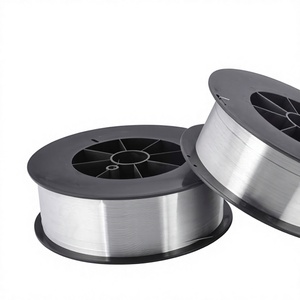
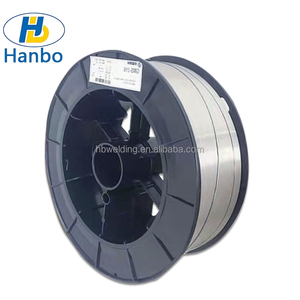
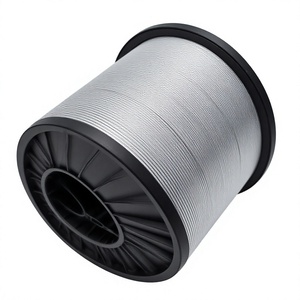
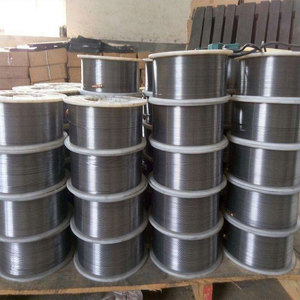
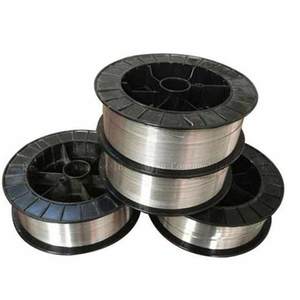
We offer standard 1kg and 5kg plastic spools for portable welding equipment, 15kg precision layer-wound plastic or wire spools for standard MIG/MAG feeders, and continuous 250kg / 350kg heavy-duty payout drums for robotic welding cells and continuous automated structural beam lines. Drums minimize wire feeding downtime, increase robotic cell productivity, and reduce spool changeover frequency.
6. How do I match my IGBT welding power source settings with flux cored wire?
Gas-shielded flux cored wires (E71T-1C) typically run on Direct Current Electrode Positive (DCEP), requiring stable constant voltage (CV) output. In contrast, self-shielded wires (E71T-GS) run on Direct Current Electrode Negative (DCEN). Our application engineers provide optimized synergic curves and parameter charts (Voltage, Wire Feed Speed, Electrical Stick-Out) tailored to your power source class to maximize weld penetration and eliminate porosity.
Partner with a Reliable Flux Cored Wire Exporter for Egypt
Whether you require bulk containers of AWS E71T-1C for shipyard operations, self-shielded wire for desert construction, or specialized hardfacing alloys for heavy plant maintenance, our technical sales engineers are ready to assist.