The Norwegian industrial sector represents one of the world's most demanding environments for metal fabrication and precision engineering. Driven by maritime engineering across Vestland, offshore energy infrastructure along Rogaland, subsea technology manufacturing around Viken, and green hydroelectric developments in Trøndelag, Norwegian fabricators require thermal cutting machinery that delivers uncompromising accuracy, structural reliability, and energy efficiency.
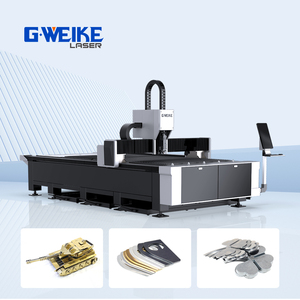
As a specialized factory direct exporter, our industrial 1000W to 30000W CNC Fiber Laser Cutting Machines are engineered to directly address the rigorous standards required by the Nordic market. With the national initiative towards Grønt industriløft (Norway's Green Industrial Roadmap), manufacturing facilities in Oslo, Bergen, Stavanger, and Trondheim are accelerating the transition from legacy plasma and flame cutting systems toward energy-efficient, zero-contact fiber laser technologies.
Precise processing of 5083-H116 and 6082-T6 aluminum alloys for ship hull structures, catamarans, and aquaculture workboats with zero micro-cracking and minimal heat distortion.
Capable of cleanly cutting high-yield structural steels (S355ML, S460ML, Super Duplex 25Cr) certified to NORSOK M-120 and M-501 requirements for North Sea platform topsides.
Heavy-plate bevel cutting and sheet metal blanking for offshore wind turbine sub-assemblies (Hywind projects) and hydroelectric penstock components.
Understanding information gain in thermal cutting requires analyzing beam optics, motion control dynamics, and resonance damping. Fiber laser technology utilizes solid-state optical fibers as the gain medium, operating at a wavelength of approximately 1.064 microns—one-tenth that of legacy CO2 lasers. This short wavelength enables absorption rates up to 300% higher in non-ferrous metals like aluminum, brass, and copper, making it ideal for Norwegian marine engineering shops.
Equipped with high-efficiency fiber laser sources featuring wall-plug efficiency exceeding 40%. The monolithic electro-optical design eliminates internal alignment mirrors, ensuring maintenance-free optical paths under harsh industrial workshop conditions.
Integrated capacitive distance sensors maintain dynamic standoff height control (+/- 0.05mm) across warped or uneven plates. Internal motorized lens adjustment enables rapid piercing routines on thick structural steel plates up to 50mm.
Manufactured using high-pressure aerospace molding and thermally stress-relieved for 24 hours. The ultra-light gantry structure provides rigidity while allowing Y-axis accelerations up to 1.5G without dynamic deformation.
High-speed bus control combined with AI-driven contour nesting maximizes material utilization on costly stainless steel and alloy sheets, reducing scrap rates by up to 18% per production cycle.
| Evaluation Parameter | CNC Fiber Laser Cutter (12kW-30kW) | High-Definition Plasma | Abrasive Waterjet |
|---|---|---|---|
| Thin-to-Medium Cutting Speed | Ultra-High (Up to 80 m/min) | Moderate (8 - 15 m/min) | Slow (0.5 - 2 m/min) |
| Heat Affected Zone (HAZ) | Extremely Narrow (< 0.1mm) | Wide (1.5mm - 3.5mm) | None (Cold Cutting Process) |
| Operating Cost / Meter | Lowest (N2 / Compressed Air assist) | Medium (High electrode wear) | High (Abrasive garnet costs) |
| Kerf Width & Detail Accuracy | ±0.02 mm / Fine Detail | ±0.5 mm / Rough Edges | ±0.08 mm / Good Detail |
| Energy Consumption (kW) | Low (Solid-state efficiency) | High (High current draw) | High (High-pressure pumps) |
| EN ISO 9013 Cut Quality Class | Range 1 to 2 (Mirror Finish) | Range 3 to 4 | Range 1 to 2 |
Exporting machinery to Norway requires strict adherence to local electrical standards, environmental requirements, and winter climate factors. Standard generic export machinery often fails due to unique grid configurations or unheated workshop environments during Nordic winters.
Unlike continental Europe (TN 400V 3-phase), significant parts of Norway utilize an IT 230V 3-phase isolated grid system. We supply custom low-loss isolation transformers and power stabilization modules certified for Norwegian electrical installations (NEK 400 compliance).
Fabrication plants in Northern regions like Tromsø or Bodø encounter sub-zero indoor temperatures during seasonal shutdowns. Our dual-circuit water chillers incorporate automatic anti-freeze heating systems and thermal glycol protection loops to safeguard expensive fiber optics.
All fiber laser systems exported to Norway bear the CE mark in accordance with Machinery Directive 2006/42/EC and EN 60825-1 Laser Safety standards. Edge beveling capabilities prepare weld seams to ISO 9692 standards, direct for EN ISO 1090-2 Execution Class EXC3 and EXC4 structures.
Modern manufacturing requires an end-to-end production ecosystem. Beyond sheet laser cutting, heavy fabrication in Norwegian shipyards, offshore pipeline construction, and pressure vessel manufacturing demands specialized auxiliary machines for edge preparation, seam welding, and surface gouging.
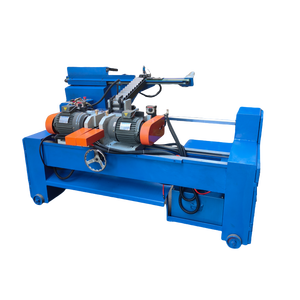
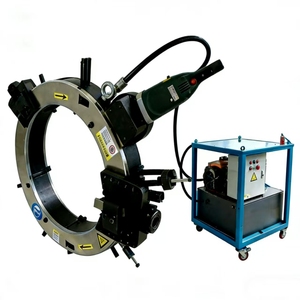
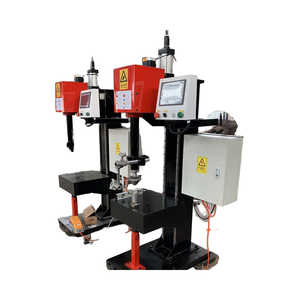
Complementing our sheet metal cutters, our Heavy Duty OD Steel Pipe Beveling Machines (3-48 Inch) and Automatic Hydraulic Double Head Chamfering Machines process large-diameter pipelines for North Sea subsea oil/gas and district heating projects. They deliver precise V, J, and U-groove weld preparations on thick-wall carbon steel and duplex stainless pipes.
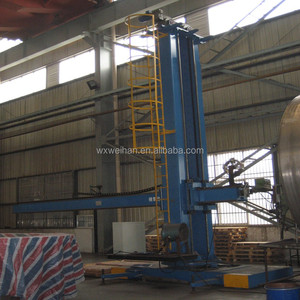
For cylinder and vessel manufacturing, our Automatic Vertical Circumferential Seam Welding Machines and Column & Boom TIG/MIG/SAW Manipulators feature real-time sensor-based seam tracking. These units automate high-deposition submerged arc welding (SAW) and flux-cored MIG welding on marine tanks and offshore caissons.
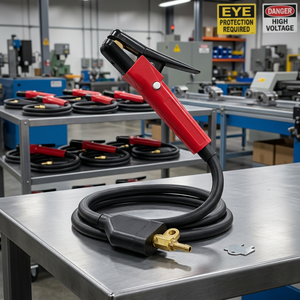
Heavy structural steel fabricators rely on the K4000 Air Carbon Arc Gouging Gun (1000A Heavy Duty) for back-gouging root passes, defect removal, and weld repair on thick structural plates in compliance with DNV and Lloyd's Register marine inspection criteria.
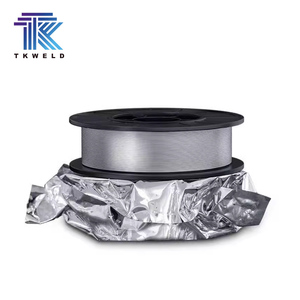
Our certified E71T-1 / E71T-1C / E71T-GS Flux-Cored Wire range (1.2mm - 1.6mm) provides low-hydrogen, smooth-arc deposition characteristics ideal for positional welding of carbon steel structural elements exposed to harsh Arctic weather conditions.
Selecting an industrial machine supplier is a critical capital expenditure decision. As an established manufacturer and direct exporter with over two decades of engineering experience, our organization provides Norwegian buyers with direct factory accountability, eliminating third-party agent markups while ensuring direct engineering support.
Full traceability across raw material sourcing, optical assembly, electronics potting, and laser power meter calibration.
Every CNC machine bed undergoes Renishaw laser interferometer backlash and linear accuracy calibration prior to packing.
Direct remote diagnostic access via Cloud IoT modules, pairing your workshop team with our senior optics engineers.
Heavy-duty anti-corrosion vacuum sealing in reinforced wooden crates engineered for maritime freight to Oslo, Brevik, or Bergen ports.
Below are detailed engineering and commercial responses to common procurement queries from Norwegian manufacturers and structural fabricators.
Many industrial areas in Norway use a 230V 3-phase IT (Isolated Terra) electrical grid system, which differs from the standard European 400V TN-S 3-phase network. We equip all machines destined for Norway with custom step-up isolation transformers and dedicated neutral-point grounding systems to ensure seamless electrical integration, preventing line noise and protecting optical sensor electronics.
For marine aluminum alloys (such as 5083, 6082) and stainless steels up to 12mm thickness, a 3000W to 6000W fiber laser provides exceptionally high cutting speeds and dross-free edge quality. For heavier offshore plate requirements (above 20mm structural carbon steel or duplex stainless), we recommend our 12kW to 30kW ultra-high-power fiber laser series utilizing high-pressure Nitrogen or Oxygen assist gas.
Norway is part of the EEA (European Economic Area). CNC laser cutting machines fall under HS Code 8456.11.00. Most industrial machinery imported into Norway from qualified manufacturing facilities carries a 0% customs duty rate, though standard Norwegian VAT (MVA at 25%) applies upon customs clearance at ports such as Oslo, Kristiansand, or Bergen. We provide complete export documentation including Commercial Invoices, Packing Lists, CE Certificates of Conformity, and Certificates of Origin.
Yes. However, fiber optic cables and laser resonators require controlled water temperature (typically 20°C to 25°C). For unheated Nordic facilities, our water chillers feature built-in electric heating elements that automatically maintain fluid temperatures above freezing. We also specify factory-approved glycol anti-freeze additives and insulated fluid lines to protect internal optics against thermal shock.
Our machines feature built-in IoT remote diagnostic modules (WeldVisor / CNC Cloud link) enabling our software engineers to diagnose parameter adjustments, CNC bus communication, and sensor status online. Critical optical consumables (protective lenses, copper nozzles, ceramic rings) and high-wear components are dispatched via DHL/FedEx express directly to your Norwegian address within 48 to 72 hours.
Yes. The cut edge quality achieved by our high-precision fiber laser systems complies with DIN EN ISO 9013 Range 2 perpendicularity and angularity tolerances. This fine edge finish minimizes the Heat Affected Zone (HAZ), satisfying the structural integrity standards required by EN ISO 1090-2 (Execution of Steel Structures) and NORSOK M-101 for offshore structural steelwork.
Contact our application engineering team today for technical machine specifications, custom bed dimensions, power source selection, and competitive factory-direct pricing for the Norwegian market.
Send an Inquiry