
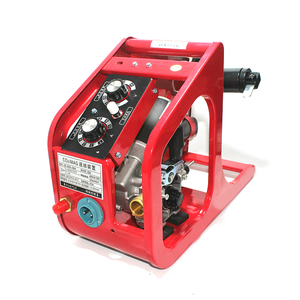
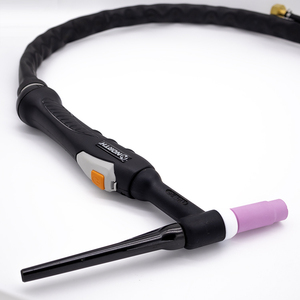
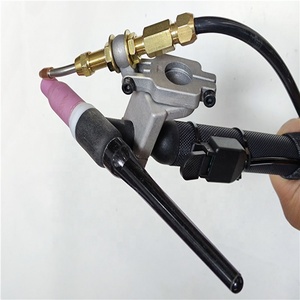
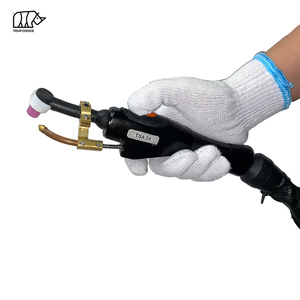
Explore our industrial-grade cold wire feeders, automatic TIG welding torches, and computerized tube-plate integration systems available for immediate delivery to the Seattle industrial zone.
Addressing the strict quality control mandates of Greater Seattle’s aerospace contractors, Puget Sound naval shipyards, and Pacific Northwest clean energy cleanrooms.
Aerospace fabricators in Everett, Renton, and the Kent Valley demand absolute control over heat input when jointing titanium, Inconel, and 6061-T6 aluminum alloys. Manual filler metal dipping introduces thermal fluctuations that increase porosity and heat-affected zone (HAZ) distortion.
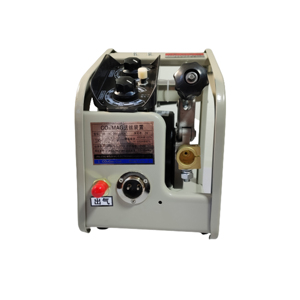
Our CE-certified cold wire feeders utilize microprocessor-driven step motors capable of micro-step pulsing (0.1–20 Hz). This ensures uniform wire placement into the keyhole arc, meeting stringent AWS D17.1 aerospace fusion welding specifications.
From commercial fishing fleet maintenance in Ballard to aluminum vessel manufacturing across Puget Sound, marine fabricators require rugged IP54-rated wire feeding equipment capable of continuous operation in high-humidity salt-air environments.
Equipped with four-roll gear-driven feed systems and anti-corrosive brass liners, our TIG wire feeders eliminate wire slippage and micro-shaving when pushing soft 5356 aluminum or heavy 316L stainless wires through extended 8-meter conduit lines.
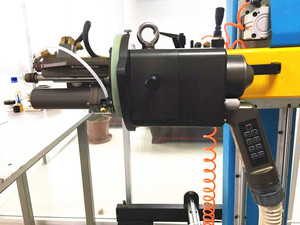
Seattle's booming biotechnology sector in South Lake Union and regional hydrogen fuel projects require X-ray clean tube-to-tube and tube-to-flange welds. Manual feeding cannot guarantee consistent internal bead reinforcement on thin-wall 304L/316L stainless steel tubing.
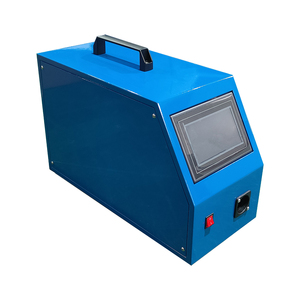
Our computerized orbital TIG feeders feature Siemens PLC touchscreens, allowing weld engineers to program precise wire burn-back, retraction length (0–10 mm), and automatic gas pre/post-flow delays for 100% root penetration without oxidation.
Transitioning from manual GTAW wire dipping to automated TIG wire feeding in Pacific Northwest shops yields an average 175% increase in deposition rates while reducing arc-on operator fatigue. Furthermore, precise automatic wire retraction prevents wire-sticking in the solidification pool, eliminating costly post-weld grinding and radiographic inspection failures.
Built under strict ISO 9001:2015 quality frameworks and fully certified under European CE Directives for global deployment.
Every TIG wire feeding system dispatched to North American and international buyers undergoes rigorous testing to comply with international low-voltage and electromagnetic safety guidelines:
Achieving defect-free welds requires zero lag between arc ignition and wire delivery. Our advanced drive mechanisms feature industry-leading mechanical controls:
Evaluating Manual TIG, Cold Wire Automatic TIG, and TIP-TIG Feeding Technologies for Precision Manufacturing.
| Technical Parameter | Manual TIG Feeding | APS Cold Wire TIG Feeder | Automated TIP-TIG / Hot Wire |
|---|---|---|---|
| Deposition Rate (kg/hr) | 0.4 – 0.8 kg/hr | 1.5 – 3.2 kg/hr (200-300% Higher) | 2.5 – 5.5 kg/hr |
| Operator Skill Requirement | High (Dual-hand coordination required) | Medium (Torch manipulation only) | Medium-High (Complex setup) |
| Wire Retraction / Crater Control | Manual (Inconsistent) | Automatic Digital Back-Dap (0-10mm) | Integrated Mechanical Retraction |
| Welding Speed Range | 8 – 15 cm/min | 25 – 60 cm/min | 40 – 90 cm/min |
| Porosity & X-Ray Defect Rate | 3% – 5% (Human error risk) | < 0.2% (Strict EN/AWS Code Compliant) | < 0.1% |
| Capital Equipment Cost | Low Initial / High Labor Cost | Optimized ROI (< 6 Months Payback) | High Initial Investment |
| CE & EMC Certification | N/A | Full CE EN 60974-5 Certified | Varies by OEM |
Strategic solutions designed to help Seattle shop managers navigate regional labor dynamics and tech upgrades.
The Pacific Northwest faces an acute shortage of certified Class-A TIG welders. Implementing automatic wire feed torches allows mid-level welders to produce X-ray quality welds with minimal training, effectively expanding your shop's operational capacity without exponential labor cost growth.
All export units destined for Washington State are configured with multi-voltage transformers (110V/220V 1-Phase 60Hz) and NEMA plug hardware, ensuring seamless integration into existing US shop electrical infrastructure without requiring costly step-down transformers.
We maintain robust export supply chains delivering directly to Seattle-Tacoma International Airport (SEA) air cargo terminals and the Port of Seattle. Standardized spare parts (drive rolls, Teflon liners, torch wire guide tips) are backed by fast dispatch guarantees.
Direct manufacturer capabilities delivering international-grade welding technology at competitive factory pricing.
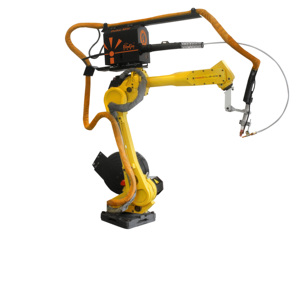
We design PCB control boards, firmware algorithms, and drive mechanisms completely in-house, enabling rapid customization for custom robotic TIG cells.
Every unit undergoes a continuous 48-hour burn-in load test and full dielectric flash testing before export packaging, guaranteeing zero DOA incidents.
Pair cold wire feeders with our industrial welding positioners, rotators, and column & boom manipulators for unified single-vendor accountability.
Direct remote access to senior application engineers to assist your Seattle team with parameter optimization and weld procedure setup (WPS).
Expert answers addressing electrical compatibility, CE verification, local delivery, and custom integrations.
Yes. Our cold wire feeders are designed with universal dry-contact trigger inputs and multi-pin remote sockets. Whether your shop utilizes a Miller Syncrowave, Lincoln Aspect, or Fronius MagicWave, the wire feeder syncs seamlessly with the torch trigger circuit. When the operator depresses the torch switch or foot pedal, gas flow, arc initiation, and wire feeding engage simultaneously.
While Washington State facilities adhere to OSHA and local electrical codes, CE certification according to EN 60974-5 guarantees that the equipment meets international benchmarks for electromagnetic shielding (EMC), high-frequency isolation, and low-voltage electrical safety. This simplifies internal safety compliance audits and ensures compatibility with high-tech aerospace manufacturing environments.
Our 4-roll drive feeders handle solid steel, stainless steel (308L, 316L, 309L), nickel alloys (Inconel), titanium, and aluminum (4043, 5356) wire diameters ranging from 0.8 mm (.030") to 1.6 mm (.062"). Specialized Teflon liners and U-groove drive rolls are included for soft aluminum applications to prevent binding and micro-shaving.
Standard CE-certified models are dispatched from our factory within 5 to 7 business days. Air freight delivery to Seattle-Tacoma International Airport (SEA) typically takes 4 to 6 transit days. Ocean freight options directly to the Port of Seattle or Port of Tacoma are also available for bulk equipment orders.
Pulsed wire feeding synchronizes filler metal insertion with peak amperage pulses. During peak current, the arc pool expands and wire is pushed into the puddle; during background current, wire feed slows or pauses. This precise control reduces total heat input by up to 35%, preventing burn-through on thin-gauge aircraft tubing and reducing interpass cooling times.
We provide comprehensive operating manuals, electrical schematics, and video calibration guides. Replacement drive rolls, torch liners, wire guide tubes, and control PC boards are stocked for fast international express dispatch via DHL/FedEx, ensuring maximum uptime for your production line.
Contact our senior application engineering team today for technical data sheets, custom integration advice, and direct factory pricing.