
Explore our industrial-grade automated robotic welding arms, CNC fiber laser cutters, high-capacity seam welders, and precision consumables built for zero-defect production.
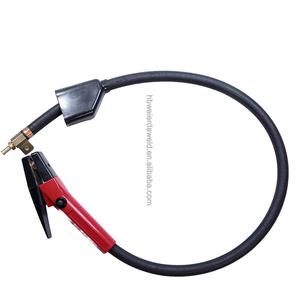
Heavy-duty carbon arc air gouging torch supporting 3-10mm rod diameters with electric ignition for rapid root pass cleaning and weld defect removal.
Inquire Now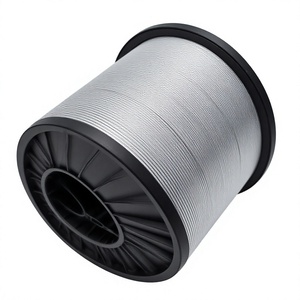
Premium gas-shielded flux-cored wire (1.2mm / 1.6mm) designed for seamless robotic arc stability, low spatter, and high deposition rates in structural steel.
Inquire Now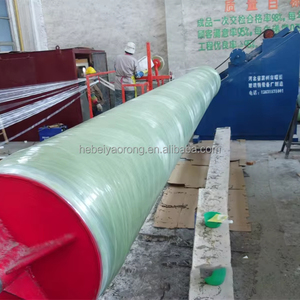
Automated horizontal GRP/FRP tank machine line engineered for precision glass fiber vessel winding, chemical storage, and industrial pressure tank fabrication.
Inquire Now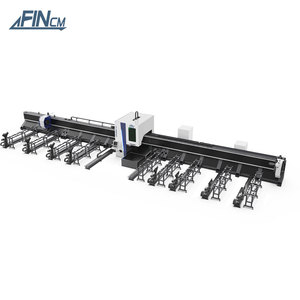
CNC fiber laser metal tube processing machine providing multi-axis beveling and high-speed rotary cutting for stainless steel and aluminum profiles.
Inquire Now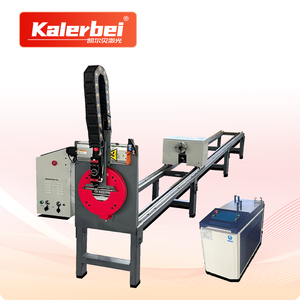
Compact precision laser processing center optimized for small-diameter metal pipe profiling, automotive tubings, and high-density electronic chassis.
Inquire Now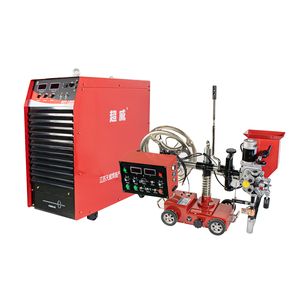
Heavy-duty electric open auto cylinder body submerged arc welding workstation (SAW) for large pressure vessels, boiler drums, and tank shells.
Inquire Now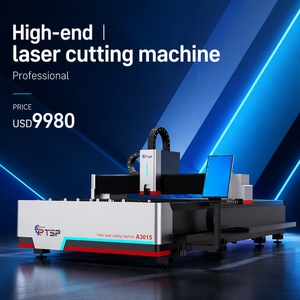
3000x1500mm large-format sheet metal fiber laser cutting system integrated with Raycus/Max sources for high-speed precision metal plate profiling.
Inquire Now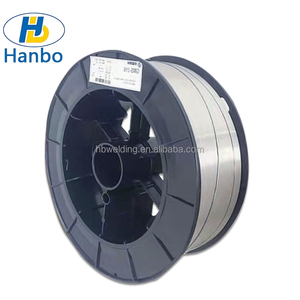
Self-shielded stainless steel flux-cored welding wire engineered for outdoor robotic repairs, pipe joints, and corrosion-resistant structural work without shielding gas.
Inquire NowIn modern industrial fabrication, transitioning from manual arc processes to high-precision robotic welding arms represents the ultimate leap in deposition efficiency, thermal distortion management, and structural weld repeatability. As an established ISO 9001:2015 certified manufacturer operating a 22,000+ square meter engineering complex in Valsad, Gujarat, Advanced Power Sources Limited (APS Welding) designs and integrates the complete automated arc-welding chain—ranging from high-frequency IGBT inverter power supplies to 6-DOF kinetic robotic arms, laser seam trackers, and automated positioners.
Industrial fabricators operating in shipbuilding, heavy structural engineering, pressure vessel manufacturing, and pipeline construction encounter severe labor shortages, rising shielding gas expenditures, and stringent non-destructive testing (NDT) criteria (such as 100% X-ray radiographic inspection under AWS D1.1 and ASME Section VIII). Robotic welding arms eliminate human thermal fatigue, achieving duty cycles approaching 100% while maintaining torch alignment accuracy within ±0.02 mm.
Information Gain Key Takeaway: Robotic welding cells integrated with real-time arc-voltage feedback and laser seam-tracking sensors reduce overall weld rework rates from an industry average of 4.8% down to less than 0.12%, while reducing shielding gas consumption by up to 32% via optimized synergic pulse control.
6-Axis articulated joints engineered with hollow-wrist designs to route water-cooled MIG/TIG torches cleanly, preventing cable twist and torque drag during complex 3D toolpath interpolation.
Proprietary inverter power sources operating at 20 kHz+ switching frequencies deliver instant arc striking, minimal spatter, and dynamic arc length control for thin sheet to heavy plate.
Cloud-connected telemetry monitoring real-time voltage, amperage, arc-on duty cycles, and wire feed speed to satisfy Industry 4.0 quality traceability requirements.
Selecting the correct robotic manipulator requires balancing arm reach, payload capacity, trajectory control, and seam tracking capabilities against workpiece geometry.
A robotic welding arm is not merely a mechanical manipulator; it functions as part of a tightly synchronized closed-loop cyber-physical system. To achieve reliable welds on carbon steel, stainless alloys, and structural aluminum, global procurement directors must evaluate six core mechanical and electrical dimensions:
Arm reach typically ranges from 1,400 mm for compact workstation cells to over 2,010 mm for long-reach structural beam welding. Payload capacity must account not only for torch weight (typically 3 kg to 6 kg for water-cooled GMAW torches), but also for torch collision sensors, laser line scanners, and heavy-duty wire feeding packages. A minimum payload rating of 6 kg to 12 kg is standard for industrial arc welding arms.
In automated Gas Metal Arc Welding (GMAW) and Gas Tungsten Arc Welding (GTAW), minor torch position drift creates lack-of-fusion (LOF) defects. Enterprise-class robotic manipulators employ absolute AC brushless servomotors coupled with RV reducer gearboxes, achieving pose repeatability of ±0.02 mm to ±0.05 mm under continuous 24/7 duty cycles.
Thermal expansion during multi-pass welding causes joint misalignment. Advanced robotic arms feature optical laser triangulation sensors mounted ahead of the torch. These sensors scan the joint profile at up to 100 Hz, automatically updating the robot's motion trajectory in real time to compensate for gap variations up to 3.0 mm.
| Kinematic Parameter | Standard Industrial Arm | Heavy-Payload Robotic Arm | Collaborative Welding Arm (Cobot) |
|---|---|---|---|
| Degrees of Freedom (DOF) | 6 Axes Articulated | 6 Axes + 2-Axis External Positioner | 6 Axes (Force Feedback Limited) |
| Reach Range (mm) | 1,400 mm – 1,810 mm | 2,010 mm – 3,100 mm | 900 mm – 1,300 mm |
| Nominal Payload | 6 kg | 12 kg – 20 kg | 3 kg – 5 kg |
| Pose Repeatability | ±0.02 mm | ±0.04 mm | ±0.05 mm |
| Torch Cooling System | Air-Cooled / Water-Cooled | Heavy Dual Water-Cooled | Air-Cooled GMAW |
| Primary Application | Automotive, Sheet Fabrication | Shipbuilding, Pressure Vessels, SAW Seams | High-Mix Low-Volume Job Shops |
Key technological shifts reshaping automated fabrication procurement for Tier-1 industrial buyers and OEM suppliers globally.
Next-generation robotic arms leverage neural networks to analyze puddle geometry in real time via vision sensors, autonomously altering weave amplitude, travel speed, and current settings during heavy-plate multi-pass fills.
Combining deep-penetration fiber laser heads with GMAW filler wire inside a single robotic end-effector increases processing speed up to 4x while virtually eliminating pre-weld joint beveling costs.
Enterprise buyers are abandoning static dedicated automation in favor of standardized plug-and-play robotic cells featuring integrated servo rotators, motorized tracks, and universal fieldbus communications (Profinet, EtherCAT).
Avoid costly cross-border integration failures by auditing these five operational parameters prior to issuing RFQs for robotic welding arms.
Verify site voltage regulation (3-Phase 380V/415V/460V ±10% at 50/60 Hz). Advanced IGBT power sources require robust surge suppressors when powered by diesel generators in field environments.
Always benchmark power sources at 40°C ambient testing temperatures. A true 100% duty cycle rating at 500A continuous output prevents thermal shutdown during automated 24-hour robotic shifts.
Ensure the robotic wrist includes a fast-acting mechanical or sensor-based safety clutch. In the event of part misplacement, the arm must halt within 5 milliseconds to prevent torch damage.
Source the robotic manipulator, power supply, wire feeder, torch, and positioner from an integrated manufacturer to eliminate interface conflicts between separate OEM subsystems.
When purchasing industrial welding machinery, buying directly from the design engineering source provides measurable lifecycle cost benefits.
Advanced Power Sources Limited (APS Welding) operates as a primary OEM designer and manufacturer rather than a third-party equipment distributor. Our state-of-the-art production complex in Gundlav, Valsad includes dedicated surface-mount PCB assembly lines, electrical transformer winding bays, structural CNC machining centers, and automated 100% full-load testing bays.
We design our own inverter topology, control firmware, and digital communications boards. This guarantees complete control over spare parts availability for 10+ years without component obsolescence.
From single-axis servo rotators to heavy 10-ton positioning tables, pipe profile cutters, and CNC gantry units, APS provides integrated motion control solutions matched to our power sources.
Our application engineers analyze your WPS requirements, joint geometries, and production volumes before purchase, providing full installation assistance and commissioning worldwide.
Get authoritative technical answers to common queries regarding robotic welding arm procurement, process selection, and international shipping.
Advanced Power Sources Limited (APS Welding) is an ISO 9001:2015 certified industrial welding equipment manufacturer based in Valsad, Gujarat, India. With over 20 years of R&D engineering and more than 22,600 field installations worldwide, APS designs and builds high-performance IGBT inverter welding sources, robotic arm cells, submerged arc systems, CNC plasma cutters, and automated positioners for global enterprise buyers.
Robotic arms can be configured for Gas Metal Arc Welding (GMAW / MIG/MAG), Pulsed TIG (GTAW), Flux-Cored Arc Welding (FCAW), Submerged Arc Welding (SAW), and Fiber Laser Hybrid Welding. APS provides specialized interface communication units that allow the robotic controller to regulate arc length, wire feed speed, and voltage parameters digitally.
Robotic welding arms maintain continuous arc-on duty cycles of up to 95%, compared to manual welder duty cycles which average 25% to 35%. Furthermore, precise toolpath speed control minimizes heat input, reducing post-weld joint distortion, grinding rework, and filler metal wire consumption by up to 25%.
International procurement managers should provide details on: (1) Base material composition and thickness range, (2) Part dimensions and joint orientation, (3) Required daily production throughput, (4) Local 3-phase power grid specifications (voltage/frequency), and (5) Specific welding procedure standards (e.g., AWS, ASME, EN 1090).
APS industrial power sources are rated according to international standards (IEC 60974-1) over a 10-minute cycle at an elevated ambient temperature of 40°C. A machine rated at 100% duty cycle at 500A can operate continuously without triggering thermal overload protective shutdowns.
Because APS manufactures all PCB electronics, power modules, and mechanical sub-assemblies in-house, spare parts (inverter boards, drive rollers, torches, contact tips, and gas nozzles) remain available for dispatch globally. Online technical support and engineer field service calls can be booked directly via our dedicated global portal.
Consult with our senior welding automation engineers to design a custom robotic welding cell, upgrade your power sources, or request technical equipment quotations.
Inquire Now