
High-Precision Handheld & Industrial Multi-Function Systems Directly from Manufacturer
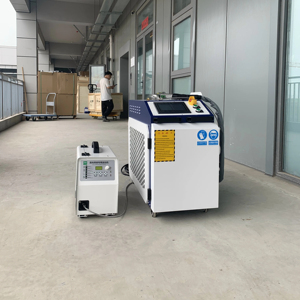
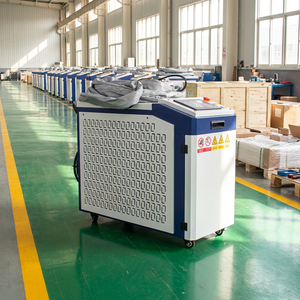
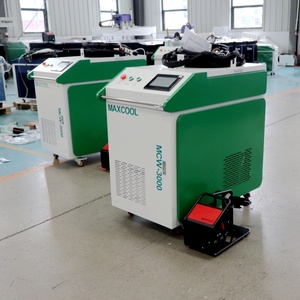
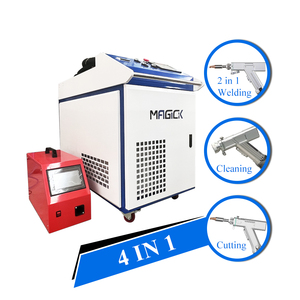
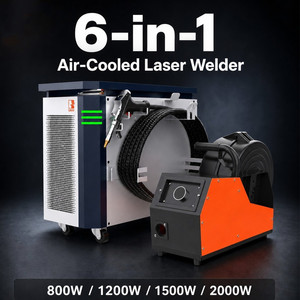
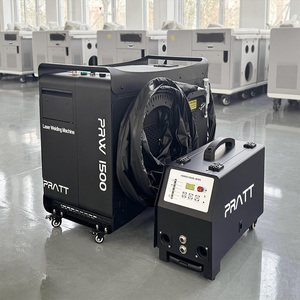
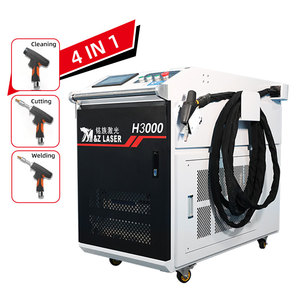
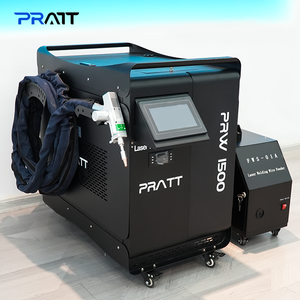
The global metal fabrication landscape is experiencing a fundamental paradigm shift. Traditional joining processes—such as Tungsten Inert Gas (TIG) and Metal Inert Gas (MIG) welding—are increasingly being replaced by high-brightness continuous-wave (CW) handheld fiber laser welding systems. Driven by requirements for higher thermal efficiency, reduced Heat-Affected Zones (HAZ), and lower operational skill thresholds, manufacturing leaders are turning to top Chinese original equipment manufacturers (OEMs) for industrial-grade laser solutions.
As a leading pioneer in advanced power sources and optoelectronic equipment manufacturing, our factory bridges the gap between high-level laser physics and practical workshop productivity. Utilizing advanced IGBT power management, optimized optical wobble heads, and integrated dual-wire feeding systems, modern fiber laser welders deliver up to 10 times the speed of conventional TIG welding while virtually eliminating post-weld grinding requirements.
Information Gain Insight: Unlike standard solid-state or CO2 lasers, 1080nm fiber laser sources yield an optical conversion efficiency exceeding 35%. This dramatic efficiency translates directly to lower shop-floor kilowatt consumption, zero consumable electrode degradation, and minimal thermal distortion across carbon steel, stainless steel, aluminum, and brass alloys.
Navigating the supplier ecosystem across key industrial clusters in China—including Wuhan (Optics Valley), Jinan, Shenzhen, and Jiangsu—requires a strategic procurement roadmap. B2B buyers, plant managers, and structural fabrication distributors must analyze total cost of ownership (TCO) rather than focusing solely on upfront hardware sticker price. Key market developments shaping future procurement include:
Next-generation 1500W to 2000W fiber laser welders are rapidly transitioning from liquid chiller units to active air-cooled refrigeration refrigerant systems. Air-cooling reduces machine weight by up to 50%, eliminates deionized water replacement cycles, and prevents ambient condensation risks in hot, humid workshop environments.
Contract manufacturing facilities no longer purchase standalone laser cleaning or cutting systems. Modern fiber laser platforms feature quick-change nozzle optics and digital control presets, enabling operators to seamlessly switch between deep-penetration welding, rust/paint surface cleaning, seam ablation, and thin-plate laser cutting within seconds.
Procurement strategies increasingly demand automation-ready handheld power units. Modern digital laser controllers come equipped with standard I/O communication ports, standard RS485/CAN bus interfaces, and external arc-on triggers for rapid integration with 6-axis collaborative robots (Cobots) or linear CNC welding carriages.
When selecting a manufacturing partner in China, tier-one factories distinguish themselves through rigorous optical calibration, dust-free cleanroom laser assembly, and full compliance with international safety standards (CE, FDA Class 4, ISO 9001:2015). Below is an operational comparison between standard OEM manufacturers and generic assembling facilities:
| Evaluation Parameter | Tier-1 China Manufacturers (e.g., Factory Direct) | Generic Trading / Small Assembly Shops |
|---|---|---|
| Laser Source Integration | Direct tier-1 strategic supply (Raycus, MAX, JPT, IPG) with optical power testing certificates | B-grade or refurbished laser sources with inconsistent beam power output |
| Optical Cleanroom Assembly | Class 10,000 dust-free optical labs for QBH fiber collimation & lens fitting | Standard open workshop assembly prone to lens contamination & burning |
| Continuous Duty Cycle | 100% full-power continuous duty cycle at 40°C ambient temperature | Derated power performance; frequent thermal cut-off under heavy loads |
| Safety Interlocks & Controls | Dual-channel safety loop, target material grounding clip lock, auto-beam shutoff | Single basic trigger bypass; higher risk of stray laser radiation exposure |
| Technical & Spares Support | Dedicated engineering line, global service networks, stocked replacement optics | Slow response times, delayed spare parts delivery, lack of direct factory assistance |
To maximize information gain for technical evaluators, it is essential to understand the engineering core of high-performance fiber laser welding equipment. Modern fiber laser systems combine high-power fiber optic transmission with precise galvanometer-driven wobble optical heads.
Traditional fixed-spot laser beam welding creates extremely narrow weld seams, requiring immaculate joint fit-up with zero gap tolerances. Modern handheld welders utilize dual-motor galvanometer wobble technology. By rotating or oscillating the focused laser beam in various patterns (circle, ellipse, line, triangle, and double-triangle), the effective beam width expands up to 5.0 mm. This capability enables fabricators to bridge wide root gaps, process uneven sheet metal joints, and achieve smooth, aesthetic fillet welds without burn-through.
For structural joins exceeding 0.5 mm gaps, integrated stepping-motor wire feeders dynamically deliver matching filler wire (stainless steel, carbon steel, or aluminum wire ranging from 0.8 mm to 1.6 mm diameter). Modern digital display control boards synchronize wire delivery speed directly with the laser pulse frequency, ensuring uniform deposition rates, eliminating spatter, and preventing wire sticking.
Selecting the appropriate wattage (1000W, 1500W, 2000W, or 3000W) determines single-pass penetration depth, linear travel speed, and material versatility. The table below outlines empirical factory processing benchmarks for industrial metals:
| Laser Source Power | Stainless Steel (SUS) Penetration | Carbon Steel (CS) Penetration | Aluminum Alloy (AL) Penetration | Brass / Copper Penetration |
|---|---|---|---|---|
| 1000 Watt CW | Up to 3.0 mm | Up to 3.0 mm | Up to 1.5 mm | Up to 1.0 mm |
| 1500 Watt CW | Up to 4.5 mm | Up to 4.0 mm | Up to 2.5 mm | Up to 2.0 mm |
| 2000 Watt CW | Up to 6.0 mm | Up to 5.5 mm | Up to 4.0 mm | Up to 3.0 mm |
| 3000 Watt CW | Up to 8.0 mm | Up to 8.0 mm | Up to 6.0 mm | Up to 5.0 mm |
Our manufacturing facility represents the pinnacle of Chinese optoelectronic and industrial power source engineering. Built upon rigorous ISO 9001:2015 quality management framework, every fiber laser welding unit undergoes strict multi-stage quality control before export dispatch.
Unlike factories relying on generic external control boards, our in-house electronic R&D team designs proprietary high-frequency IGBT inverter drive circuits and digital PLC interfaces, guaranteeing exceptional arc stability, instant response times, and superior surge voltage protection.
Before leaving the factory floor, every power source and fiber laser generator is subjected to a 72-hour continuous thermal and optical stress test in elevated ambient temperature chambers to guarantee zero early-life field failures.
We provide global distributors and direct industrial buyers with tailored OEM customization—including custom chassis color schemes, software UI localization, localized voltage adapters (110V/220V single-phase / 380V three-phase), and dedicated spare parts packages.
Designed to address key B2B buyer inquiries, technical parameters, safety requirements, and global shipping logistics:
Speak directly with our application engineers to request custom machine configurations, factory direct price lists, or technical welding test reports for your material samples.
Get a Quote