Heavy-duty automation, orbital welding power sources, CNC cutting systems, and integrated local exhaust ventilation (LEV) hardware engineered for high-duty production environments.
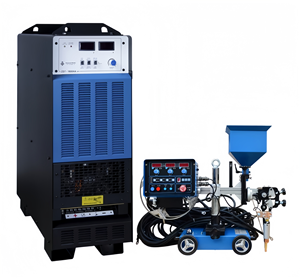
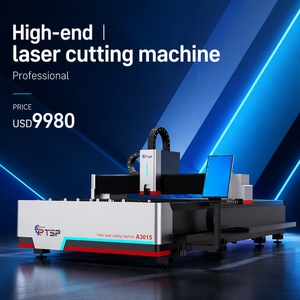
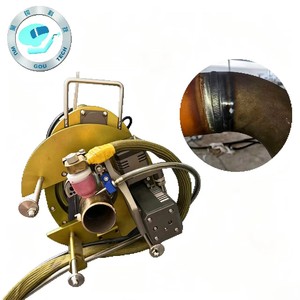
Industrial metal fabrication environments present rigorous health, safety, and operational challenges. Modern arc welding (GMAW, GTAW, SMAW, SAW), carbon arc gouging, and laser profile cutting generate sub-micron airborne particulate matter ranging from 0.01 to 1.0 micrometers ($\mu m$). These fumes contain hazardous heavy metals including Hexavalent Chromium ($Cr(VI)$), Manganese ($Mn$), Nickel ($Ni$), Lead ($Pb$), and Beryllium ($Be$). Prolonged exposure without certified Local Exhaust Ventilation (LEV) leads to occupational conditions such as siderosis, occupational asthma, metal fume fever, and severe neurological damage.
Selecting the right welding fume extractor manufacturer is no longer just a purchasing decision—it is a critical environmental health and regulatory compliance strategy. International regulatory bodies such as OSHA (USA), HSE (UK), Safe Work Australia, and the EU Directive 2004/37/EC have dramatically lowered Permissible Exposure Limits (PELs). For instance, OSHA's PEL for Hexavalent Chromium stands at $5 \, \mu g/m^3$ over an 8-hour Time-Weighted Average (TWA), requiring source-capture filtration systems with certified MERV 16 to HEPA (H13/H14) efficiency ratings.
Recognized as a pioneer in ultra-fine dust extraction and W3-certified filtration units. Kemper specializes in high-vacuum extraction arms, central extraction plants, and clean air towers for automated robotic welding bays.
A global leader in environmental technology. Nederman offers comprehensive industrial air filtration platforms integrated with IoT edge sensors (Insight platform) for real-time airflow velocity monitoring and predictive filter cartridge replacement.
Famous for Ultra-Web nanofiber cartridge filter technology. Donaldson Torit delivers heavy-duty pulse-jet dust collectors capable of managing continuous duty cycles in high-tonnage structural steel and vessel manufacturing.
Specializes in source capture arms, spatial filtration systems (Diluter systems), and automated draft tables. Highly regarded in European shipyards and vocational technical academies.
An ISO 9001:2015 engineering heavyweight combining IGBT power source development with direct-source extraction tooling, fume-extraction MIG torches, and heavy-duty automatic pulse-jet dust collection units integrated with WeldVisor IoT telemetry.
Offers Mobiflex portable extractors and Guardian centralized system integration. Seamlessly blends power source technology with automated extraction hood controls.
Known for Filtair mobile and stationary extraction series, featuring ZoneFlow technology which extends the effective capture area up to 3 feet away from the extraction hood.
Italian industrial design meets heavy engineering. Coral manufactures ATEX-certified anti-explosive fume extractors suitable for hazardous particulate environments and aluminum welding setups.
A prominent European manufacturer of portable and central exhaust systems. TEKA units comply with stringent IFA W3 certification standards for high-alloy steel fume purification.
Specializes in modular extraction arms, downdraft tables, and central filter plants equipped with pulse-cleaning membrane media for long operational lifespans.
Achieving true source capture requires exact fluid dynamics engineering. The capture velocity ($V_x$) at a distance ($x$) from an un-flanged exterior extraction hood must overcome cross-draft currents in the shop floor (typically $0.25 - 0.5 \, m/s$).
For effective hexavalent chromium and manganese containment, $V_x$ at the arc point must be maintained between 0.5 m/s to 1.0 m/s (100–200 fpm). If $x$ doubles, the required airflow $Q$ increases by nearly 400%, demonstrating why high-vacuum low-volume (HVLV) direct-on-torch extraction systems engineered by vendors like APS present significant power efficiency advantages over distant canopy hoods.
Use this executive benchmark matrix when preparing RFQs for plant-wide fume extraction upgrades.
| Manufacturer | Primary Extraction Type | Filter Efficiency Class | Airflow Capacity Range | IoT & Telemetry Integration | Best Application Fit |
|---|---|---|---|---|---|
| APS Engineering | HVLV On-Torch & Mobile Extraction | HEPA H13 / ePTFE (99.95%) | 150 – 4,500 m³/h | WeldVisor IoT Cloud platform | Heavy steel fabrication, pipelines, automated CNC welding cells |
| Kemper GmbH | Centralized & High-Vac Mobile | W3 Certified / IFA (99.9%) | 1,000 – 10,000+ m³/h | Autoclean Smart Control | Automotive production lines, robotic cells |
| Nederman | Source Capture & Ambient Towers | MERV 16 / ePTFE Nanofiber | 500 – 12,000 m³/h | Nederman Insight Edge | Shipyards, maintenance depots, aerospace repair |
| Donaldson Torit | Pulse-Jet Cartridge Collectors | Ultra-Web Nanofiber (MERV 15/16) | 1,500 – 30,000+ m³/h | Delta P Smart Controller | High-tonnage metal processing, laser plate cutting |
| Plymovent | Draft Tables & Spatial Diluter Systems | HEPA H14 Optional | 800 – 6,000 m³/h | ControlPro Touch Control | Training academies, manual GMAW workshops |
How smart technology, carbon neutrality goals, and stricter worker exposure legislation are reshaping global factory equipment procurement.
Traditional extraction arms require manual re-positioning by the operator every few minutes. As welder labor costs rise and automated seam tracking advances, buyers are shifting toward High-Vacuum Low-Volume (HVLV) fume extraction MIG torches. These systems extract fumes directly at the gas nozzle tip within 10mm of the arc pool, capturing up to 95% of particulates before they enter the welder's breathing zone.
Modern factories reject fixed-speed extraction fans running continuously at 100% power. Next-generation systems integrate pressure differential sensors and current clamps on welding power sources. When an arc strikes, the extractor automatically scales EC fan speeds via VFDs, reducing electrical energy consumption by up to 65% during idle fitting and prep periods.
Standard cellulose filter media plug quickly when exposed to oily metallic particulates from flux-cored wire or anti-spatter sprays. Procurement specifications now mandate expanded Polytetrafluoroethylene (ePTFE) surface-laminated membranes. ePTFE allows surface loading rather than depth loading, enabling reverse pulse-jet compressed air systems to clean filter cartridges with 99.9% dust release efficiency.
In cold climate manufacturing regions (North America, Northern Europe), exhausting heated shop air outside creates immense heating bills. Modern central LEV systems clean air through multi-stage HEPA and activated carbon filtration, returning purified air back to the plant floor, retaining up to 85% of thermal energy.
Unlike third-party equipment traders who merely assemble imported components, Advanced Power Sources Limited (APS Welding) designs, crafts, and load-tests the entire production arc and air management lifecycle in-house at our ISO 9001:2015 facility in Gujarat, India.
Every APS system undergoes rigorous high-voltage insulation tests, static pressure curve benchmarking, and laser particle count validation before export packaging.
Answers to critical technical questions asked by plant managers, safety directors, and global procurement officers.
Hexavalent Chromium particulates are extremely fine, often under 0.4 microns ($\mu m$). To comply with OSHA's PEL ($5 \, \mu g/m^3$), filtration systems must utilize a minimum of MERV 16 cartridge filters or HEPA H13/H14 secondary final filters certified to capture 99.95% to 99.97% of particles down to 0.3 microns. Using standard MERV 8 to 11 HVAC filters is non-compliant and dangerous.
Airflow requirements depend on the capture method. For flexible extraction arms (160mm diameter), calculate 700 to 1,000 m³/h (400–600 CFM) per arm. For On-Torch extraction, calculate 150 to 250 m³/h (90–150 CFM) per torch at high vacuum static pressure (15–25 kPa). For downdraft grinding/welding tables, calculate 2,000 to 3,500 m³/h per linear meter of table surface.
LVHV systems (Extraction Arms & Canopy Hoods) move large volumes of air (800–1500 m³/h) at low static pressures (1–2 kPa). They capture fumes from 300–500mm away from the arc. HVLV systems (On-Torch & Small Nozzles) use high vacuum pressure (15–30 kPa) to move smaller air volumes (150–250 m³/h) directly at the torch tip, drastically reducing total heating/cooling energy loss in the facility.
Yes. In continuous multi-shift production, static filter cartridges quickly blind with fine metallic dust, causing airflow velocity to drop below safety thresholds. Reverse pulse-jet systems blast dry compressed air (5–7 bar) through the inside of the filter cartridge while running, dislodging accumulated dust into a collection hopper without stopping operations.
ISO 21904 (Parts 1–4) replaced older EN 1093 standards. It defines mandatory international requirements for capture efficiency testing, minimum air velocities for extraction devices, and equipment labeling. Choosing ISO 21904 compliant hardware ensures audit compliance across EU, US, and Asian industrial jurisdictions.
Air recirculation is permitted under OSHA and European regulations ONLY if the extraction unit is certified to W3 standards (for high-alloy/stainless steel containing chromium/nickel) and incorporates a tested HEPA final stage. In some jurisdictions (e.g., Germany for carcinogenic fumes), strict heat exchanger recirculation regulations apply.
You should provide: (1) Welding processes used (GMAW, FCAW, TIG, Gouging), (2) Base materials (Mild steel, Stainless, Aluminum), (3) Number of simultaneous welding stations, (4) Plant layout / ducting distance, and (5) Local site electrical input (Voltage, Hz, 3-Phase configuration).
Speak directly with our senior application engineers to review joint drawings, workplace air velocity targets, and local regulatory requirements.
Contact Us