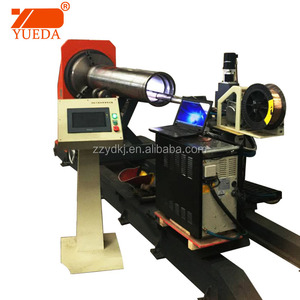
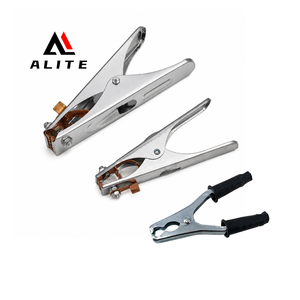
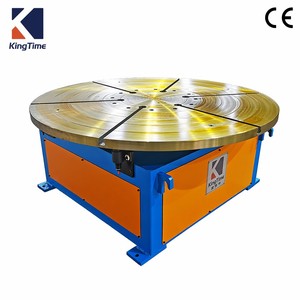
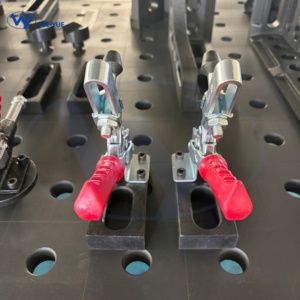
Explore heavy-duty power sources, automated rotators, positioning equipment, and precision torches engineered for demanding fabrication requirements.
Ultrasonic Metal Welding (UMW) represents a paradigm shift in non-ferrous metal joining technology. Unlike conventional fusion welding methods—such as Resistance Spot Welding (RSW), TIG, or Laser Welding—ultrasonic joining operates as a true solid-state bonding process. By converting high-frequency electrical energy into localized mechanical oscillations (typically between 20 kHz and 40 kHz), the process introduces rapid shear stress at the contact interface of the metallic workpieces.
Because the process remains well below the melting temperature of the target materials (typically operating at 30% to 50% of the absolute melting point in Kelvin), thermal degradation, embrittlement, and intermetallic compound formation are virtually eliminated. This makes ultrasonic metal welders indispensable for highly conductive materials like high-purity copper (C10100/C11000) and aluminum alloys (1xxx, 3xxx, and 6xxx series).
High-efficiency ceramic PZT transducers convert electrical signals from digital generators into micro-inch mechanical amplitude. Precision-tuned boosters amplify or attenuate displacement before transmission to the sonotrode.
Custom-machined tool steel or M42 high-speed steel horns feature knurled surface patterns that grip the top metal sheet while acoustic energy is coupled horizontally parallel to the interface.
Next-generation digital generators feature dynamic automatic frequency tuning (DPT) to compensate for acoustic horn thermal expansion, load variations, and acoustic mass changes during millisecond weld cycles.
Selecting an OEM supplier for industrial ultrasonic metal welding equipment requires evaluating technical capability, acoustic horn longevity, digital power regulation, and global after-sales integration support. Below is an authoritative technical synthesis of the industry's leading global manufacturers and export powerhouses.
| Manufacturer / Brand | Primary HQ | Core Frequency Range | Max Power Output | Key Strengths & Specialty | Global Export Markets |
|---|---|---|---|---|---|
| Branson (Emerson Automation) | USA / Global | 20 kHz, 30 kHz, 40 kHz | Up to 5,500 W | EV Lithium-Ion tab joining, GMX micro-welders, global service network. | Worldwide (Americas, EU, APAC) |
| Herrmann Ultraschall | Germany | 20 kHz, 35 kHz | Up to 6,000 W | HiS VARIO metal welding series, ultra-precise digital stroke control. | Europe, North America, Asia |
| Telsonic Ultrasonics | Switzerland | 20 kHz, 35 kHz (Torsional) | Up to 10,000 W | Patented SONIQTWIST torsional welding for heavy gauge tabs & busbars. | Global Automotive & Battery hubs |
| Schunk Sonosystems | Germany | 20 kHz, 35 kHz | Up to 4,000 W | Automotive wire harness splicing (Minicontrol), high-volume automated lines. | EU, North America, China |
| APS Welding (Advanced Power Sources) | India | Multi-process / Automation | Industrial Inverters | ISO 9001:2015 certified heavy fabrication, IGBT inverter R&D, complete automated turnkey systems. | Middle East, Africa, Asia, Europe |
| Sonics & Materials Inc. | USA | 20 kHz, 40 kHz | Up to 3,500 W | Microprocessor-controlled metal welders, medical device hermetic sealing. | Americas, Europe, Asia-Pacific |
| Techsonics Ultrasonic Technology | China | 20 kHz, 35 kHz | Up to 5,000 W | High-speed copper/aluminum foil tab welding, competitive export OEM pricing. | Southeast Asia, EU, South America |
| Dukane Corporation | USA | 15 kHz, 20 kHz, 40 kHz | Up to 4,800 W | iQ Servo driven acoustic press systems, real-time statistical process control. | Global Medical & Electronics |
| Crest Ultrasonics | USA | 20 kHz, 40 kHz | Up to 3,000 W | Precision spot welders and specialized acoustic transducers for cleanroom assembly. | North America, Asia, EU |
| Rinco Ultrasonics | Switzerland | 20 kHz, 35 kHz, 70 kHz | Up to 3,000 W | Ultra-compact actuators, micro-metal joint precision, Swiss engineering tolerances. | Europe, APAC, Americas |
Procurement engineers and plant directors search for ultrasonic metal welding technology to overcome distinct metallurgical limitations associated with high electrical conductivity, thermal shock sensitivity, and dissimilar metal joining. Below are the key sector applications driving global procurement demand:
Lithium-ion pouch cell tab-to-tab, pouch cell-to-busbar, and cylindrical cell ribbon joining require bonding up to 100 layers of ultra-thin copper and aluminum foils (6μm to 12μm thickness). Ultrasonic metal welding achieves near-zero electrical resistance across multi-layer stacks without thermal damage to sensitive electrolyte separators.
Splicing stranded copper wire bundles ranging from 0.26 mm² up to 85 mm² cross-sectional area. Solid-state consolidation ensures maximum electrical conductivity, eliminates crimp terminal resistance, and provides superior mechanical pull-out strength in high-vibration automotive chassis environments.
Simultaneous flattening, solid-state welding, and automated cutoff of copper and aluminum capillary tubes used in HVAC systems, thermal heat pipes, and medical sensors. Creates a 100% gas-tight hermetic seal in a single cycle lasting under 0.8 seconds.
Direct Bonded Copper (DBC) substrate joining, lead frame attachments, and heavy aluminum wire bonding for high-power IGBT inverter modules. The cold welding characteristic prevents thermal expansion stress on sensitive silicon dies.
As smart manufacturing and Industry 4.0 principles rewrite shop floor expectations, the ultrasonic metal welding market is undergoing rapid technological evolution. Global exporters and engineering teams must evaluate modern equipment against the following emerging trends:
Next-generation digital generators incorporate high-speed digital signal processors (DSP) that analyze acoustic impedance, amplitude attenuation, and dynamic power curves in microsecond increments. Machine learning models flag defective welds (such as missing foil layers or oxidized wire strands) instantly during cycle execution.
Traditional linear ultrasonic welders apply vibration parallel to the work surface. Torsional welding applies rotational high-frequency shear force, allowing deeper penetration on thick busbars (>4mm) while exerting 70% less stress on surrounding fragile structures, such as ceramic substrates or delicate pouch seals.
Integration of cloud monitoring interfaces—such as WeldVisor IoT architecture—enables enterprise-level traceability. Global operations managers can track arc-on time, peak power consumption, sonotrode wear cycles, and CPK statistical process indicators remotely from anywhere in the world.
Building reliable welding systems requires total control over design engineering, printed circuit assembly, power electronics, and structural automation. Engineered in-house at our advanced Valsad, Gujarat manufacturing complex, our solutions deliver certified performance for critical global fabrication projects.
Our dedicated team of application engineers assists buyers with process selection, custom sonotrode geometry design, parameter optimization, and comprehensive load testing before dispatch. Whether implementing automated production cells or upgrading heavy fabrication power sources, our direct-from-factory model guarantees uncompromised quality and complete technical accountability.
Clear, technical answers to common buyer inquiries regarding ultrasonic metal welding specifications, tooling life, and process integration.
Contact our engineering team today for technical consultation, material test sampling, and comprehensive equipment catalogs.