
Precision-engineered power sources, high-duty torches, and automated hardfacing systems engineered for heavy fabrication and continuous line operation.
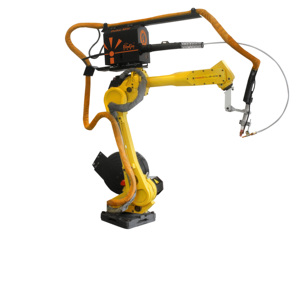
As industrial global supply chains shift toward autonomous, high-throughput manufacturing, selecting a top-tier robotic welding cell factory requires evaluating more than mechanical arm repeatability. It demands an end-to-end analysis of power source arc physics, digital communication bus latencies, and adaptive vision seam tracking integrations.
Modern robotic cells demand power supplies capable of microsecond pulse adjustments. High-frequency IGBT inverter topologies ensure minimal spatter, ultra-low heat input on thin-gauge metals, and flawless penetration control during high-speed rotational or linear arm movements.
Top robotic welding cell suppliers integrate real-time optical triangulation sensors. By scanning the weld joint milliseconds ahead of the wire arc, the system dynamically recalculates robot trajectories and weaving parameters to compensate for thermal distortion and gap variations.
Direct comparative engineering parameters across standardized industrial cell setups for decision-makers.
| Evaluation Parameter | Standard Entry-Level Cell | High-Precision Production Cell | APS Engineered Automation Cell |
|---|---|---|---|
| Inverter Arc Control | Analog / SCR Transformer | Standard High-Frequency IGBT | DSP-Controlled Digital Micro-Pulse IGBT |
| Seam Tracking Capability | Tactile Touch Sensing | 1D Arc Voltage Sensing (AVC) | Real-Time 3D Laser Triangulation Vision |
| Duty Cycle Rating (40°C Ambient) | 60% @ Max Amperage | 80% @ Max Amperage | 100% Continuous Duty (IEC 60974-1 Compliant) |
| Data Communication Protocol | Hardwired Discrete I/O | Standard Fieldbus / DeviceNet | Profinet / EtherCAT & WeldVisor™ IoT Cloud |
| Multi-Process Adaptability | Single Process (GMAW only) | Dual Process (MIG/MAG + TIG) | 5-in-1 (SAW, MIG, TIG, Gouging, Overlay Cladding) |
How next-generation factories are reshaping automated metal joining through smart sensors, hybrid energy beams, and AI arc diagnostics.
Integrating acoustic sensor arrays with deep learning models allows automated systems to analyze acoustic emission frequencies mid-weld, detecting keyhole instability or gas porosity in under 5 milliseconds.
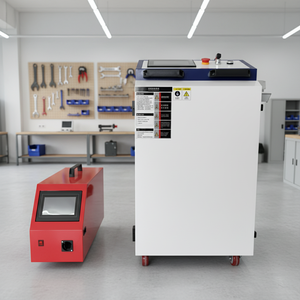
Combining deep-penetration fiber lasers with high-deposition MIG wire feeds increases welding speed up to 400% while reducing thermal distortion, ideal for thick-plate shipbuilding and pressure vessel fabrication.
High-Mix Low-Volume (HMLV) fabricators are pivoting from rigid industrial cells to fast-teach Collaborative Robots (Cobots), reducing fixture changeover times from hours to under ten minutes.
Enterprise systems automatically capture amperage curves, wire feed rates, and gas flow rates per linear millimeter, creating digital twin certificates required by nuclear and aerospace regulators.
Why Tier-1 industrial buyers are transitioning from buying isolated components to procuring turnkey automated workstations directly from vertically integrated OEMs.
Sourcing power sources, robotic manipulators, positioners, and torch clean-up stations from separate vendors creates integration gaps. Purchasing complete turnkey cells ensures unified PLC handshakes and single-point warranty service.
Legacy transformer-based welding cells waste up to 40% of grid energy as ambient heat. Transitioning to advanced IGBT inverter power supplies reduces electrical draw by up to 35%, delivering substantial operating cost savings.
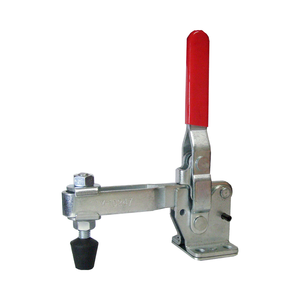
Leading factories choose cell suppliers that utilize open-standard consumables (Euro-connect torches, universal drive rolls, standardized toggle clamps like GTY-10247) to eliminate proprietary lock-in risks.
For over two decades, APS Welding has engineered, manufactured, and serviced the complete industrial welding chain in-house from our Gujarat manufacturing hub.
Every IGBT power PCB, robotic interfacing card, and structural gantry frame is built, assembled, and load-tested under rigorous ISO quality systems.
We do not rebrand third-party circuit boards. Our in-house electronics engineering team develops proprietary inverter topologies optimized for continuous industrial duty cycles.
From heavy-duty multi-operator power sources to high-capacity rotators, 2-axis positioners, and CNC gantry plasma cutters, we deliver fully integrated workstations.
Our experienced application specialists analyze your joint geometries, metal metallurgy, and duty requirements to deliver tailored equipment packages.
Technical, operational, and logistics answers for international procurement managers evaluating robotic welding equipment.
Matching power capacity requires assessing joint thickness, wire diameter, deposition rate requirements, and continuous operational duty cycles. For heavy fabrication (plate thickness > 12mm), a 500A to 1250A CC-CV multiprocess power source operating at 100% duty cycle (under IEC 60974-1 standards at 40°C) prevents thermal cut-offs and maintains arc stability during long continuous robotic passes.
Global industrial sites operate on varied 3-phase supply voltages (e.g., 380V, 415V, 440V, or 480V at 50/60 Hz). Advanced IGBT inverter machines feature built-in primary line voltage compensation (+/- 15% tolerance) to ensure stable arc output even during severe grid fluctuations or when powered by jobsite diesel generators.
Duty cycle defines the percentage of a 10-minute period a power source or welding torch can operate at its maximum rated current without overheating. In robotic cells, where arc-on times often exceed 80%, specifying equipment rated to IEC 60974-1 standards ensures components withstand high ambient temperatures (40°C) without thermal breakdown.
Yes. Our industrial power sources and digital wire feeders feature open communication interfaces (supporting DeviceNet, Profinet, EtherCAT, and analog I/O cards). This allows seamless handshake integration with major 6-axis industrial robot controllers for precise current pulsing, arc-start signals, and error monitoring.
APS maintains a comprehensive inventory of replacement circuit boards, drive roll kits, water-cooled torches, and wear parts. Overseas buyers receive dedicated online technical support, wiring schematics, video commissioning guidance, and options for on-site commissioning by field service engineers.
WeldVisor™ IoT integration tracks real-time arc-on hours, operational electrical draw, wire usage, and instantaneous voltage/current curves. Factory managers receive automated alerts for maintenance intervals, detect operator technique deviations, and generate digital quality records required for ISO and ASME audits.
Speak directly with our senior automation application engineers. Send us your workpiece drawings, joint specifications, and production target rates for a detailed technical proposal and factory direct quote.
Get a Quote