Explore high-precision fiber laser cladding setups, automatic wire-feed systems, orbital solutions, and positioners built for continuous heavy fabrication environments.
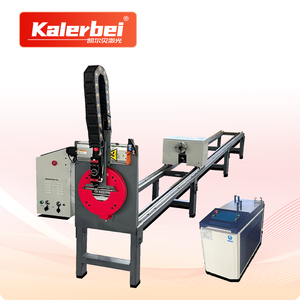
A comprehensive analysis of laser deposition technology, metallurgical bonding parameters, and supplier evaluation criteria for B2B procurement managers.
Laser cladding (also known as Laser Metal Deposition - LMD or Direct Energy Deposition - DED) has transitioned from a niche remanufacturing technique to a mainstream, high-volume production methodology in severe-wear industries. Global engineering OEMs, oil & gas valve manufacturers, mining gear fabricators, and aerospace suppliers are increasingly phasing out traditional thermal spraying, hard chrome plating, and submerged arc hardfacing in favor of High-Speed Laser Cladding (HSLC / EHLA).
Driven by tightening global environmental regulations against hexavalent chromium (RoHS/REACH compliance) and the imperative for prolonged component operational lifespans, laser cladding delivers a unique combination: an extremely small Heat-Affected Zone (HAZ), negligible thermal distortion, a dense microcrystalline deposit structure, and a true metallurgical bond with dilution rates below 1%.
Unlike thermal spraying which relies primarily on mechanical interlocking, laser cladding melts both the substrate surface and the alloy feed material (powder or wire) simultaneously using a high-power laser beam. This produces zero porosity, zero micro-cracks under optimal parameters, and bond strengths exceeding 400 MPa, drastically reducing lifetime total cost of ownership (TCO).
An objective, technical benchmark of the leading global manufacturers based on optical integration, robotic motion control, power stability, and custom system engineering capability.
Core Focus: Ultra-precise TruLaser Cell series combining fiber optics with multi-axis gantry and robotic processing heads.
Strengths: Industry benchmark for high-speed laser deposition (EHLA), proprietary disk lasers, real-time depth monitoring, and closed-loop pyrometer control systems ideal for aerospace and turbine blade repairs.
Core Focus: Turnkey laser cladding stations integrated with advanced alloy powder feed technologies.
Strengths: Complete vertical integration from diode laser sources to custom carbide/stellite powder chemistry, backed by global application engineering centers.
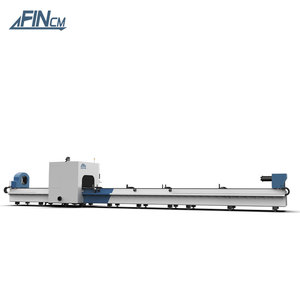
Core Focus: Heavy-duty industrial fiber laser cladding systems, multi-process CC-CV units, and automated pipe/beam processing cells.
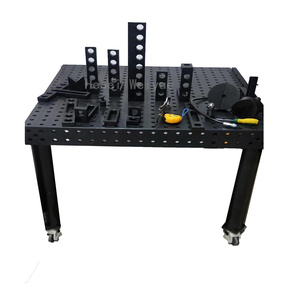
Strengths: ISO 9001:2015 certified in-house R&D, over 22,600 global machine installations, modular 3D clamping positioners, direct engineering support, and superior cost-to-performance ratio for heavy industrial fabricators.
Core Focus: High-power direct diode lasers specifically tailored for broad-beam surface cladding and hardening applications.
Strengths: Ultra-high electrical efficiency (>45%), highly uniform rectangular intensity profiles for rapid wide-track cladding on hydraulic shafts.
Core Focus: High-power fiber laser generators and integrated multi-axis laser deposition workstations.
Strengths: Unmatched fiber source reliability, high wall-plug efficiency, and wide range of kW-class fiber lasers operating at 1070nm wavelength.
Core Focus: Large-scale gantry and 6-axis robotic laser cladding units for mining machinery, rollers, and steel plant equipment.
Strengths: Extensive automated cell customization, integrated powder recovery units, and multi-kW fiber optical heads built for continuous mass production.
Core Focus: 3D multi-axis precision laser deposition systems tailored for aerospace turbine engines and power generation components.
Strengths: Advanced optical focus tracking, multi-powder hopper switching, and sophisticated CAM software interface for complex free-form geometries.
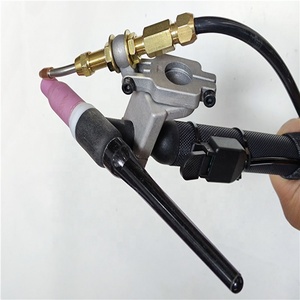
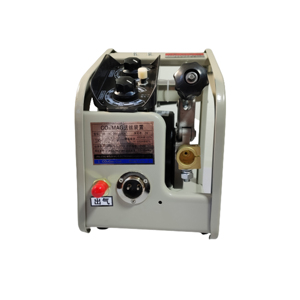
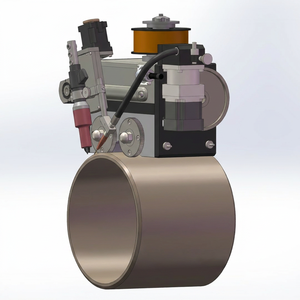
Core Focus: Portable orbital wire feeders and specialized internal pipe wall laser cladding automation systems.
Strengths: Wireless remote pendant controls, compact internal-diameter cladding heads capable of processing narrow bore pipes down to 50mm ID.
Core Focus: High-precision micro-cladding optical modules integrated into flexible sheet metal and tooling automation cells.
Strengths: Renowned Japanese manufacturing rigor, clean beam profiles, and high automation repeatability for fine tool & die mold repair.
Core Focus: Standardized and custom automated laser cladding rigs for marine shafting, hydraulic cylinders, and mud rotors.
Strengths: Comprehensive turnkey project delivery, dedicated internal wire/powder nozzle technology, and compliant CE safety enclosure designs.
Evaluating standard laser deposition modalities across performance, material efficiency, thermal input, and initial capital expenditure (CAPEX).
| Cladding Technology | Laser Source Type | Deposition Rate | Dilution Rate (%) | HAZ Impact | Powder Utilization | Primary Industrial Use Case |
|---|---|---|---|---|---|---|
| High-Speed Laser Cladding (HSLC / EHLA) | Fiber / Direct Diode (3KW - 12KW) | Up to 500 m/min | < 0.5% | Microscopic (< 0.05mm) | > 90% | Hydraulic rams, brake discs, thin-walled cylinders |
| Standard Coaxial Powder Cladding | Fiber Laser (1KW - 6KW) | 1.5 - 5.0 kg/hr | 0.5% - 2.0% | Low (0.1mm - 0.3mm) | 75% - 85% | Mining equipment, valve seats, heavy gear teeth |
| Hot Wire Laser Deposition (HW-LMD) | Fiber Laser + Pre-heated Wire | 2.0 - 8.0 kg/hr | 1.0% - 3.0% | Moderate (0.2mm - 0.5mm) | ~ 98% (Zero waste) | Large vessel cladding, offshore pipe spooling |
| Internal Diameter (ID) Laser Cladding | Fiber Laser + Special Optics Head | 1.0 - 3.0 kg/hr | < 1.5% | Low | 80% - 90% | Pump housings, valve bores, oilfield drill tubes |
Key technological shifts every capital equipment buyer and manufacturing executive must factor into long-term procurement decisions.
Traditional near-infrared fiber lasers (1070nm) suffer from high reflectivity when cladding pure copper, aluminum, or gold alloys. The integration of Blue (450nm) and Green (515nm) high-power diode/fiber laser sources dramatically increases energy absorption by up to 800%, allowing spatter-free, highly dense cladding layers on non-ferrous substrates.
Modern enterprise laser cladding systems now incorporate real-time melt-pool monitoring via co-axial pyrometers and high-speed CMOS cameras. Connected to AI feedback loops, the CNC controller dynamically adjusts laser power, feed speed, and powder flow rates in real-time to maintain constant melt-pool temperature, preventing heat accumulation and guaranteeing structural grain consistency.
With environmental bans on hard chrome plating expanding worldwide, High-Speed Laser Cladding (EHLA) has emerged as the definitive replacement. By melting powder particles *above* the melt pool inside the focused laser beam rather than inside the pool itself, travel speeds jump from 2 m/min to over 100-500 m/min, enabling sub-100-micron corrosion barrier coatings at unmatched speeds.
Advanced equipment suppliers now embed IoT telemetry modules (such as WeldVisor IoT) inside laser power sources and chiller units. Machine operators can track arc-on/laser-on duty cycles, gas consumption, powder hopper levels, and optical lens contamination remotely, ensuring 99.5% uptime in 24/7 automated production bays.
Combining over 20 years of in-house manufacturing heritage, certified ISO 9001:2015 quality control, and turn-key robotic integration.
We do not merely assemble bought-in components. Our engineering team designs and manufactures the core control architecture, inverter topology, power source boards, and optical processing setups in-house, ensuring root-level troubleshooting and custom firmware adaptability.
With more than two decades of industrial equipment deployment across 40+ countries, our machines are field-proven under extreme ambient conditions—from continuous high-duty-cycle shipyard environments to remote desert pipeline projects.
From 6-axis articulated robots and heavy-duty 3D positioners to multi-hopper powder feeders and cold/hot wire feeder systems, we deliver complete single-vendor automation cells backed by unified technical accountability.
Direct answers to common technical, financial, and operational questions asked by procurement officers and plant directors.
While the initial capital expenditure (CAPEX) for a laser cladding machine is higher than thermal spray or manual hardfacing, laser cladding reduces operational expenditure (OPEX) by 40%-60%. This is achieved through minimal post-cladding machining requirements (due to thin, precise deposit layers), lower consumable usage, zero delamination failures, and extended component operating lifespans.
Buyers should specify: (1) Laser power and wavelength (e.g., 3KW-12KW Fiber/Diode), (2) Workpiece size, weight, and multi-axis movement requirements, (3) Delivery method (coaxial powder feeder vs hot/cold wire feeder), (4) Site electrical power stability (voltage, phase, 50/60Hz), and (5) Duty cycle rating under IEC 60974-1 standards (measured at 40°C ambient temperature).
Yes. By equipping the system with specialized Internal Diameter (ID) optical heads (using compact 90-degree reflective optics and co-axial nozzles), our systems can deposit wear- and corrosion-resistant alloys inside bores as small as 50mm ID at depths exceeding 1.5 to 3 meters.
Our machines process a wide spectrum of metallurgical powders and solid/flux-cored wires, including Nickel-based superalloys (Inconel 625, Inconel 718), Cobalt-based alloys (Stellite 6, Stellite 12), Stainless Steels (316L, 410, 17-4PH), and Tungsten Carbide matrix composites (NiCrBSi + WC) for severe abrasion resistance.
We provide comprehensive global support, including pre-dispatch Factory Acceptance Testing (FAT), on-site installation and commissioning by trained application engineers, full operational manuals, remote cloud diagnostics via IoT monitoring, and stocked spare parts kits ready for immediate dispatch.
Speak directly with our laser cladding application engineers to analyze your part drawings, material requirements, and production line automation goals.
Get Catalog