High-capacity extrusion blow moulding units, composite filament winding technology, rotomolding systems, and automated cage framing machinery engineered for global OEM/ODM deployment.
An authoritative analysis of polymer processing, composite filament winding, and structural steel container automation for industrial buyers, plant managers, and procurement officers.
Modern industrial tank fabrication has evolved beyond basic single-layer rotational moulding into highly sophisticated, multi-material engineering discipline. Industrial storage containers—ranging from 1,000-liter Intermediate Bulk Containers (IBCs) and multi-layer chemical storage tanks to 10,000-liter composite Fiberglass Reinforced Plastic (FRP) pressure vessels—demand uncompromising structural integrity, chemical resistance, and wall-thickness precision. As global manufacturing standards escalate toward Industry 4.0 automation, sourcing the correct machinery line requires a deep understanding of process kinetics, servo-hydraulic dynamics, and polymer parison control.
Whether your facility manufactures municipal water storage units, hazardous chemical transportation vessels, or agricultural liquid storage systems, selecting between Extrusion Blow Moulding (EBM), Composite Filament Winding, or Shuttle Rotomolding hinges on strict economic and physical criteria: annual volumetric output, target hoop stress resistance, container footprint, and capital expenditure amortization curves.
Built upon over two decades of in-house research, circuit design, control board engineering, and mechanical assembly, we deliver heavy-duty industrial machinery engineered for zero-unscheduled-downtime operation.
Unlike machinery assembly traders who outsource core controls, our factory designs proprietary inverter drives and PLC algorithms in-house. This guarantees rapid troubleshooting, customized cycle programming, and long-term spare component availability.
Every piece of machinery undergoes stringent full-load dry running, hydraulic pressure verification, and electrical thermal imaging before export dispatch. Compliance with IEC 60974-1 and global safety directives guarantees seamless on-site commissioning.
From foundation layout planning to mold commissioning and operator safety training, our field engineering team provides complete overseas installation support. Dedicated technical lines ensure uninterrupted plant operations.
Understanding the engineering principles powering high-efficiency tank manufacturing lines.
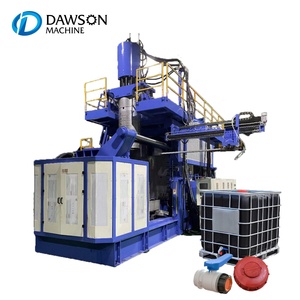
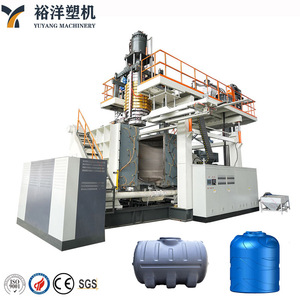
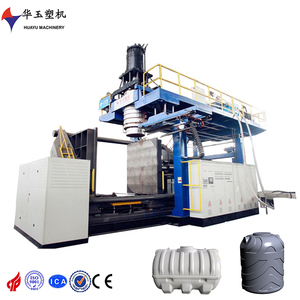
Extrusion blow moulding represents the gold standard for high-speed, mass-production polymer container manufacturing. Designed for high-density polyethylene (HDPE), these systems utilize accumulator die heads to extrude massive plastic parisons weighing up to 120 kg within seconds. Featuring 100-to-512-point axial parison controllers, our machines continuously adjust melt thickness during extrusion, ensuring that corners and bottom pinch-off zones retain necessary material thickness without wasting polymer on flat sidewalls.
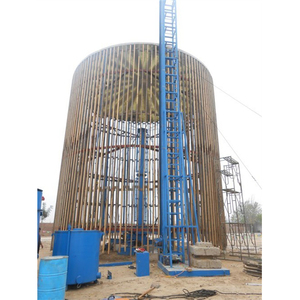
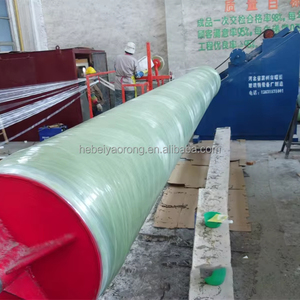
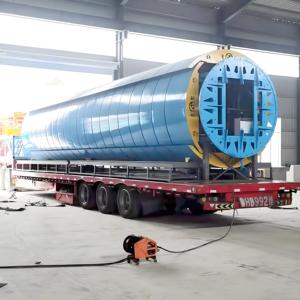
For high-pressure chemical storage, oilfield fluid handling, and underground wastewater systems, Fiberglass Reinforced Plastic (FRP) vessel winding lines offer unmatched strength-to-weight ratios. Utilizing computerized multi-axis CNC winding heads, glass fiber rovings saturated with resin are precisely laid onto rotating mandrels at calculated helical and hoop angles (typically 45° to 85°). This automated process optimizes directional tensile strength, enabling tanks to withstand working pressures up to 16 bar and resisting corrosive acids that would destroy conventional metals.
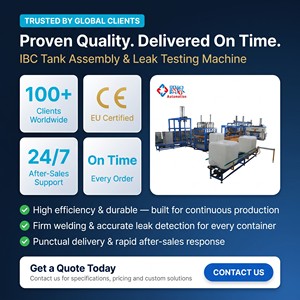
A complete 1000L IBC production facility requires not only the inner plastic liner machine but also automated steel cage fabrication machinery. Our heavy-duty hydraulic frame welding lines combine mesh shearing, cross-wire resistance welding, square pipe bending, and automated clinching units into a continuous assembly line powered by 380V/10kW hydraulic power packs, yielding a fully structured steel outer basket every 45 to 60 seconds.
Compare production parameters across processing technologies to select the ideal machinery configuration for your target vessel specifications.
| Technology Category | Target Volume Range | Primary Raw Materials | Typical Cycle Time | Wall Thickness Control | Capital Investment |
|---|---|---|---|---|---|
| Extrusion Blow Moulding | 100L – 3,000L | HDPE / HMWHDPE / EVOH | 2.5 – 5.0 mins / unit | 100-512 Point Servo Parison | High (Ideal for mass scale) |
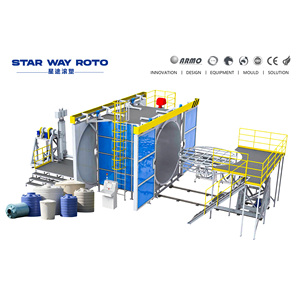
| Shuttle Rotomolding | 500L – 20,000L | LLDPE / Cross-linked PE | 25.0 – 45.0 mins / mold | Thermal & Rotation Speed | Moderate (Flexible molds) |
| CNC FRP Filament Winding | 1,000L – 100,000L+ | Glass Roving + Epoxy/Vinyl Resin | Continuous / Custom CNC | Fiber Strand Tension Control | Moderate - High |
| IBC Steel Frame Line | Standard 1000L / 1200L Grid | Galvanized Tubular Steel | < 60 secs / frame | Hydraulic Punch/Weld Tol. | Moderate (Specialized automation) |
Key technological transformations shaping the next decade of industrial container manufacturing.
As sustainability regulations tighten and energy costs remain volatile, global procurement directors must evaluate future-proofing factors before committing capital to long-term equipment purchases:
Essential engineering parameters to verify before issuing RFQs for custom OEM/ODM tank fabrication lines.
Confirm local industrial power supply: voltage (e.g., 380V, 415V, 480V), phase count (3-Phase), and frequency (50Hz vs 60Hz). Equipment built for 50Hz networks requires electrical transformer and inverter sizing adjustments when installed in 60Hz environments.
High Molecular Weight HDPE (HMWHDPE) used in 1000L blow moulding requires specific screw L/D ratios (typically 30:1) and high-torque gearbox drives due to low melt flow index values (<0.05 g/10min).
Cycle times are limited primarily by heat extraction rates. Ensure your auxiliary layout includes adequate industrial water chiller refrigeration capacity (kcal/hr) and high-flow mold cooling channels.
Direct insights from our engineering and export departments to assist your procurement decisions.
Consult with our Senior Application Engineers today for customized OEM/ODM equipment configurations, mold designs, complete turnkey factory layouts, and competitive factory-direct quotations.
Send an Inquiry