Precision Cold Cutting, Split-Frame Clamping, Hydraulic Double-Head & Fiber Laser Beveling Systems
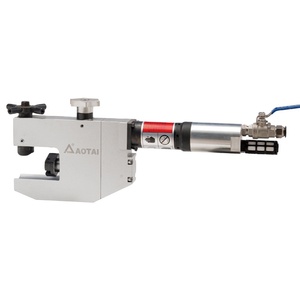
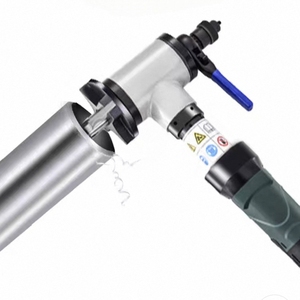
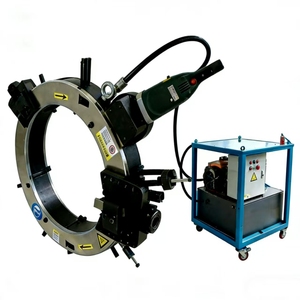
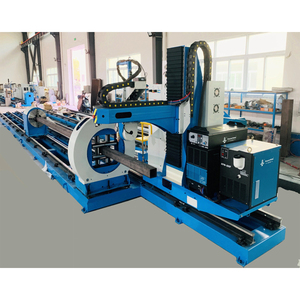
Modern high-pressure piping networks—spanning nuclear power plants, ultra-supercritical thermal stations, offshore FPSO units, and cross-country hydrocarbon transmission pipelines—require absolute structural integrity at every welded joint. As an established OEM/ODM Pipe Beveling Machine Supplier and Exporter, our engineering directive is simple: eliminate thermal damage and deliver perfect joint geometries that guarantee 100% volumetric non-destructive testing (NDT) compliance.
Traditional edge preparation using manual flame cutting or angle grinding introduces critical flaws into high-strength low-alloy (HSLA) steels, duplex stainless steels, and nickel alloys. Thermal cutting generates a compromised Heat-Affected Zone (HAZ), micro-cracking, and oxide inclusion layers that severely weaken subsequent root-pass welds performed by automated orbital TIG, MIG, or Submerged Arc Welding (SAW) equipment. In contrast, mechanical cold pipe cutting and beveling technology preserves the original grain structure of the pipe material, producing clean, burr-free bevel geometries without micro-structural distortion.
Technical Information Gain Insight: Mechanical cold beveling eliminates thermal HAZ cracking, guarantees strict root face (land) thickness tolerances down to ±0.05 mm, and optimizes weld deposit volume. This reduces filler wire consumption by up to 35% on heavy-wall pipe configurations (wall thickness >25 mm).
Depending on the pipe wall thickness, material grade, and joining specification (ASME B31.3, ASME Section VIII, API 1104), our custom pipe beveling systems execute precise profile geometries:
Building upon over two decades of in-house design, thermal engineering, and mechanical manufacturing, our factory operates an integrated ISO 9001:2015 certified production system. From initial finite element analysis (FEA) of gear train stress to micro-controller drive electronics development, we maintain 100% control over the component chain. Unlike trading intermediaries, our OEM/ODM custom division offers total flexibility in power source drives (Pneumatic, Hydraulic, Servo Electric), frame geometry, clamping jaw metallurgy, and smart IoT control modules.
Proprietary gearbox design, high-torque gear tooth hardening, and drive electronics engineered internally by expert mechanical and welding engineers.
Full load continuous torque testing, thermal stability checks, and laser coordinate measuring machine (CMM) verification on all core cutter heads.
Non-contaminating stainless steel and titanium clamping shoes designed specifically for high-purity pharmaceutical, nuclear, and offshore pipelines.
Built for continuous 24/7 fabrication workshop duty cycles, backed by robust over-current, thermal, and voltage spike electrical protection circuits.
Complete custom branding, customized input power voltages (110V-480V, 50/60Hz), tailored paint colors, and specialized field casing solutions.
Smart monitoring systems that log cutting hours, feed speeds, cutter wear indicators, and predictive maintenance schedules for Industry 4.0 workshops.
Choosing the correct pipe beveling equipment depends on structural pipe dimensions, wall thickness, site accessibility, power availability, and throughput requirements. Below is an engineering comparison matrix designed to guide procurement teams and plant engineers in specifying the right machine architecture.
| Machining Technology | Diameter Range | Wall Thickness | Drive Systems | Primary Industrial Applications | Key Operational Advantage |
|---|---|---|---|---|---|
| ID-Mounted Pipe Bevelers | 25 mm – 840 mm (1" to 33") | Up to 45 mm | Pneumatic / Electric / Hydraulic | Boiler tube maintenance, heat exchangers, power plant shutdown operations | Internal self-centering mandrel ensures perfect concentricity relative to pipe ID |
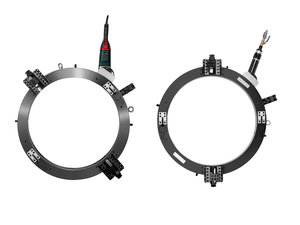
| OD-Mounted Split-Frame Cutters | 50 mm – 1220 mm (2" to 48") | Up to 100 mm (Heavy Wall) | Hydraulic / Servo / Pneumatic | Subsea pipeline tie-ins, nuclear decommissioning, petrochemical turnarounds | Cold cutting & simultaneous beveling in explosive environments (cold work qualified) |
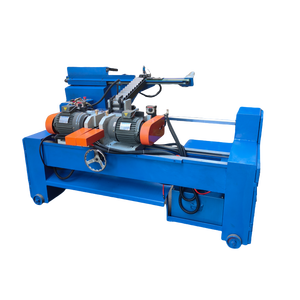
| Stationary Hydraulic Double-Head | 15 mm – 219 mm | Up to 15 mm | Hydraulic Gear Drive | High-volume pipe manufacturing, automotive chassis, HVAC tubing production lines | Simultaneous dual-end chamfering with auto-loading magazine for rapid cycle times |
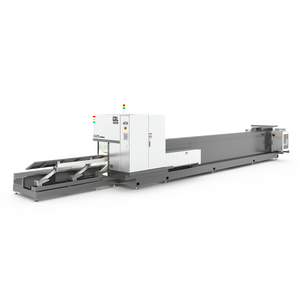
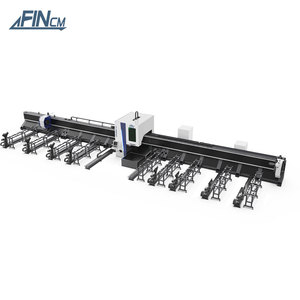
| CNC Multi-Axis Fiber Laser Bevelers | 20 mm – 508 mm | Up to 25 mm (Carbon Steel) | 3KW – 12KW Fiber Laser | Structural steel columns, offshore jacket frames, modular construction spools | Non-contact 3D complex beveling (V, X, K-joints) integrated with cut-to-length processes |
| CNC 8-Axis Plasma Profilers | 50 mm – 1500 mm | Up to 60 mm | High-Definition Plasma | Pressure vessel nozzles, branch saddles, stadium truss structures | Complex saddle contours and intersection beveling with compensation for ovality |
As global energy infrastructure pivots toward hydrogen-ready pipelines, liquefied natural gas (LNG) export terminals, nuclear small modular reactors (SMRs), and deep-water wind turbine foundations, the requirements for edge preparation equipment are evolving rapidly. Procurement buyers and engineering directors must account for several major technology shifts over the coming decade:
Explosion risk management in operating petrochemical refineries and gas processing facilities has led to strict "hot work" restrictions. Offshore platform operators and pipeline contractors are overwhelmingly standardizing on OD-mounted split-frame cold pipe cutters. Equipped with spark-free pneumatic or remote hydraulic power units, these machines cut and bevel live or hot-tap pipelines without requiring costly plant shutdowns or extensive nitrogen purging protocols.
Traditional mechanical cutting is increasingly complemented by high-power (6KW to 15KW) multi-axis fiber laser tube cutting machines in centralized fabrication shops. Laser beveling provides unmatched flexibility by switching between straight cuts, 45° single V-bevels, and complex countersunk holes in a single automated CNC program. The elimination of physical tool wear and cutting fluids drastically lowers consumables costs while boosting daily tonnage throughput.
Modern pipeline transportation relies on high-yield steels such as API 5L Grade X80 and X100, as well as corrosion-resistant alloys (Super Duplex UNS S32750, Inconel 625 clad lines). These materials exhibit extreme work-hardening characteristics. Procurement specialists must ensure their pipe beveling suppliers furnish ultra-rigid machine frames equipped with premium Titanium Aluminum Nitride (TiAlN) coated carbide inserts and high-torque low-RPM gear assemblies to prevent premature tool failure.
Industry 4.0 integration has reached edge preparation equipment. Advanced split-frame and CNC beveling stations now feature embedded load sensors, real-time vibration telemetry, and cutting temperature monitors. Connected via industrial IoT gateways (such as our proprietary WeldVisor module network), shop managers can track real-time machine efficiency, diagnose operator feed rate errors, and automatically order wear-part replacements before tool breakage occurs.
Technical guidance for pipeline contractors, plant maintenance leads, and global buyers
ID-mounted pipe beveling machines lock onto the internal wall of the pipe via an expanding mandrel system. They are lightweight, portable, and ideal for beveling individual pipe ends, boiler tubes, and heat exchanger tubes. OD-mounted (split-frame) bevelers clamp around the exterior diameter of the pipe. Because their frame splits into two halves, they can mount onto inline, continuous piping systems to cut the pipe in two while simultaneously machining a bevel on both cut ends.
Cold cutting uses mechanical cutting bits to remove metal without generating high thermal energy. Flame or thermal cutting creates a Heat-Affected Zone (HAZ), altering the grain structure, creating residual stress, and causing surface oxidation. For stainless steel, duplex steel, and chrome-moly pipes, thermal cutting leads to loss of corrosion resistance and potential hydrogen embrittlement unless extensive post-weld heat treatment (PWHT) and grinding are performed. Cold cutting leaves the metallurgy completely unchanged.
Pneumatic drives are lightweight, intrinsically safe, and required for explosive refinery or subsea environments. Electric drives offer convenient plug-and-play operation in workshops and site locations where compressed air is unavailable. Hydraulic drives deliver the highest torque-to-weight ratio, making them essential for heavy-wall pipes (>25 mm wall thickness), large-diameter lines, and continuous 24/7 industrial fabrication.
Yes. Our engineering division manufactures custom high-speed steel (HSS-Cobalt) and carbide-tipped cutter inserts engineered to execute complex J-bevels, U-bevels, internal counterboring, and compound angle profiles according to your exact orbital welding WPS (Welding Procedure Specification).
Every machine undergoes a rigorous 48-hour continuous run-in test under simulated maximum cutting loads. We verify gear shaft runout, thermal dissipation, clamping force stability, and bevel surface roughness (Ra value) using precision optical metrology instruments before packing machines in export-grade reinforced flight cases.
Standard model bevelers from our core catalog are shipped within 5 to 7 business days. Custom OEM/ODM orders—including specialized clamping ranges, custom drive mounts, or modified frame profiles—typically carry a production lead time of 15 to 25 calendar days, supported by full 3D CAD drawing approval prior to machining.
Partner directly with a certified manufacturer. Contact our application engineers today to discuss pipe dimensions, material specs, and tailored machine configurations for your upcoming project.
Get Catalog