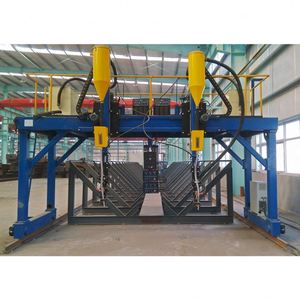
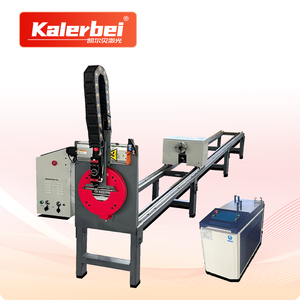
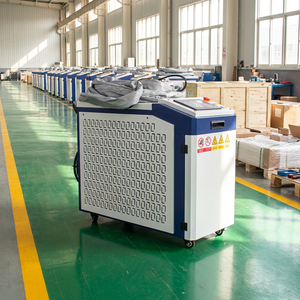
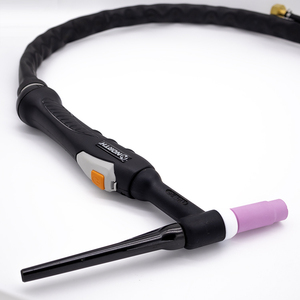
Explore our industrial-grade hydraulic plate benders, fiber laser cutters, automatic SAW welding manipulators, and wear-resistant alloy wires manufactured for high-duty continuous operation.
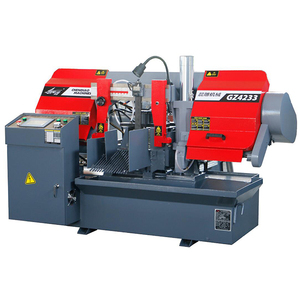
In modern heavy manufacturing—spanning pressure vessel fabrication, wind turbine tower production, shipbuilding, and petrochemical piping—hydraulic plate benders represent the critical nexus between raw steel stock and structural integrity.
As a globally recognized OEM/ODM hydraulic plate bender supplier and exporter, Advanced Power Sources Limited (APS) delivers custom-engineered heavy plate bending rolls designed to eliminate edge flat spots, maximize bending accuracy, and accelerate production throughput. Operating from our state-of-the-art manufacturing facility in Old GIDC Gundlav, Valsad, Gujarat, India, our engineering team integrates high-torque hydraulic drives, anti-deflection crown compensation, and multi-axis CNC controllers into every machine we build.
Precision plate rolling is no longer merely a mechanical bending operation; it is an integrated thermal and mechanical deformation process. The interaction between material yield strength, plate thickness tolerance, springback ratios, and roll geometry dictates final roundness. Modern fabricators require OEM/ODM partners capable of tailoring roll diameter, hydraulic working pressure, and CNC feedback loops to match exact alloy compositions—from standard carbon steel S355 to high-yield quenched and tempered steels like Weldox and Hardox.
Request Custom Engineering Spec SheetDirect factory manufacturing, proprietary power electronics, and over two decades of heavy machinery design authority establish APS as a trusted global exporter.
Every hydraulic cylinder, hardened roll shaft, structural steel frame, and hydraulic manifold undergoes rigorous non-destructive testing (NDT), dimensional inspection, and continuous load testing prior to factory acceptance testing (FAT).
Unlike trading intermediaries, APS maintains dedicated mechanical, hydraulic, and electrical engineering teams in Gujarat. We design custom roll profiles, cone-bending attachments, and integrated automated feed tables tailored to unique OEM specifications.
With over 22,600 machines deployed across international workshops, APS provides complete turnkey support—from export packing and multi-voltage electrical configurations (380V, 415V, 480V) to remote diagnostic support and field commissioning.
The metal forming sector is undergoing a profound digital transformation. OEM/ODM suppliers must adapt to intelligent automation, energy-efficient hydraulics, and dynamic springback compensation.
Modern hydraulic benders are evolving into smart cyber-physical systems. Integrated IoT sensors measure hydraulic oil temperature, pressure fluctuations, motor current draw, and roll alignment in real-time. Data is fed directly to cloud monitoring platforms (such as APS WeldVisor IoT architecture) to enable predictive maintenance, prevent oil overheating, and log production parameters for audit compliance in nuclear and aerospace projects.
Traditional fixed-displacement hydraulic pumps continuously consume energy regardless of whether the rolls are under active load. Next-generation hydraulic plate benders utilize variable-speed servo-driven hydraulic pumps. This hybrid drive technology reduces electrical energy consumption by up to 40%, lowers oil reservoir capacity, reduces acoustic noise below 70 dB, and significantly extends oil seal life by minimizing thermal stress.
Material thickness variations and coil batch tensile differences cause unpredictable springback after pressure release. Advanced CNC 4-roll hydraulic plate benders now incorporate inline optical laser radius measurement. The CNC system continuously reads the actual curve diameter during bending and automatically recalibrates side roll positions on-the-fly, achieving target roundness in a single pass without manual operator templates.
How B2B buyers, EPC contractors, and heavy fabricators are shifting their capital equipment sourcing strategies over the next decade.
Procurement directors are moving away from purchasing isolated plate rolling machines. Modern tenders demand complete automated bending cells that integrate hydraulic plate loaders, vacuum lifters, alignment side supports, overhead hydraulic gantry cranes, and automatic ejection systems. This turn-key approach minimizes manual overhead crane handling, reduces operator safety hazards, and lowers cycle time per cylinder by up to 60%.
While initial capital expenditure remains a factor, global buyers increasingly evaluate TCO. Sourcing evaluations now calculate long-term energy consumption, hydraulic valve reliability (utilizing Rexroth or Eaton Vickers components), roll regrinding life, and manufacturer spare parts availability. Purchasing high-grade forged alloy rolls (42CrMo) with induction hardening yields a 15-year operational lifespan versus standard carbon steel rolls that deform under high-stress pre-bending.
Fabrication shops frequently handle specialized geometries—such as elliptical tank heads, conical pipe reducers, or thick-walled structural steel cylinders. Procurement managers favor machinery manufacturers offering modular OEM/ODM customization. This allows buyers to select specialized roll hardness profiles, extended lower roll strokes, interchangeable top roll spindles, and custom CNC human-machine interfaces (HMI) built to exact shop floor workflows.
Global supply chain disruptions have highlighted the risk of single-source geographical concentration. EPC firms in North America, Europe, the Middle East, and Southeast Asia are actively diversifying their equipment vendors. Partnering with established Indian manufacturers like APS provides high-spec engineering, international standard compliance (CE / ISO), competitive export pricing, and resilient shipping logistics.
Select the optimal mechanical architecture based on your material thickness range, production volume, and pre-bending precision requirements.
| Feature / Parameter | 3-Roll Initial Pinch Hydraulic | 3-Roll Variable Geometry Hydraulic | 4-Roll CNC Hydraulic Bender (Flagship) |
|---|---|---|---|
| Bending Mechanics | Top roll stationary/vertical; bottom side rolls pivot independently. | Top roll moves vertically; two lower side rolls move horizontally. | Top & bottom rolls pinch plate continuously; two side rolls tilt hydraulically. |
| Pre-Bending Capability | Good (requires plate feeding from both front & back). | Excellent (variable geometry optimizes leverage for pre-bending). | Superior (pre-bending achieved in a single square pass without flipping). |
| Remaining Flat Edge | 1.5 to 2.5× Plate Thickness | 1.0 to 1.5× Plate Thickness | < 1.0× Plate Thickness (Minimal flat spot) |
| Cone Bending Precision | Moderate (requires manual side guide rollers). | High (individual roll tilt for variable radii). | Maximum (Automated CNC cone tilting & side guide controls). |
| Operator Skill Requirement | High (requires manual alignment & experience). | Medium to High. | Low to Medium (Fully automated CNC cycle execution). |
| Production Speed / Efficiency | Standard workshop rate. | High efficiency for thick plate. | Maximum Speed (50% faster cycle times than 3-roll systems). |
| Recommended Industry Use | General maintenance, ducting, light tanks. | Heavy pressure vessels, offshore monopoles, thick plate. | High-volume production lines, wind towers, precision boilers. |
Follow this structured engineering evaluation process to ensure seamless machine integration and optimal ROI.
Define maximum and minimum plate thickness, plate width, yield strength (N/mm²), and minimum bending diameter. Account for cold work hardening factors on high-yield alloys.
Determine allowable unbent flat edge margins based on code requirements (ASME Section VIII, EN 13445). Choose 4-roll CNC configurations if zero-flat-spot pre-bending is mandated.
Verify hydraulic pump flow rates, cylinder tonnage ratings, proportional valve response times, and motor efficiency classes (IE3/IE4). Ensure oil filtration systems are rated for continuous duty.
Specify multi-axis CNC requirements (e.g., Siemens, Cybelec, or proprietary APS controllers). Evaluate software simulation features for visual trajectory preview and springback calculation.
Direct technical answers to help engineering teams and purchasing directors make informed decisions.
A 3-roll initial pinch machine utilizes a top roll and two lower side rolls where plate pre-bending requires feeding the material from one side, flipping or re-feeding it to bend the opposite edge. In contrast, a 4-roll hydraulic plate bender pinches the steel plate securely between the top and bottom rolls throughout the entire sequence. The two lateral rolls move independently to perform pre-bending on both leading and trailing edges without removing or turning the plate. This makes 4-roll machines significantly faster, more precise, safer, and easier to automate with CNC systems.
APS operates in-house R&D, structural fabrication, hydraulic assembly, and electrical control wiring facilities. For OEM/ODM orders, our design team customizes roll shaft diameters, surface hardness (up to 58 HRC), crown profiles to counteract specific deflection ranges, extended bed lengths (up to 8+ meters), and integrated automation accessories such as hydraulic side supports, overhead crane arches, and automated ejection arms. We work directly from customer engineering drawings or process requirements.
When bending wide or thick steel plates under high hydraulic tonnage, bending rolls naturally experience elastic deflection (bending upward in the center). Without compensation, this causes an uneven barrel shape where the cylinder ends are bent tight but the middle remains loose or under-bent. Roll crowning involves machining a precise convex profile into the roll body or incorporating internal hydraulic crowning cylinders to dynamically offset deflection, guaranteeing uniform cylindrical roundness along the entire length of the workpiece.
Our main bending rolls are forged from high-grade alloy forged steel (such as 42CrMo / 4140 or 34CrNiMo6). The forgings undergo ultrasonic NDT inspection to verify structural density and eliminate internal voids. Rolls undergo full heat treatment, including normalizing, quenching, and induction hardening to achieve surface hardness between 50 and 58 HRC with deep case depth, ensuring maximum resistance against wear, galling, and indentation when rolling stainless steel or high-hardness wear plates.
Yes. All standard 3-roll variable geometry and 4-roll CNC APS hydraulic benders feature electronic roll tilting capabilities and hardened cone-bending attachment shoes. The side rolls can be tilted independently via hydraulic cylinders, while the CNC controller coordinates linear feeding speeds to form precise conical shells, transition pieces, and reducer spools for chemical tanks and pressure vessel manufacturing.
Every APS machine is supplied with a comprehensive factory warranty, detailed electrical hydraulic schematics, and English operating manuals. We maintain an extensive inventory of standardized hydraulic valves (Rexroth/Eaton), electrical components (Schneider/Siemens), and seals. For international buyers, we provide remote telemetry diagnostics via IoT modules, online video commissioning support, and field engineer dispatch services when required.
You can click the "Get a Quote" button on this page to initiate a live inquiry with our engineering sales department. Please provide your target material type, maximum plate thickness, maximum plate width, minimum bending diameter, and site power supply parameters (voltage/frequency). Our application engineering team will prepare a detailed technical proposal, CAD layout drawing, and competitive export quotation within 24 hours.
Consult directly with Advanced Power Sources Limited application engineers for custom OEM/ODM hydraulic plate bender designs, factory site visits, and competitive export pricing.