Modern industrial manufacturing demands flawless metallurgical integrity, minimal post-weld rework, and ultra-precise thermal control. Standard short-circuit GMAW (MIG) welding often fails when joining heat-sensitive materials such as aluminum alloys (5xxx/6xxx series), stainless steel (304L/316L), and high-strength low-alloy (HSLA) steels due to excessive heat input, burn-through, and heavy spatter generation. Custom OEM Pulse MIG power sources overcome these physics limitations through advanced Digital Signal Processor (DSP) driven high-frequency waveform modulation.
Synergic microprocessors instantly calculate arc dynamics. Operators select material type, wire diameter, and shielding gas; the machine automatically pairs peak current, background current, pulse frequency, and pulse width for controlled single-droplet metal transfer per pulse.
By superimposing a low-frequency pulse over the high-frequency primary pulse, Dual-Pulse MIG creates a aesthetically superior "TIG-like" ripple bead appearance while breaking up aluminum oxide layers, dramatically eliminating porosity and cold lap defects.
Incorporating embedded CANbus communications and Industry 4.0 IoT modules (WeldVisor), our OEM platforms capture real-time arc-on duration, current/voltage variance, wire consumption, and thermal duty cycle data for automated QA audit trails.
| Performance Parameter | Conventional GMAW (MIG/MAG) | OEM Synergic Pulse MIG | GTAW (TIG Welding) |
|---|---|---|---|
| Metal Transfer Mode | Short-Circuit / Globular | Controlled Spray (1 Drop / Pulse) | Non-consumable Tungsten Arc |
| Deposition Rate (kg/hr) | Medium (2.5 – 4.0 kg/h) | High (4.5 – 7.5 kg/h) | Low (0.8 – 1.5 kg/h) |
| Heat Input & Distortion | High (Risk of plate warp) | Precisely Modulated (Very Low) | Concentrated (Medium-High overall) |
| Post-Weld Cleanup (Spatter) | Heavy (Grinding required) | Near Zero Spatter | Zero Spatter |
| Aluminum (Thin Sheet & Plate) | Poor (High burn-through risk) | Excellent (Dual-Pulse TIG aesthetic) | Excellent (Very slow travel speed) |
| Duty Cycle Rating at 40°C | 60% Average | 60% - 100% Heavy Industrial (IEC 60974-1) | 60% Average |
As an ISO 9001:2015 certified manufacturer operating from old GIDC Gundlav, Valsad, Gujarat, India, Advanced Power Sources Limited (APS Welding) has accumulated over 20 years of in-house R&D expertise. With over 22,600 welding power sources installed globally across heavy engineering, shipbuilding, pressure vessel fabrication, and cross-country pipelines, we supply engineering-backed OEM and ODM solutions directly to worldwide distributors, private label brands, and EPC contractors.
Unlike asset-light assembly traders, APS designs the entire power control architecture—from multi-layer IGBT driver boards and high-frequency transformers to custom microprocessor firmware—eliminating middleman dependencies.
We provide global brand owners with complete custom chassis styling, proprietary UI display interfaces, customized voltage configurations (380V/415V/440V/480V, 50/60Hz), and pre-programmed synergic lines matching regional alloy specifications.
Every single power source undergoes rigorous thermal chamber load testing at 40°C ambient temperatures, high-voltage dielectric insulation checks, and vibration endurance tests to ensure 100% continuous duty reliability under extreme field environments.
Global fabricators are accelerating the deployment of Collaborative Robots (Cobots). Future-ready Pulse MIG suppliers must offer ultra-fast digital communication interfaces (EtherNet/IP, EtherCAT, DeviceNet) to synchronize wire feed speed and pulse waveforms within microsecond loops.
With global green manufacturing mandates, active Power Factor Correction (PFC) modules are becoming mandatory. Advanced inverter topologies achieve a power factor >0.95, significantly reducing KVA demand and energy costs in multi-station manufacturing facilities.
EPC contractors in pressure vessel and nuclear sectors now require digital weld logs for every seam. Future procurement contracts heavily favor OEM suppliers who integrate native cloud monitoring platforms capable of logging voltage, current, and wire feed speed per weld centimeter.
Thin aluminum sheet welding demands minimal heat input to avoid structural distortion. Dual-pulse MIG delivers tight root control and zero porosity on 6001/6061-T6 aluminum alloys.
Thick stainless steel (316L) and nickel alloy cladding require defect-free radiographic quality. Pulse MIG minimizes alloy dilution while maintaining maximum deposition speed.
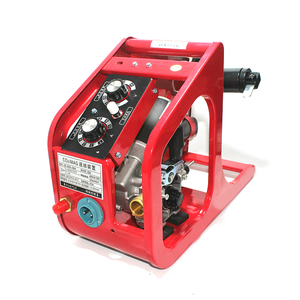
Continuous heavy plate welding requires high duty-cycle power sources combined with robust 4-roll drive wire feeders capable of pulling wires across long inter-connecting cables.
Pulse MIG welding operates by modulating output current between a high peak current (which detaches a single droplet of molten metal across the arc) and a low background current (which maintains the arc without overheating the plate). This results in zero spatter, reduced heat distortion, deeper root penetration, and the capability to weld thin stainless steel and aluminum in all positions without burn-through.
We provide end-to-end OEM and ODM customization including custom sheet metal enclosure designs, branded silkscreen artwork and paint colors, custom synergic program libraries (tailored for specialized wire alloys), input voltage matching (220V/380V/415V/440V/480V 50/60Hz), custom torch connector interfaces (Euro, Dinse, Panasonic style), and embedded software localization.
All APS industrial power sources are rated according to standard IEC 60974-1 regulations. Duty cycle is measured over a 10-minute testing period in a temperature-controlled ambient environment of 40°C. For example, a 60% duty cycle rating at 400A means the machine can weld continuously at 400 Amperes for 6 full minutes out of every 10 minutes without thermal overload trip.
Yes. Our OEM power sources feature multi-pin auxiliary control sockets, analog/digital I/O ports, and optional CANbus protocol ports. This allows seamless integration with automated welding positioners, longitudinal seamers, tank rotators, welding carriages, and CNC plasma gantry systems as a unified single-vendor automated cell.
We support global OEM partners with comprehensive service kits, spare mainboards, pre-tested IGBT modules, technical schematics, and video troubleshooting guides. Additionally, global service calls can be logged online, and direct engineering consults are available via our dedicated technical support desk.
Standard model evaluations have an MOQ of 1 unit for sample testing. Custom private-label OEM production runs typically carry an MOQ starting at 10 to 20 units depending on the level of chassis customization and localized firmware development. Typical factory lead times range from 3 to 5 weeks from technical drawing sign-off.
Partner with Advanced Power Sources Limited for reliable, high-deposition, ISO 9001:2015 certified Pulse MIG welding power sources engineered for international industrial standards.