
Explore our high-performance industrial power sources, automated orbital systems, fiber laser cutting units, and precision welding fixtures built for heavy-duty fabrication worldwide.

As global automotive, aerospace, railway transit, and power generation industries transition toward lightweight structural materials and high-efficiency thermal management systems, traditional fusion welding processes—such as Metal Inert Gas (MIG), Tungsten Inert Gas (TIG), and high-power Laser Welding—are encountering fundamental physical limitations. When joining high-strength aluminum alloys (including 2xxx, 6xxx, and 7xxx series), copper busbars, or dissimilar metal combinations, conventional fusion techniques frequently induce porosity, hot cracking, keyhole collapse, and severe heat-affected zone (HAZ) degradation.
Friction Stir Welding (FSW), invented by The Welding Institute (TWI) in 1991, has evolved from a specialized niche process into a mainstream industrial joining technology. As a solid-state joining process, FSW operates below the melting temperature of the workpiece material. A non-consumable rotating tool featuring a specially designed shoulder and pin is plunged into the joint interface. The friction generated between the tool and workpiece, combined with mechanical forging pressure, plasticizes the material and forces it around the pin to form a dense, fine-grained equiaxed recrystallized weld zone devoid of liquid-phase solidification defects.
China has emerged as the global epicenter for advanced Friction Stir Welding equipment manufacturing, driven by massive domestic adoption across Electric Vehicle (EV) battery tray production lines, high-speed rail carbody fabrication, 5G liquid-cooling cold plate manufacturing, and aerospace structural panel assembly. Selecting a top-tier Chinese FSW manufacturer requires evaluating complex engineering metrics: axial downforce control accuracy, structural gantry rigidity, spindle torque response under high thermal loads, multi-axis CNC interpolation capability, and integrated closed-loop quality monitoring.
Industrial buyers must align workpiece geometry, production throughput, joint thickness, and budget constraints with the appropriate FSW machine kinematic layout.
| FSW Machine Architecture | Primary Industrial Applications | Axial Downforce (Z-Axis) Range | Spindle Speed & Torque | Key Technical Advantages |
|---|---|---|---|---|
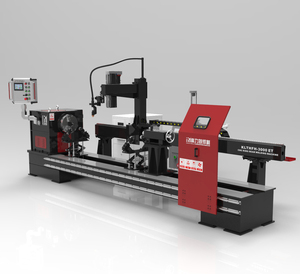
| Heavy-Duty Gantry CNC FSW Machine | EV Battery Tray Baseplates, Rail Carbody Side Walls, Large Aerospace Panels | 30 kN – 150 kN | 1,500 – 4,000 RPM (High Torque) | Maximum structural rigidity, multi-axis interpolation, handles thick plate (up to 50mm single pass), exceptional dimensional accuracy. |
| Robotic Arm FSW System | Automotive Structural Pillars, 3D Spatial Contours, Complex EV Battery Frames | 5 kN – 20 kN | 3,000 – 6,000 RPM | High kinematic flexibility, multi-station working cell integration, lower footprint, seamless fit for automated automotive lines. |
| Bobbin Tool / Self-Reacting FSW Machine | Hollow Aluminum Extrusions, Thin-Wall Tanks, Aircraft Fuselage Panels | Net Zero Downforce (Self-Balancing) | 1,200 – 3,000 RPM | Eliminates heavy back-up tooling and Z-axis clamping force; prevents structural collapse of hollow extrusions; equal top/bottom weld bead. |
| Stationary Shoulder FSW (SSFSW) System | 5G Liquid Cooling Plates, Automotive Radiators, Ultra-Smooth Surface Components | 10 kN – 40 kN | 2,000 – 5,000 RPM | Stationary shoulder eliminates surface flash, dramatically reduces process heat input, produces mirror-like surface finish needing no post-machining. |
| C-Frame / Compact Benchtop FSW Rig | Small Electronic Enclosures, Power Semiconductor Heat Sinks, R&D Testing | 5 kN – 30 kN | 2,000 – 8,000 RPM | Compact footprint, quick changeover, ideal for small component production runs and metallurgical laboratory procedure development. |
Our manufacturing heritage combines over two decades of power electronics engineering, robust mechanical machine building, and rigorous ISO 9001:2015 quality control systems.
Unlike assembly-only vendors, our engineering team designs power board topologies, digital control firmware, heavy-duty structural frames, and custom spindle assemblies in-house. This ensures total control over mechanical resonance, thermal management, and power electronic performance.
Every industrial machine undergoes rigorous multi-stage quality assurance before dispatch: continuous duty load testing, 3D laser interferometer precision calibration, dynamic balancing of spindle assemblies, and non-destructive ultrasonic testing of joint coupons.
Our FSW machines and power equipment integrate seamlessly with robotic loading arms, automatic clamping systems, and our proprietary IoT monitoring platform (WeldVisor), enabling real-time logging of downforce, RPM, temperature, and cycle time for complete QA traceability.
The friction stir welding landscape is rapidly transforming. Leading Chinese factories are driving state-of-the-art developments across real-time closed-loop control, hybrid processing, and advanced tool material science.
Traditional constant-displacement FSW machines suffer from flash defects or keyhole void formation when workpiece thickness varies. Modern Chinese FSW equipment features ultra-fast piezoelectric and strain-gauge load cells integrated directly into the spindle housing. Combined with real-time infrared thermography, the machine automatically dynamically adjusts axial downforce (Z-axis) and spindle speed (RPM) within milliseconds, guaranteeing 100% constant heat input across complex part geometries.
Demand from 5G communication liquid-cooling plates and high-end automotive battery covers has driven adoption of Stationary Shoulder FSW (SSFSW). By isolating shoulder rotation while allowing only the inner pin to rotate, friction heat is concentrated localized around the pin. This eliminates surface flash, reduces axial force requirements by 40%, prevents thermal distortion of micro-channel cooling fins, and leaves a smooth, flat surface requiring zero post-weld machining.
Replacing heavy gantry structures with high-payload (300kg – 800kg) 6-axis articulated industrial robots equipped with specialized high-torque FSW end-effectors is a major industry trend. Chinese factories are deploying multi-robot coordinated cell setups that combine robotic friction stir welding, automated optical inspection (AOI), and laser seam tracking to fabricate complex 3D automotive space frames and EV battery pack enclosures with minimal human intervention.
To extend FSW capability to steel alloys, titanium, and copper-to-aluminum dissimilar metal joining, Chinese research institutes and top manufacturers are integrating high-power fiber laser preheating optics alongside FSW tool heads. Additionally, advances in Polycrystalline Diamond (PCD), Tungsten-Rhenium (W-Re), and Silicon Nitride ceramic tool pin materials enable continuous welding of high-melting-point materials with significantly prolonged tool life.
Global procurement directors and supply chain engineers sourcing FSW machinery from China must prepare for evolving strategic, economic, and technical trends.
Global buyers are moving away from purchasing standalone machines toward acquiring fully integrated turnkey manufacturing cells. Leading Chinese manufacturers now supply complete engineering packages including finite element thermal analysis, custom hydraulic fixture design, specialized tooling selection, welding parameter qualification (WPS development), and on-site operator training.
In aerospace, defense, and electric vehicle battery manufacturing, 100% parameter traceability is mandatory. Future procurement requirements demand embedded Industry 4.0 data logging systems. Chinese FSW machines now feature high-speed data acquisition that logs spindle torque, downforce, travel speed, temperature, and micro-positioning for every millimeter of weld length, creating a searchable digital twin for quality compliance.
Essential technical and commercial answers for sourcing managers, welding engineers, and plant managers.
Friction Stir Welding is a solid-state joining process that occurs without melting the workpiece metal. This eliminates common solidification defects such as porosity, hot cracking, hydrogen embrittlement, and element loss. Mechanically, FSW welds deliver superior fatigue strength, higher tensile strength (often 80%-95% of parent material strength), reduced residual stress, and minimal thermal distortion. Additionally, FSW requires no shielding gas, filler wire, or post-weld grinding, making it significantly more eco-friendly and cost-effective for mass production.
FSW is primarily utilized for aluminum alloys across the 1xxx, 2xxx, 3xxx, 5xxx, 6xxx, and 7xxx series, as well as pure copper and copper-based alloys. Advanced heavy-duty gantry CNC FSW machines can weld single-pass aluminum plates ranging from 0.5 mm up to 50 mm in thickness (or up to 100 mm using double-sided welding). Furthermore, specialized hybrid FSW machines can handle copper-to-aluminum dissimilar joints (crucial for EV battery busbars) and magnesium alloys.
Selection depends primarily on workpiece geometry, required axial downforce, and joint precision:
• Choose a Gantry FSW Machine if you process large 2D flat sheets, heavy structural profiles, or thick plates (>10mm) requiring high axial forces (>30 kN) and extreme structural rigidity, such as EV battery tray baseplates or railway side walls.
• Choose a Robotic FSW System if your components feature 3D spatial contours, complex curves, thin walls (<6mm), or require multi-station flexible automation, such as automotive pillar assemblies or intricate liquid-cooling channels.
For standard aluminum alloys (6xxx and 5xxx series), tools manufactured from premium AISI H13 tool steel or SKD61 hardened steel provide excellent service life, typically lasting 1,000 to 3,000 meters of continuous weld length. For high-strength 7xxx series aluminum, metal matrix composites, or copper alloys, tools engineered from Tungsten-Rhenium (W-Re) alloys, Polycrystalline Diamond (PCD), or Silicon Nitride ceramics are utilized, extending tool life under high thermal stresses.
In conventional FSW, both the shoulder and the pin rotate together, creating surface flash and generating significant heat across a wider surface area. In Stationary Shoulder FSW (SSFSW), the probe pin rotates independently inside a non-rotating outer shoulder ring. The stationary shoulder slides across the workpiece surface, acting as a flat smoothing bar. This eliminates top surface flash, drastically reduces heat-affected zone width, lowers thermal deformation, and produces a mirror-flat weld finish ideally suited for liquid cold plates and visible cosmetic components.
Leading ISO 9001-certified Chinese manufacturers offer comprehensive international customer support including on-site machine commissioning, robotic cell programming, welding procedure specification (WPS) optimization, and operator safety training. Spare parts (such as replacement spindle bearings, load cells, CNC controllers, and specialized FSW tooling pins) are dispatched via express global logistics. Additionally, remote diagnostic capabilities via secure IoT connections enable engineering teams to troubleshoot machine parameters in real time worldwide.
Consult with our senior application engineers to receive custom joint feasibility studies, machine selection guidance, and competitive turnkey OEM/ODM quotations.