
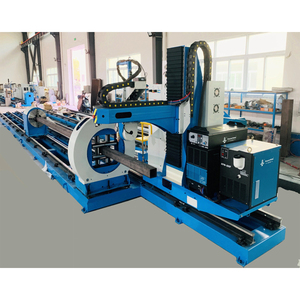
Explore our industrial-grade welding power sources, automated positioners, CNC pipe cutters, and cold wire feed mechanisms engineered for heavy fabrication and high-purity piping systems.
Understanding the strict quality framework, electromagnetic compatibility (EMC), and micro-processor pulse controls required for critical joint integrity in process piping.
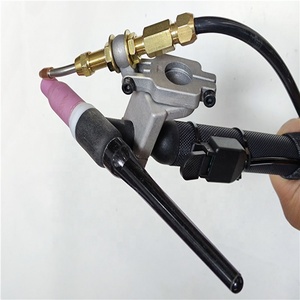
In modern industrial manufacturing—spanning pharmaceutical bioprocessing, semiconductor fabrication, aerospace propulsion, and nuclear engineering—the integrity of circumferential tube and pipe joints directly impacts operational safety and fluid purity. Manual Gas Tungsten Arc Welding (GTAW / TIG) introduces human variability in tungsten positioning, travel speed, and heat input, leading to erratic bead profiles, oxide discoloration, and root concavity.
An orbital welding system automates the 360-degree rotation of a GTAW torch around a static cylindrical workpiece. When sourcing equipment from global factories, securing genuine CE Certification (compliance with IEC/EN 60974-1 and EN 60974-10 EMC directives) is not merely a legal gateway into European and international markets; it guarantees electrical safety, arc stability, thermal protection, and immunity against high-frequency electromagnetic interference.
Evaluating deposition rates, heat affected zones (HAZ), penetration control, and qualification criteria across modern industrial joinery technologies.
| Performance Parameter | Orbital Closed-Head TIG | Manual GTAW / TIG | MIG / GMAW (Pulsed) | Submerged Arc (SAW) |
|---|---|---|---|---|
| Target Application | Thin-wall UHP tubing & process pipe | Short-run repairs & manual fitting | Medium structural steel plates | Heavy pressure vessels & thick tanks |
| Penetration & HAZ Control | Micro-precise (Pulse synced) | Variable (Operator dependent) | Moderate (Risk of spatter) | Deep penetration (High heat input) |
| Internal Oxygen Protection | Enclosed chamber (<5 ppm O₂) | Open purge (Risk of sugarings) | Shielding gas cone only | Granular flux cover |
| Weld Repeatability Rate | 99.8% Digital Consistency | 65% - 85% (Skill dependent) | 80% - 90% | 95% (Automated linear) |
| CE Certification Focus | EN 60974-1 / EN 60974-10 Class A | EN 60974-1 Standard | EN 60974-1 / EN 60974-5 | EN 60974-1 Heavy Duty |
Proprietary IGBT inverter topologies deliver rapid switching frequencies up to 100 kHz. This yields instantaneous response to arc voltage changes, minimizing arc wander and zero cold-laps.
Pulsed current delivery is synchronized down to milliseconds with wire feed speed and rotor stepping angle, maintaining precise thermal management across 1G, 2G, 5G, and 6G orbital positions.
Real-time data logging captures voltage, current, purge gas flow, travel speed, and heat input per sector, generating digital weld passports required for ASME, EN, and FDA compliance audits.
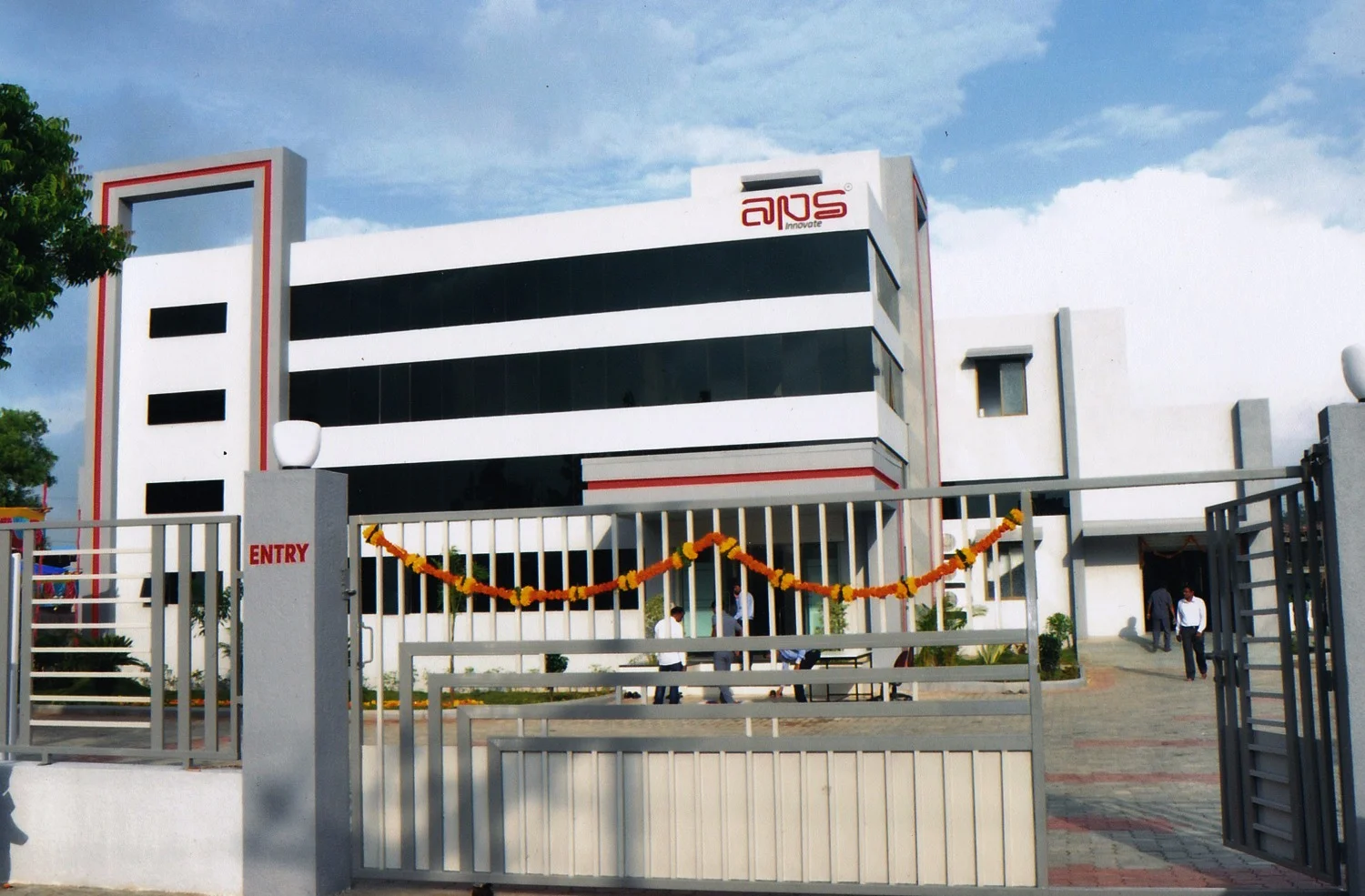
Unlike trading entities that assemble outsourced sub-components, Advanced Power Sources Limited (APS Welding) operates a fully integrated, ISO 9001:2015 certified design and manufacturing facility in Old GIDC Gundlav, Valsad, Gujarat, India. With over two decades of dedicated R&D in power electronics, APS controls every phase of the manufacturing workflow.
From designing multi-layer PCB control boards with surface-mount technology (SMT) to machining precision gearboxes for welding positioners and rotators, APS systems are engineered for uninterrupted operation under extreme industrial duty cycles.



Key technological shifts global procurement teams and plant managers must evaluate when selecting equipment suppliers for long-term ROI.
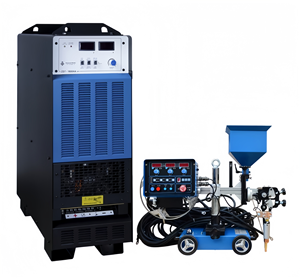
Modern procurement is shifting away from standalone power sources toward IoT-enabled welding ecosystems. Enterprise buyers demand real-time parameters logged per linear millimeter of weld. Systems feature cloud-connected controllers with WeldVisor software to automatically upload voltage, wire feed rate, and gas flow rates directly to Quality Management Systems (QMS).
Emerging orbital systems incorporate high-speed optical sensors and machine learning algorithms that analyze melt pool geometry in real time. If thermal accumulation causes pool sagging during overhead 4G positions, the system dynamically scales down current pulse amplitude within milliseconds, preventing burn-through.
Off-the-shelf catalog units often fail to address specific radial clearance constraints in dense skid assemblies. Suppliers offering modular mechanical enclosed heads, customizable pulse programs, and custom cold wire feed liners are replacing rigid mass-market vendors.
Specific compliance mandates and metallurgical demands across key industrial verticals.
Requires ASME BPE compliant welds on 316L stainless steel tubing. Closed orbital heads under pure Argon purging eliminate internal discoloration (oxidation) down to zero residual oxygen, preventing bacterial accumulation.
Ultra-High Purity (UHP) gas lines made of electropolished stainless steel or Hastelloy. Orbital GTAW ensures 100% full-penetration root beads without particulate generation, certified by X-ray and helium leak detection.
Titanium and Inconel alloy tubing subjected to high pressure and fatigue. Microprocessor-controlled pulse timing prevents micro-fissures and maintains grain structure integrity across thermal cycles.
Clear engineering answers to the technical questions asked by global purchasing agents, quality directors, and chief welding engineers.
A legitimate CE certified welding power source and orbital system must comply with two primary directives under European law: the Low Voltage Directive (2014/35/EU) via standard IEC/EN 60974-1 (covering electrical insulation, thermal overload protection, mechanical robustness, and duty cycle ratings), and the EMC Directive (2014/30/EU) via standard IEC/EN 60974-10 (ensuring electromagnetic emissions do not disrupt plant automation and that the unit withstands high-voltage arc initiation surges).
Enclosed Orbital Heads clamp fully around the tube, sealing the weld zone in an airtight chamber filled with inert shielding gas (usually Argon). They are ideal for thin-wall tubing (0.5mm to 3.0mm) in high-purity sectors like biopharma and semiconductors because they prevent all atmospheric oxygen contamination. Open Orbital Heads use wire feeders and mechanical tracking on larger diameter pipes (above 3 inches) and thicker walls, allowing multi-pass deposition with filler wire.
Duty cycle specifies how many minutes out of a 10-minute period a power source can operate at full current before overheating. Ratings conducted under IEC 60974-1 require testing at an elevated ambient temperature of 40°C. Lower-quality suppliers rate machines at 20°C or 25°C, which leads to frequent thermal tripping and inverter board failure when operated in warm industrial workshops or field sites.
Yes. APS Inverter power sources (such as the Apollo DC Pulse TIG and Genesis Stick series) are built with wide input voltage tolerance circuitry (typically ±15% to ±20% variation protection). This guarantees arc consistency even when powered by diesel generators or operating on unstable field grids during cross-country pipeline or structural steel construction.
For sanitary and high-purity stainless steel (316L), purge gas (Grade 5.0 Argon, 99.999% purity) must reduce root-side oxygen concentrations below 5 to 10 parts per million (ppm) before arc ignition. Operating above 50 ppm causes "tinting" (chromium depletion), rendering the stainless steel susceptible to localized pitting corrosion.
WeldVisor IoT interfaces directly with the inverter control logic, capturing actual arc-on time, average voltage, RMS current, wire feed rate, and heat input for every weld joint. This data is automatically mapped to unique joint identification numbers, creating an immutable electronic quality record required by ISO 3834 and ASME Section IX standards.
Precision orbital GTAW requires ground tungsten electrodes (typically 2% Ceriated or Lanthanated) with a longitudinal finish and a specific tip angle (typically 30° to 60° depending on wall thickness). Precision tip preparation ensures symmetric arc distribution and prevents arc deflection inside closed welding heads.
Standard power sources and wire feeders are maintained in stock for rapid dispatch. Customized orbital automation, CNC pipe cutters, and heavy-duty positioners typically carry a manufacturing and factory acceptance testing (FAT) lead time of 4 to 8 weeks. APS handles export packaging, seaworthy crating, and documentation for global delivery from Gujarat, India.
Whether you require CE-certified orbital TIG power sources, automated cold wire feeders, or complete CNC pipe cutting automation lines, our engineering team provides full application engineering, WPS development, and direct factory pricing.