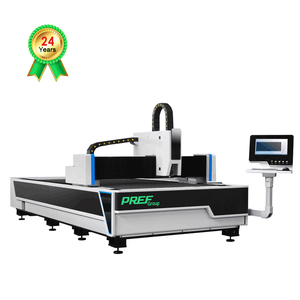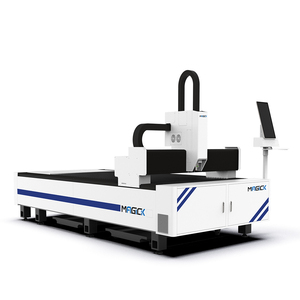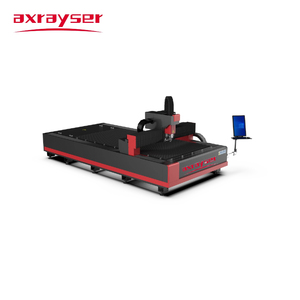
Explore our flagship CE-certified fiber laser systems engineered with shuttle exchange platforms, high-rigidity annealed machine beds, and real-time CNC control.
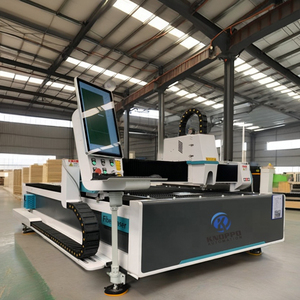
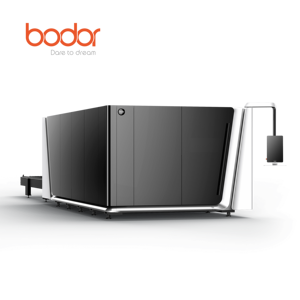
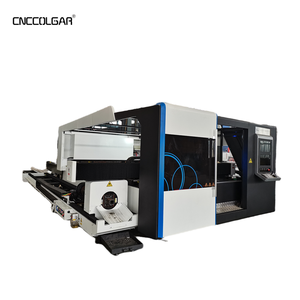
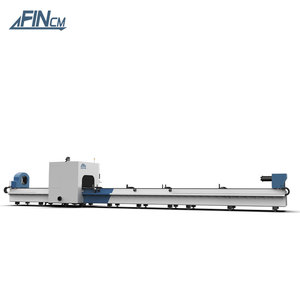
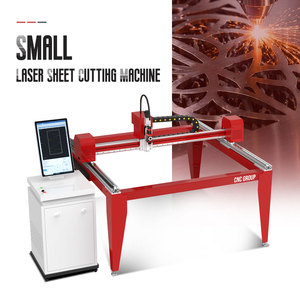
In modern metal fabrication, selecting a laser cutting table is no longer merely a transaction involving machinery wattage and sheet metal dimensions. It is a strategic capital expenditure that directly dictates operational throughput, edge squareness tolerance, duty cycle stability, and long-term operating costs. As premier CE certified laser cutting table manufacturers, our engineering organization bridges advanced optical thermodynamics with heavy structural machinery to manufacture world-class industrial fiber laser systems.
The European Conformity (CE) marking represents far more than a regulatory hurdle; it serves as a rigorous technical validator of machine safety, electromagnetic compatibility (EMC), and laser hazard mitigation. A genuine CE certified laser cutting table guarantees compliance with the EU Machinery Directive 2006/42/EC, Low Voltage Directive 2014/35/EU, EMC Directive 2014/30/EU, and specifically EN 60825-1 / EN ISO 11553-1 for Class 1 laser enclosure protection. Buyers evaluating international manufacturers must look beyond basic commercial claims and examine verified structural engineering, stress-relieved gantry beds, dynamic servo kinematics, and optical isolation protocols.
To understand the performance differentiation between standard commercial cutting beds and industrial-grade heavy-duty laser tables, procurement managers must evaluate the core subsystems that govern dynamic accuracy and thermal longevity:
Heavy steel plate welded structures undergo high-temperature thermal annealing at 600°C in specialized electric furnaces. This stress-relieving process eliminates internal welding stresses, guaranteeing zero structural deformation over 20 years of continuous 24/7 operation.
Dual-platform exchange tables employ heavy-duty chain drive or high-torque motor systems, enabling smooth pallet swapping within 10 to 15 seconds. High-precision pneumatic location pins lock the exchange pallet into exact alignment, maintaining repeatability down to ±0.02 mm.
Fully enclosed cutting housing featuring OD6+ rated laser safety protective glass, interlocking safety door switches, positive pressure internal air filtration, and partitioned zoned exhaust ducting to meet European safety and environmental emission limits.
Dynamic motion performance is governed by the structural gantry design. Advanced systems employ cast aluminum alloy gantries manufactured using aerospace-grade low-pressure die-casting processes. This reduces moving mass by over 30% compared to traditional steel gantries, allowing acceleration rates up to 1.5G to 2.0G without inducing micro-vibrations at sharp cornering paths.
Below is an authoritative technical comparison matrix detailing key operational specifications across our certified single-table and dual-exchange fiber laser cutting systems:
| Performance Metric | Standard Single Platform | Classic C Series Exchange | High-Power Enclosed Dual Table | Heavy Duty Tube & Plate Combo |
|---|---|---|---|---|
| Power Range | 1000W – 3000W | 2000W – 6000W | 6000W – 20,000W | 3000W – 12,000W |
| Effective Cutting Area | 1200x1200mm / 3000x1500mm | 3000x1500mm / 4000x2000mm | 6000x2000mm / 6000x2500mm | 6000mm Sheet + 6m Pipe |
| Table Exchange Time | N/A (Manual Loading) | 12 – 15 Seconds | 10 – 12 Seconds | 15 Seconds (Pallet Swap) |
| X/Y Positioning Accuracy | ±0.03 mm/m | ±0.02 mm/m | ±0.015 mm/m | ±0.03 mm/m |
| Max Acceleration | 0.8G | 1.2G | 1.8G – 2.0G | 1.2G |
| CE Compliance Level | EN 60204-1 / Open Bed | EN 60825-1 Class 1 Interlocked | EN 60825-1 Full Safety Cover | EU Machinery Directive Fully Shielded |
| Primary Application | Prototype & Precision Parts | Industrial Sheet Metal Production | Heavy Thickness & High Speed | Structural Beams, Pipes & Sheets |
As global metal fabrication shifts toward Industry 4.0 automation, key technology trends are reshaping B2B procurement strategies for fiber laser machinery:
The market is witnessing a rapid transition from medium-power laser sources (2kW–4kW) to ultra-high-power fiber laser resonators (12kW and above). High-power cutting is no longer restricted to ultra-thick plates; it drastically improves cutting speeds on medium-thickness stainless steel and carbon steel when using high-pressure nitrogen or compressed air. Cutting 10mm mild steel with a 12kW laser using nitrogen yields speeds up to 400% faster than traditional 4kW oxygen cutting, while completely eliminating oxide scale formation on the cut edge.
Automated nozzle changing units paired with real-time capacitance height sensing are becoming standard in high-end European facilities. Modern laser cutting heads continuously adjust focal depth automatically based on real-time thickness measurement and thermal expansion algorithms, eliminating human setup errors and reducing machine idle time between batch jobs.
With liquid nitrogen and oxygen prices rising globally, manufacturers are equipping laser cutting tables with specialized high-pressure compressed air filtration systems. Delivering clean, oil-free, dry air at 16 to 25 bar pressure enables clean cutting of aluminum, galvanized steel, and carbon steel up to 10mm thickness at a fraction of bottled gas cost.
High-Pressure Nitrogen: Delivers bright, oxide-free edges on stainless steel but accounts for up to 45% of hourly machine operating cost.
Oxygen Assist Gas: Ideal for thick carbon steel (piercing assist via exothermic reaction), low gas consumption but leaves an oxide layer requiring secondary grinding.
Integrated High-Pressure Air (18+ Bar): Reduces operating gas costs by 70% to 85% compared to liquid nitrogen while maintaining high cutting speeds on thin-to-medium sheet metals.
Many overseas suppliers display CE logos that represent unverified self-declarations or non-compliant documentation. For industrial buyers importing into the European Union, UK, or regulated global jurisdictions, non-compliant machinery exposes businesses to massive regulatory fines, operational shutdowns, and severe workplace safety liabilities.
When auditing a CE certified laser cutting table manufacturer, insist on evaluating the following technical documentation and structural engineering criteria:
Ensures the entire cutting enclosure prevents scattered laser radiation from exceeding Maximum Permissible Exposure (MPE) levels. Protective viewing windows must be certified with optical density ratings (OD6+ or higher) matching the exact fiber wavelength (typically 1064nm–1080nm).
Governs electrical equipment safety, proper grounding protection, short-circuit breaking capacity, electromagnetic shielding, IP54 rated control cabinets, and dual-channel emergency stop circuits wired into safety relays.
High-power laser cutting produces hazardous sub-micron metal dust and noxious gases. CE compliance mandates multi-zone automatic compartmented extraction ducts connected to pulse-jet dust collectors capable of filtering 99.9% of particles down to 0.3 microns.
With over two decades of in-house manufacturing, proprietary design engineering, and over 22,600 machines installed worldwide, our manufacturing facilities stand at the forefront of industrial laser tool production. We control every stage of production—from laser cutting bed welding and stress-relieving heat treatment to precision CNC machining of gantry components, optical assembly in cleanroom conditions, and rigorous 48-hour continuous load testing under full power output.
Our ISO 9001:2015 certified quality management system guarantees that every component meets uncompromising industrial specifications. Overseas buyers benefit from complete technical transparency, direct application engineering consultation before purchase, complete spare parts availability, remote telemetry diagnostics, and on-site commissioning supported by our global engineer support network.
Speak with our senior application engineers to discuss your sheet dimensions, thickness specifications, and customized OEM/ODM machine requirements.