As an established CE Certified Hardfacing Welding Machine Exporter and industrial automation OEM, Advanced Power Sources Limited (APS Welding) delivers high-performance surface cladding solutions engineered for extreme wear environments. Our robust IGBT inverter platforms and automatic gantry systems drastically minimize downtime and extend component operational lifespan across mining, cement, steel, oil & gas, and power generation sectors.
Explore our CE-marked, automated surfacing and cladding machinery designed for continuous duty operations.
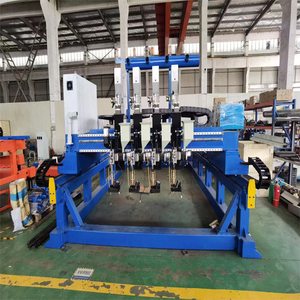
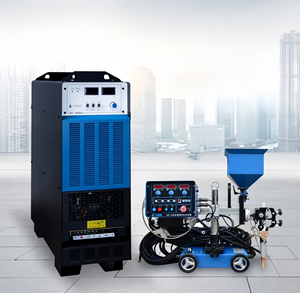
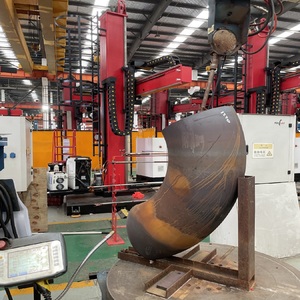
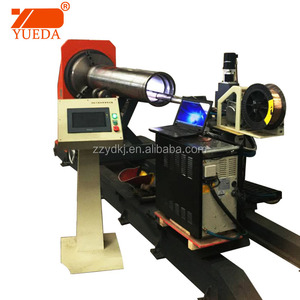
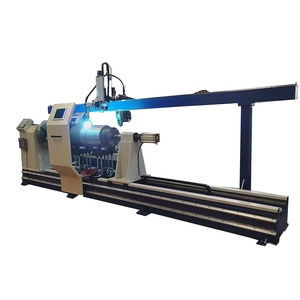
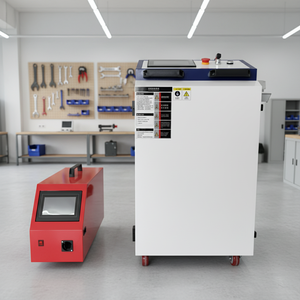
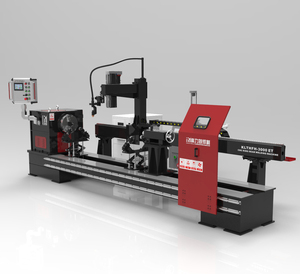
Unlike general machinery traders, Advanced Power Sources Limited (APS Welding) operates an ISO 9001:2015 certified integrated manufacturing plant in Gujarat, India. Every inverter power source, control logic PCB, and heavy-duty mechanical gantry is designed, fabricated, and rigorously load-tested in-house.
Our dedicated electronics R&D team designs robust IGBT inverter topologies capable of withstanding extreme line-voltage fluctuations (±15%). Closed-loop arc control circuits provide instantaneous dynamic response, ensuring minimal spatter and exceptionally stable arc ignition during automated long-duration cladding cycles.
Our export-grade hardfacing systems undergo mandatory safety and electromagnetic assessment to fulfill European Harmonized Standards (EN IEC 60974-1 and EN 60974-10 EMC Class A). Buyers receive verified Technical Files, CE Declarations of Conformity, and comprehensive electrical documentation.
From single-torch pipe cladding to multi-torch gantry open-arc plate overlay machines, we deliver turnkey mechanical, electrical, and pneumatic integration. Optional WeldVisor IoT monitoring tracks arc-on time, deposition efficiency, thermal parameters, and real-time power metrics across multi-machine bays.
Industrial components operating in earthmoving, mineral processing, cement manufacturing, and power generation face compound mechanical degradation mechanisms, including severe low/high-stress abrasion, metal-to-metal impact, cavitation, and high-temperature oxidation. Selecting the optimal hardfacing process and alloy chemistry is paramount to maximizing wear life and reducing Total Cost of Ownership (TCO).
Hardfacing (surfacing) involves depositing a wear-resistant alloy layer onto a base metal (typically carbon steel, low-alloy steel, or manganese steel) via fusion welding processes. The primary wear-resistant alloy families include:
The table below summarizes the key technical parameters for selecting the correct hardfacing machine architecture based on metallurgy, production volume, dilution limits, and geometrical constraints.
| Hardfacing Process | Typical Deposition Rate | Parent Metal Dilution % | Heat-Affected Zone (HAZ) | Primary Application Geometry | Optimal Metallurgy |
|---|---|---|---|---|---|
| Open-Arc Multi-Torch Gantry | 12 – 25 kg/h per head | 15% – 25% | Deep / Broad | Large Flat Wear Plates, Chutes, Liners | FeCrC High-Chromium Alloys, Complex Carbides |
| Submerged Arc (SAW) Hardfacing | 8 – 16 kg/h | 20% – 30% | Deep | Heavy Rollers, Mill Drums, Idlers, Shafts | Martensitic Steels, Low-Alloy Work-Hardening Steels |
| PTA (Plasma Transferred Arc) | 2 – 8 kg/h | 5% – 10% | Minimal / Controlled | Valve Seats, Pump Impellers, Extruder Screws | Tungsten Carbide (WC), Stellite, Ni-Cr-Bo-Si Powders |
| Automated CNC / Orbital TIG | 1 – 3 kg/h | 8% – 12% | Very Low | Small Pipe Bores, Flanges, Deep Valve Chambers | Stellite 6, Inconel 625, Hastelloy C276 Wire |
| Fiber Laser Cladding | 0.5 – 3 kg/h | < 5% | Ultra-Low / Precision | Turbine Blades, Precision Tools, Hydraulic Rods | Fine Carbide Powders, Superalloys, Tool Steels |
The global industrial hardfacing landscape is undergoing rapid technological transformation driven by industrial automation, material science innovations, and global sustainability mandates.
Procurement teams are shifting away from high-dilution conventional welding toward PTA and Fiber Laser systems. Because base metal dilution compromises overlay chemistry, low-dilution systems reach target hardness in a single pass (rather than 2 or 3 passes), yielding massive wire material and electrical energy savings.
Modern CE-certified hardfacing machines incorporate infrared pyrometers and closed-loop PLC controls to adjust welding velocity, current, and torch oscillation in real-time. This prevents excessive heat buildup, eliminating work-piece warping and cracking during long cladding cycles on high-carbon steels.
Complex 3D geometries such as valve internals, curved pipe elbows, and pulverizer tires require 5-axis or 6-axis articulated motion. Overseas buyers are standardizing on CNC/PLC interfaces capable of accepting CAD/CAM offline programming and transmitting operational telemetry directly to plant SCADA systems via OPC-UA protocols.
Addressing essential technical, commercial, and compliance questions for international machinery importers and procurement directors.
Our hardfacing welding equipment complies fully with European Union Directive 2014/35/EU (Low Voltage Directive) and Directive 2014/30/EU (Electromagnetic Compatibility Directive). Mechanical structures adhere to EN IEC 60974-1 (Arc Welding Equipment - Safety Requirements) and EN 60974-10 (EMC Emissions and Immunity Class A). Every machine shipped overseas is issued a complete CE Declaration of Conformity and technical file.
Dilution refers to the mixing of molten base metal with the deposited alloy weld metal. Higher dilution dilutes key alloy elements (such as Chromium, Tungsten, or Cobalt) with carbon steel, significantly lowering the overall micro-hardness and wear performance of the overlay layer. Utilizing precise automated torch weave control, low-heat IGBT power sources, or PTA process parameters maintains dilution below 10%, ensuring maximum wear resistance in a single layer.
Industrial sites in developing regions or remote mining facilities often experience grid fluctuations. Our proprietary IGBT inverter control electronics feature an ultra-wide primary voltage tolerance (380V - 480V ± 15%, 3-Phase, 50/60 Hz). Automatic voltage compensation (AVC) logic stabilizes arc voltage within milliseconds, preserving consistent weld bead geometry regardless of generator or grid fluctuation.
Multi-torch open-arc gantries allow simultaneous deposition across multiple weld heads (e.g., 2, 3, or 4 torches). This exponentially increases hourly deposition rates (up to 50 kg/h overall output), reduces plate thermal distortion through balanced heat distribution, and slashes total labor and electrical power expenditure per square meter of Chromium Carbide Overlay (CCO) plate produced.
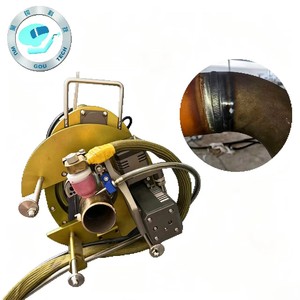
Yes. Systems like our Yueda Small Inner Pipe Surfacing Machine and CNC Pipe TIG Overlay units feature specialized slimline water-cooled cladding lances, integrated micro-TV cameras for remote arc monitoring, and precise motorized stroke control. They can operate inside pipe diameters as small as 50 mm (2 inches) up to multi-meter penetrations with exceptional concentricity.
APS Welding provides global after-sales coverage. We offer remote factory acceptance testing (FAT), complete on-site installation guidance, operator programming training, and comprehensive parameter setup assistance. Spare parts (including specialized torches, control boards, feed rolls, and gas nozzles) are maintained in inventory for rapid air dispatch worldwide.
Contact our senior application engineers today to discuss your component wear challenges, process specifications, or custom machine design requirements. Receive a detailed technical proposal and transparent export quotation within 24 hours.