
Engineered for heavy structural steelwork, shipbuilding, pressure vessels, and hardfacing machinery repair. Select a product below to request technical specification sheets and bulk export pricing.
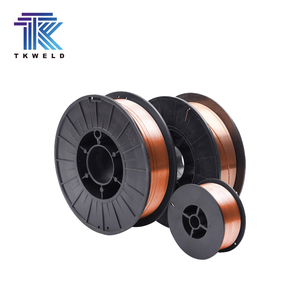
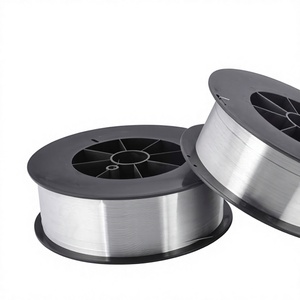
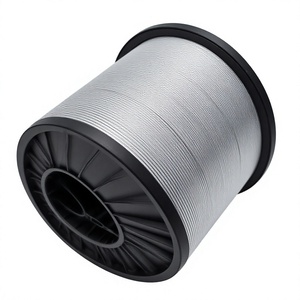
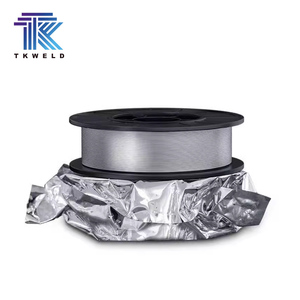
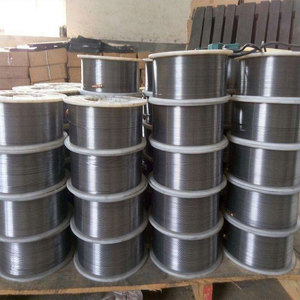
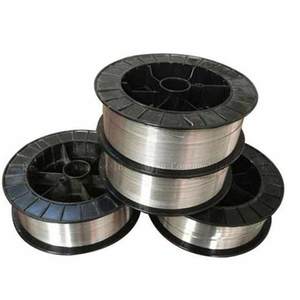
Navigating global structural fabrication standards requires absolute alignment between wire chemistry, mechanical compliance, and manufacturing precision. Operating from state-of-the-art facilities in GIDC Gundlav, Valsad, Gujarat, our ISO 9001:2015 certified infrastructure supports end-to-end quality control.
Every batch of Flux-Cored Arc Welding (FCAW) wire is manufactured under stringent Factory Production Control (FPC) procedures, fully complying with European Construction Products Regulation (CPR 305/2011) and EN ISO 17632 standards for structural steelwork under EN 1090-2 execution classes.
Our facility integrates Optical Emission Spectrometry (OES) chemical analysis, X-ray diffraction microstructural evaluation, and mercury-based diffusable hydrogen testing. This guarantees low hydrogen levels (H4 and H8 ratings) that prevent cold cracking in high-tensile steels.
Specifically calibrated to work seamlessly with modern IGBT Inverter CC-CV power sources, automated submerged arc system tractors, multi-process GMAW systems, and IoT weld-monitoring setups (such as WeldVisor systems), minimizing spatter and maximizing arc stability.
Flux-cored wire consists of a tubular metal sheath enclosing a precisely formulated flux compound containing deoxidizers, arc stabilizers, slag formers, and alloying elements. Understanding the distinction between gas-shielded (FCAW-G) and self-shielded (FCAW-S) wires is paramount for project cost-optimization and weld integrity.
Utilizing external shielding gas blends (such as 100% CO2 or 80/20 Argon/CO2 mixes), FCAW-G wires like AWS A5.20 E71T-1C / E71T-1M offer smooth spray arc transfer, fast-freezing slag systems for out-of-position welding, and exceptional deep penetration.
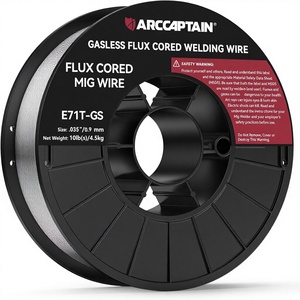
Self-shielded wires, such as E71T-GS and ER308-GS, generate their own protective shielding gas envelope via thermal decomposition of core compounds (fluorides and carbonates), eliminating the need for high-pressure gas cylinders.
| AWS Classification | EN ISO Standard | Shielding Type | Tensile Strength (MPa) | Yield Strength (MPa) | Impact Energy (CVN) | Certifications |
|---|---|---|---|---|---|---|
| E71T-1C / E71T-1M | EN ISO 17632-A T46 2 P C1 | 100% CO2 or 80/20 Ar/CO2 | 490 - 660 MPa | ≥ 400 MPa | ≥ 47 J at -20°C | CE Certified AWS A5.20 |
| E71T-GS (Gasless) | EN ISO 17632-B T49Z T14-1N | Self-Shielded (None) | ≥ 490 MPa | ≥ 400 MPa | Not Specified (Single-pass) | CE Certified AWS A5.20 |
| ER308-GS / ER304 | EN ISO 17633-A T 19 9 L R C1 | Self-Shielded / Mixed | ≥ 520 MPa | ≥ 350 MPa | ≥ 35 J at -196°C | CE Certified AWS A5.22 |
| Hardfacing Alloy Wire | EN 14700 E Fe14 | Gas-Shielded / Self | Hardness: 55-62 HRC | Wear Resistant | High Abrasion Resistance | CE Certified DIN 8555 |
As heavy fabrication transitions toward higher automation, strict environmental regulations, and zero-defect quality standards, global procurement directors must align supply chains with next-generation FCAW trends.
Traditional folded seam flux-cored wires are prone to ambient moisture pickup during transit and storage. Modern CE certified factories are investing heavily in laser-welded seamless tubular wires that completely seal the core flux, keeping diffusable hydrogen below 3 ml/100g indefinitely.
With the rapid adoption of welding carriages, Gantry CNC plasma profile cutters, and robotic welding cells, wire feedability under constant duty cycle is vital. Precise wire drawing technologies yield tight diameter tolerances (±0.01mm) and copper-coated/special surface treatments for ultra-smooth feeding over 25-meter conduits.
Worker safety mandates in the EU and North America are forcing factories to reduce hexavalent chromium, manganese, and particulate emissions. Advanced core flux formulations incorporate rare-earth arc stabilizers, cutting weld fume extraction loads by up to 35% while virtually eliminating spatter cleanup.
100% inspection of steel strip chemical composition (C, Mn, Si, P, S) and flux mineral purity prior to tube forming.
Continuous electronic monitoring of fill-ratio percentage followed by multi-stage diamond die drawing to target gauge (0.8mm - 1.6mm).
Precision random/precision layer winding onto D200, K300 spools or 250kg marathon drums with hermetic foil vacuum packaging.
Destructive tensile, bend, Charpy V-Notch impact tests, and non-destructive radiographic bead inspection for every 20-ton heat lot.
In commercial structural engineering and heavy manufacturing, consumables represent less than 15% of the total welding cost, whereas labor, arc-on time, and post-weld rework account for over 80%. Transitioning from solid wires or stick electrodes to premium CE certified flux-cored wires dramatically drives down overall project expenditure.
FCAW delivers deposition rates of 3.8 kg/hr to 6.5 kg/hr (1.2mm / 1.6mm), compared to 1.2 kg/hr for SMAW (stick) and 2.8 kg/hr for standard GMAW solid wire. This effectively doubles or triples fabricator throughput on heavy plate thickness.
High-quality CE certified wires utilize formulated fast-freezing slag systems that contract at a different coefficient than the weld metal. Slag peels off effortlessly in large sheets, reducing grinding labor hours by up to 70%.
Due to deeper arc penetration profiles, bevel angles can be reduced from 60° to 45°, reducing required filler metal volume by 25% while maintaining complete root fusion and zero lack-of-penetration defects.
Connect directly with our application engineers to determine optimal wire chemistries, packaging configurations (5kg, 15kg spools or 250kg bulk drums), and containerized freight schedules.
Get a QuoteGet expert answers on CE certification standards, storage protocols, polarity settings, and factory selection criteria.
CE Certification (under EN 1090 and European Construction Products Regulation CPR 305/2011) verifies that the manufacturer maintains an audited Factory Production Control (FPC) system. For structural steelwork, pressure vessels, and public infrastructure projects in Europe and international territories adopting EN standards, using non-CE certified welding consumables can lead to legal non-compliance, project shutdown, or structural failure due to unverified tensile and impact properties.
E71T-1C: Designed for all-position welding using 100% CO2 shielding gas. Offers deep penetration, smooth arc, and easy slag removal for carbon and low-alloy steels.
E71T-1M: Formulated for use with Argon/CO2 gas mixtures (e.g., 80/20 Ar/CO2), delivering lower spatter, higher cosmetic bead quality, and lower fume emissions.
E71T-GS: A self-shielded (gasless) flux-cored wire intended for single-pass applications on thin sheet metal or field maintenance where shielding gas cylinders are impractical.
Flux-cored wires perform best with Constant Voltage (CV) DC power sources. Modern IGBT Inverter CC-CV welding systems provide dynamic inductance regulation, allowing fine-tuning of arc stiffness and spatter control. For gas-shielded wires (E71T-1), DC+ (DCEP - Direct Current Electrode Positive) polarity is used, whereas gasless wires (E71T-GS) typically operate on DC- (DCEN - Direct Current Electrode Negative) polarity.
Flux-cored wire must be stored in its original, undamaged vacuum-sealed packaging in a dry room with controlled relative humidity (RH < 60%) and temperature maintained above 15°C. Once opened, spools left idle on wire feeders overnight should be stored in wire warmers or returned to hermetic storage to prevent ambient moisture absorption, which increases diffusable hydrogen and causes hydrogen-assisted cold cracking.
Yes. Experienced CE-certified wire manufacturers possess in-house R&D capabilities to tailor core flux chemistry—adjusting Manganese/Silicon deoxidizer ratios, Nickel content for sub-zero impact toughness down to -60°C, or Chromium/Molybdenum additions for heat-resistant power plant steels (e.g., P91/P22 equivalents).
For standard manual and semi-automatic MIG guns, spools of 1kg, 4.5kg, 5kg (D200), and 15kg (K300 metal basket or plastic spools) are standard. For robotic welding cells, column & boom automation systems, and heavy continuous fabrication lines, 200kg to 350kg bulk marathon drums are supplied to minimize spool-change downtime.
Authentic CE certification for welding consumables is issued by European Notified Bodies (NB). Buyers should request the factory's Certificate of Factory Production Control (FPC), verify the 4-digit Notified Body number against the EU NANDO database, and review corresponding EN 10204 Type 3.1 Mill Test Certificates (MTC) supplied with each shipment batch.
Whether you require standard AWS A5.20 E71T-1C carbon steel wires, specialized self-shielded stainless wires, or custom hardfacing alloy solutions, our engineering team delivers batch-tested consumables with complete global logistics support.
Get a Quote