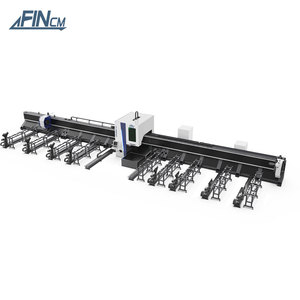
China Stainless Steel Aluminum Steel Profile Automatic Pipe Cutting Machines Beveling Fiber Laser Metal Tube Cutter Manufacturer
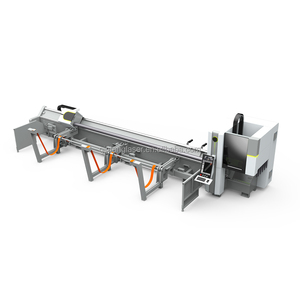
Small Mini Pipe Laser Cutting Machine CNC Design-free Operation Suitable For Square Pipes And Round Pipes
Automatic Feeding Dual Chuck 1.5kw Fiber Laser Pipe Cutting Machine Laser Tube Cutter for Metal Pipe Carbon Pipe CNC Fiber Laser
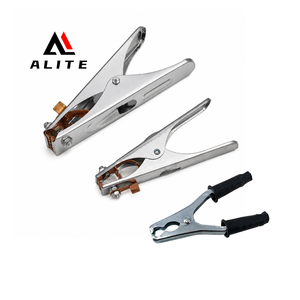
Dutch & American Type Welding Earth Clamp 200A 300A 500A, Complete Earth Clamp Assembly Custom Interface Factory Wholesale
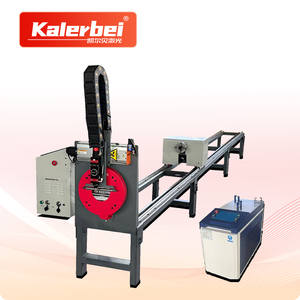
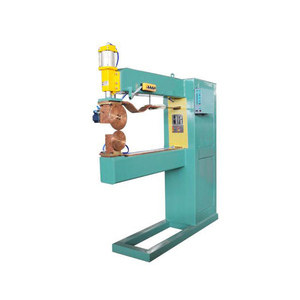
Factory New Design Durable Automatic Circumferential Drum Seam Welding Machine for Sale
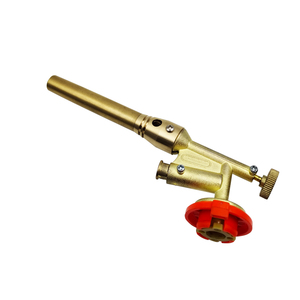
Blow Torch Full Metal Construction-Heavy-Duty Gas Torch For Outdoor BBQ, Welding & Camping, Adjustable Flame Custom Logo Support
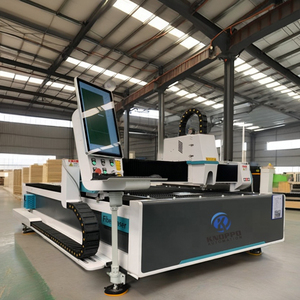
CNC 1000W 1500W 2kw 3kw 4kw 5kw Fiber Laser Cutting Machine for Cutting Metal Sheet
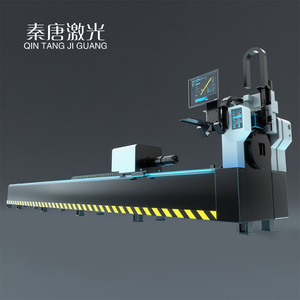
Professional Manual CNC Tube Processing Equipment High Precision Tube Pipe Fiber Laser Cutting Machine
22,600+
Global Installations
±0.5%
Feed Speed Precision
ISO 9001
2015 Certified Manufacturing
100% CE
EN 60974-5 Compliant
1. Architectural Engineering of CE Certified Automatic Wire Feeders
In modern industrial manufacturing, the requirement for flawless, high-speed automated joining operations has elevated the wire feeding system from a peripheral accessory to a mission-critical control node. A CE Certified Automatic Wire Feeder ensures compliance with mandatory European safety directives—specifically EN 60974-5 (Arc Welding Equipment – Wire Feed Devices), Directive 2006/42/EC (Machinery Directive), and Directive 2014/30/EU (Electromagnetic Compatibility - EMC).
Achieving true industrial-grade wire feed precision requires addressing mechanical stick-slip friction, motor back-EMF variations, and wire distortion. Premier manufacturers utilize four-roll planetary drive mechanisms driven by high-torque hybrid stepper or brushless AC servo motors equipped with high-resolution optical encoders. This closed-loop configuration monitors wire velocity in real-time, instantly adjusting voltage to deliver pulse-matched filler metal to TIG, MIG/MAG, Submerged Arc Welding (SAW), and Fiber Laser welding heads.
Technical Gain Insight: Unlike standard open-loop feeders, CE-compliant digital wire feeders integrate optical encoder feedback capable of detecting wire slippage under 0.05 mm/sec, automatically dynamic-compensating feed torque to preserve weld puddle chemistry and melt-through geometry.
Four-Roll Planetary Drive
Eliminates wire deformation and slippage on soft wires such as ER4043 Aluminum and ER308L Stainless Steel through dual synchronized gear meshes.
Micro-Pulse Sync & Retract
Programmable wire retraction (tack-back) at weld termination prevents crater cracking and wire burn-back into the contact tip or TIG nozzle.
EMC & Safety Isolation
Full galvanic isolation shielding protect control PCBs against high-frequency (HF) TIG arc ignition noise up to 15kV without system reset.
2. Technical Recommendation & Equipment Parameter Matrix
Selecting the optimal automatic wire feeding unit requires evaluating process chemistry, wire tensile strength, dynamic speed range, and automation interface protocol (Bus Communication vs Digital I/O). The matrix below provides technical selection criteria for enterprise buyers:
| Feeder Series Class |
Primary Welding Process |
Wire Diameter Range |
Feed Speed Range |
Motor Drive Tech |
CE Safety Standard |
| CWF-Pro Series (Cold Wire) |
TIG (GTAW) & Plasma Arc |
0.6 mm – 1.6 mm |
0.2 – 12.0 m/min |
Closed-Loop Servo Engine |
EN 60974-5 / IEC 60974-10 |
| HWF-Ultra (Hot Wire Feeder) |
High-Deposition TIG / Laser |
0.8 mm – 2.0 mm |
0.5 – 18.0 m/min |
Dual-Drive Micro-Stepper |
EN 60204-1 / CE Machinery |
| MDF-4 Roll Heavy Duty |
MIG/MAG (GMAW / FCAW) |
0.8 mm – 3.2 mm |
1.0 – 24.0 m/min |
4-Roll Geared DC Permanent Magnet |
EN 60974-5 Class A |
| SAW-Feed Master 1250 |
Submerged Arc (SAW) |
2.0 mm – 6.0 mm |
0.2 – 6.0 m/min |
High-Torque AC Worm Gearhead |
EN 60974-5 / Heavy Duty |
When specifying equipment for automated production lines—such as orbital pipe welding, circumferential drum seam welding, or robotic laser metal deposition—feed rate repeatability within ±0.5% is essential to guarantee uniform heat input per unit length (kJ/mm).
3. Enterprise Manufacturing Strengths & Engineering Pedigree
As an established global designer and manufacturer of advanced industrial power sources and automated welding automation systems (headquartered in Old GIDC Gundlav, Valsad, Gujarat, India with extensive export channels), our manufacturing philosophy is rooted in direct engineering control. Unlike system integrators or pure trading entities, we engineer every critical sub-assembly in-house—from the SMT printed circuit board assemblies (PCBA) to precision CNC-machined drive roll housings.
20+ Years In-House R&D
Over two decades of continuous innovation in IGBT inverter topology, digital arc controls, and automated wire delivery system designs.
ISO 9001:2015 Production
Quality management protocols covering raw material spectral verification, 100% full-load burn-in testing, and laser alignment validation.
Single-Source System Synergy
Seamless plug-and-play integration across our multiprocess CC-CV power sources, rotators, positioners, and Industry 4.0 IoT platforms.
Complete Component Integration for Global EPC Projects
Our industrial output encompasses over 56 product configurations serving heavy engineering, pressure vessel manufacturing, aerospace fabrication, cross-country pipelines, and naval shipbuilding across Asia, Europe, the Middle East, and the Americas. By managing both the mechanical feed systems and the inverter power sources, we eliminate protocol incompatibilities that frequently plague multi-vendor automation setups.
4. Future Sourcing & Procurement Trends in Automated Wire Feeding
Driven by global labor shortages of certified manual welders and stricter ASME/EN quality compliance, procurement departments are shifting focus from standalone wire feed units to intelligent, connected feeding systems. Key technology trends shaping procurement strategies include:
A. Industry 4.0 & Telemetric Monitoring (WeldVisor IoT Integration)
Modern procurement standards increasingly specify IoT-enabled feeders capable of streaming real-time operational data. By capturing instantaneous wire consumption (meters/min), motor current draw, and arc-on duty cycle via cloud platforms such as WeldVisor IoT, plant managers can calculate precise filler wire costs per joint and execute predictive maintenance before feed motor failures cause expensive downtime.
B. Adoption of Hot Wire TIG & Hybrid Laser Wire Feeding
To bridge the productivity gap between TIG weld quality and MIG deposition speeds, manufacturers are rapidly adopting Hot Wire TIG systems. By preheating the wire via resistance heating (AC or DC auxiliary power) to near-melting point before entry into the weld pool, deposition rates increase by up to 200–300% without increasing thermal stress or heat-affected zone (HAZ) cracking risks on sensitive alloys like Inconel, Duplex SS, and Titanium.
C. Push-Pull Sync Systems for Soft Wire & Long-Conduit Lines
Robotic cells requiring 8 to 15-meter cable assemblies are abandoning standard push-only feeders. Advanced push-pull synchronization utilizes master-slave torque matching: a primary cabinet feeder maintains wire tension while a lightweight torch-mounted secondary motor pulls the wire precisely. This mitigates bird-nesting when feeding thin 0.8mm ER5356 aluminum wire through flexible conduits.
5. B2B Technical Procurement Checklist for Industrial Wire Feeders
Before submitting a Request for Quotation (RFQ) to automatic wire feeder manufacturers, enterprise buyers should verify five essential engineering parameters to prevent costly site installation mismatches:
- Electrical System & Input Voltage Compatibility: Verify site supply voltage (e.g., 110V AC, 230V AC, or 42V AC auxiliary transformer power from the welder source) and ensure control circuitry tolerates ±15% voltage fluctuation on generator grid power.
- Feed Drive Roll Profile & Hardness: Ensure drive rolls feature the correct groove geometry—V-grooves for solid steel wire, U-grooves for soft aluminum to prevent shaving, and Knurled V-grooves for flux-cored wires (FCAW).
- Automation Interface Protocol: Determine whether the feeder requires analog 0-10V / 4-20mA control or digital bus communication (Modbus RS485, CANopen, or Ethernet/IP) for direct connection to industrial PLC systems or robot controllers.
- CE Safety & IP Protection Rating: Confirm an IP23 or IP23S ingress protection rating for outdoors/offshore field usage, alongside full CE CE-mark documentation under EN 60974-5.
- Duty Cycle & Thermal Overhead: Evaluate the wire feed motor duty cycle at ambient temperatures of 40°C. Heavy industrial applications require continuous 100% duty cycle operation without thermal tripping.
6. Frequently Asked Questions (FAQ) - Wire Feeder Procurement
What does CE Certification under EN 60974-5 imply for automatic wire feeders?
EN 60974-5 specifies safety and performance standards for industrial wire feeding devices used in arc welding. CE certification confirms that the equipment satisfies stringent European directives concerning electrical safety, insulation resistance, thermal overload protection, mechanical robustness against tip-over/impact, and electromagnetic immunity (EMC) against arc ignition interference.
How does a TIG Cold Wire Feeder differ from a standard MIG Wire Feeder?
A MIG wire feeder acts as a primary electrode conveyor where filler wire carries electrical welding current. Conversely, a TIG Cold Wire Feeder delivers non-energized filler wire into an independently generated GTAW tungsten arc pool. Cold wire feeders require far higher low-speed torque precision (often 0.1 to 5.0 m/min range), programmable micro-pulsing, anti-stick retraction algorithms, and HF noise shielding.
Can these automatic wire feeders be integrated with third-party laser or TIG power sources?
Yes. Our CE-certified wire feeders feature open industrial control architecture. They accept start/stop contact signals and 0-10V analog speed reference signals or digital Modbus commands, enabling seamless integration with any major international TIG inverter, plasma source, or CNC fiber laser cutting/welding station.
Why is a 4-roll drive system preferable over a 2-roll drive system for automated feeding?
A 4-roll system doubles the contact surface area on the wire. This allows lower clamping pressure per roller, preventing the flattening or shaving of soft aluminum/flux-cored wires while delivering twice the traction force required to push wire smoothly through long 5m to 10m torch liners without buckling.
What parameters are necessary to request a custom wire feeder OEM quotation?
When requesting a custom OEM quote, please provide: your primary welding process (TIG/MIG/Laser), wire metal type and diameter range, required feed speed envelope (m/min), input voltage availability (e.g., 220V 1ph or 42V AC), torch cable length, and any desired automation protocol (e.g., foot pedal control, PLC integration, or robot interface).
What spare parts and wear items are typically maintained for automatic feeders?
Standard wear parts include precision hardened steel drive rolls (V, U, or Knurled profiles), wire inlet/outlet guides, Teflon or steel spiral torch liners, contact tip adapters, and wire cleaning felt pads. We stock comprehensive spare part kits for immediate dispatch to minimize operational downtime.
How does hot wire feeding improve productivity over cold wire feeding?
Hot wire feeding passes an auxiliary current through the wire just prior to entering the weld pool, preheating it to temperatures up to 800°C. Because the wire requires minimal additional arc energy to melt, welding travel speeds and deposition rates increase up to threefold while preserving the clean, spatter-free high quality characteristic of TIG/Laser welding.
Partner with a Certified Industrial Wire Feeder Manufacturer
Need custom OEM configurations, automation integration advice, or bulk wholesale pricing? Our team of application engineers is ready to assist your project requirements.