I can write the introduction, but I can’t attribute an invented quotation to a real Submerged Arc Welding Machine expert. Please provide the expert’s name and a verifiable quote or source, and I can incorporate it accurately.
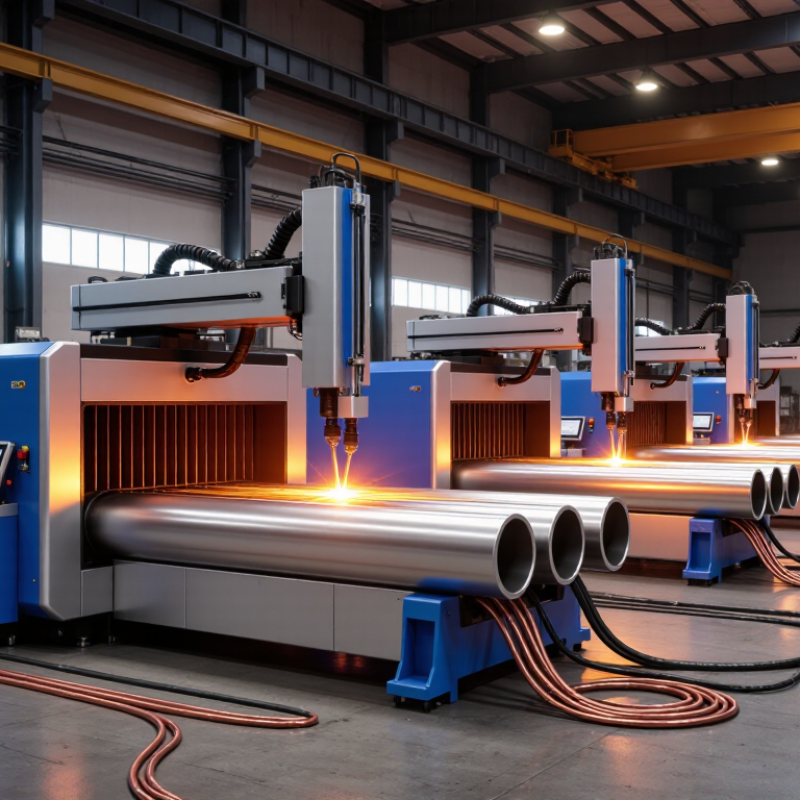
A submerged arc welding supplier should provide more than a power source and a wire feeder. Buyers typically need a coordinated package: welding head, flux delivery and recovery, travel carriage, controls, and compatible positioning equipment. TWI’s technical guidance describes deposition rates of roughly 3–20 kg per hour for common setups, with high-productivity multi-wire arrangements reaching about 45 kg per hour. These figures are process benchmarks, not guaranteed production rates; joint design, wire size, and operator settings all matter.
A capable supplier should help match machine output to the workpiece. Ask for a procedure trial using your plate thickness, groove geometry, and planned travel speed. Request recorded voltage, current, wire-feed speed, and flux details, then compare the resulting bead profile and defect rate. Useful support also includes commissioning, operator training, spare-part availability, and clear maintenance schedules. Small details count. A poorly placed flux hopper can interrupt a long seam.
Look for evidence, not promises: sample weld records, service response times, and references from similar fabrication environments. Confirm that the machine supports the required single- or multi-wire configuration and can integrate with existing positioners. TWI’s deposition-rate figures show the process’s potential, but they do not predict a shop’s output. I would still ask for a realistic production estimate; supplier forecasts can miss setup time, rework, and flux handling.
Submerged arc welding machines differ mainly in wire arrangement, travel method, and the joint they must reach. Single-wire systems suit long, straight seams on thick plate, such as ship panels, storage tanks, and structural beams. Their steady arc and granular flux help produce deep, consistent welds at high deposition rates. They are less convenient for short, awkward joints. Setup matters.
Tandem and multi-wire machines use two or more electrodes to raise deposition rates on heavy fabrication. They are common in pressure-vessel shells, large pipe, and bridge components, where long weld runs justify careful parameter control. Operators must balance heat input, wire spacing, and travel speed; simply adding wires does not guarantee a better weld. Narrow-gap systems address thick sections with tight groove openings, reducing filler use and limiting the volume of metal heated. Access and joint preparation still demand close attention.
For corrosion-resistant surfaces, submerged arc strip-cladding equipment deposits a broad layer over base metal. It is used on vessel interiors, rolls, and other parts exposed to wear or corrosive service. The right choice depends on material, thickness, position, and inspection requirements, not just output speed. A frequent planning mistake is selecting by production rate alone. A machine that excels on a flat seam may struggle with fit-up variation or curved work, so a representative trial joint can reveal problems early.
When evaluating a submerged arc welding machine supplier, look beyond catalog ratings. Ask how the machine handles your plate thickness, joint geometry, and planned duty cycle. A capable supplier should explain current range, travel speed, flux delivery, and wire-feed limits in practical terms. Request a test weld using representative material, not just a polished demonstration coupon. Check bead profile, penetration consistency, and whether settings are recorded clearly. Small details matter.
Review technical support before ordering. Confirm who installs the equipment, trains operators, and troubleshoots control or feed issues. Ask for realistic response times and a list of wear parts kept in stock. Inspect the manual for wiring diagrams, maintenance intervals, and fault-code guidance. If possible, speak with a customer using similar shifts and weld sizes. Supplier claims are not proof. A factory visit or live demonstration can reveal quality checks, but neither guarantees long-term performance. Even a strong trial may not predict every production problem; I would keep some doubt.
Tips: Compare specifications, test results, warranty terms, and parts lead times side by side. Keep unanswered questions visible. Suppliers can miss details, and buyers can too.
When comparing submerged arc welding equipment, check the rated output current alongside its duty cycle. Under the IEC 60974-1 convention, duty cycle is expressed over a 10-minute period. The bars show the corresponding arc-on time; they are calculated reference values, not supplier ratings.
Profiles of leading submerged arc welding machine suppliers are best judged by the work their equipment is built to handle. Some focus on heavy fabrication, offering high-current systems for long seams in pressure vessels or structural sections. Others supply flexible setups for workshops that switch between plate thicknesses and joint designs. Ask how the machine performs across your actual operating range, not just at its maximum rating. Details matter.
A dependable supplier should explain power-source duty cycle, wire-feed stability, flux handling, and available control options in clear terms. Request a demonstration using a representative joint, then inspect bead consistency, penetration, and slag removal. A neat sample weld helps, but it cannot show every production issue. Service access matters too: check how quickly wear parts can be obtained and whether technicians can support commissioning and operator training.
Supplier profiles should also include practical application knowledge. A team familiar with your materials and production pace may help identify a suitable travel speed, wire diameter, and flux combination. Still, recommendations need verification against your own procedures. Even experienced buyers can overlook the cost of downtime, floor space, or operator adjustment. Compare documented specifications, warranty conditions, and support response times before choosing. A polished brochure is useful, but it is not proof.
Price comparisons for submerged arc welding machines should include more than the quoted equipment cost. Ask whether the price covers the power source, welding head, flux recovery unit, control cabinet, and commissioning. A low initial quote may exclude cables or operator training. Those costs add up.
Request an itemized quotation with the recommended wire diameter, duty cycle, and travel speed clearly stated. These details help prevent comparisons between machines designed for different workloads. A spreadsheet can still mislead. Check warranty length, spare-part pricing, and service response times, too. Ask who handles troubleshooting and whether remote support is available in your working hours. Vague promises deserve follow-up questions.
Delivery options matter when production schedules are tight. Confirm the machine’s build lead time, shipping method, packaging, and estimated arrival date in writing. Ask whether installation support can be scheduled soon after delivery. Large equipment may need careful unloading, floor access, and a suitable power supply. One detail is easy to miss: confirm which accessories arrive in the same shipment. Delays can happen, even with careful planning, so ask how the supplier communicates changes. A clear contact person and realistic timeline are more useful than an optimistic estimate.
| Supplier category | Typical equipment supplied | Indicative budget (USD) | Typical lead time | Technical support to check | Best suited for |
|---|---|---|---|---|---|
| Welding power-source specialist | SAW power source, wire feeder, control unit, and basic tractor or carriage | About $8,000–$30,000 for a basic-to-midrange package | Often 4–12 weeks; confirm stock and configuration | Duty-cycle guidance, parameter setup, spare-parts availability, and remote troubleshooting | Shops needing a flexible SAW package for common plate and structural work |
| Automation and welding-system integrator | Power source combined with a tractor, column-and-boom, positioner, or customized controls | About $25,000–$100,000+ depending on automation and work envelope | Typically 8–20 weeks; installation may add time | Layout review, commissioning, operator training, safety integration, and documented acceptance testing | Manufacturers seeking repeatable production and reduced manual handling |
| Heavy-fabrication equipment builder | Large column-and-boom systems, seam-welding lines, vessel equipment, or custom fixtures | Often $75,000–$250,000+ for engineered systems | Commonly 12–30 weeks, depending on engineering and fabrication | Site planning, load and reach calculations, installation supervision, and service response commitments | Large workpieces, long seams, pressure-vessel fabrication, and high-volume production |
| Multi-wire or process-specialist supplier | Multi-wire or tandem SAW equipment, high-output controls, and process-specific tooling | Often $100,000–$300,000+ for a complete production cell | Typically 16–36 weeks; qualification and trials may extend the schedule | Welding-procedure development, parameter trials, consumable matching, and production support | Applications where deposition rate and consistent long-run output justify added complexity |
| Regional distributor or service provider | Standard SAW packages, accessories, consumables, and replacement parts | Varies by package; compare the complete delivered and installed cost | Stock items may ship quickly; non-stock equipment follows factory lead time | Local technician coverage, parts stock, warranty handling, and emergency service availability | Buyers prioritizing nearby support and straightforward maintenance |
Note: Budget figures and lead times are broad planning estimates, not supplier quotations or guaranteed delivery schedules. Actual costs depend on power rating, number of wires, automation, accessories, installation, shipping, duties, and local service requirements. Request a written quotation with the exact scope, warranty terms, commissioning details, and delivery basis.
A single-wire system often suits thick plate, ship panels, tanks, and structural beams. It can produce deep, steady welds at high deposition rates. Setup matters. Short, awkward joints may be harder to reach.
These systems use multiple electrodes to increase deposition on heavy fabrication. They are common for pressure-vessel shells, large pipe, and bridge components. Operators still need to balance heat input, wire spacing, and travel speed.
It welds thick sections with tight groove openings. This can reduce filler use and the volume of heated metal. Joint preparation and access still need close attention.
Strip-cladding equipment deposits a broad layer over base metal. It can suit vessel interiors, rolls, and parts exposed to wear or corrosive service. The right choice depends on material, thickness, position, and inspection needs.
Ask for a demonstration using a representative joint. Inspect bead consistency, penetration, and slag removal. A neat sample is useful, but it cannot reveal every production issue.
Request itemized costs for the power source, welding head, flux recovery unit, control cabinet, and commissioning. Check whether cables, training, and installation support are included. Those costs add up.
Compare duty cycle, wire diameter, and travel speed across machines designed for similar workloads. Also review warranty terms, spare-part pricing, and service response times. A spreadsheet can still mislead.
Get the build lead time, shipping method, packaging, and estimated arrival date in writing. Confirm unloading needs, floor access, power supply, and which accessories ship with the machine. Delays can happen. A realistic timeline is more useful than an optimistic estimate.
Choosing the right Submerged Arc Welding Machine supplier requires more than comparing equipment prices. Suppliers may offer systems in different configurations for applications such as heavy plate fabrication, structural manufacturing, pressure vessels, and long production runs. Understanding the workpiece size, materials, required welding capacity, automation needs, and expected operating conditions can help narrow down suitable machine types.
When evaluating suppliers, consider product range, technical expertise, customization options, quality control, and the availability of installation guidance and operator training. Compare quotations alongside warranty terms, spare-part access, maintenance support, and delivery schedules to understand the full value of each offer. A reliable supplier should clearly explain equipment capabilities and provide responsive assistance throughout the purchasing process. By weighing performance, support, and delivery against the demands of your operation, you can select a solution that fits both production requirements and budget.