
Choosing among China’s top Pipe Profile Cutting Machine manufacturers requires more than comparing website prices. A reliable supplier should demonstrate engineering experience, stable production, and clear quality controls. Buyers should examine factory capability, machine configuration, and support capacity before signing an order. A serious manufacturer can explain laser power, tube diameter, cutting length, positioning accuracy, and compatible materials in practical terms.
Look for evidence, not impressive wording. Factory videos, sample cuts, inspection records, and live demonstrations can reveal important details. A machine cutting a 6-meter steel tube should produce clean edges, consistent holes, and limited heat distortion. Ask whether the rotary chuck handles round, square, rectangular, and channel profiles. Software compatibility also matters, especially when drawings come from different CAD systems. Installation guidance, operator training, spare parts, and response times should appear in the quotation.
No supplier is perfect. Even respected manufacturers may have uneven after-sales service in different regions. Some specifications also look strong on paper but perform differently in a busy workshop. An informed comparison should include total operating cost, maintenance access, warranty conditions, and local technical support. Independent references can strengthen confidence, but they should be checked carefully. This guide introduces practical criteria for evaluating leading Chinese manufacturers, while recognizing that the best choice depends on production volume, material range, accuracy requirements, and budget. Real evidence matters more than polished claims.
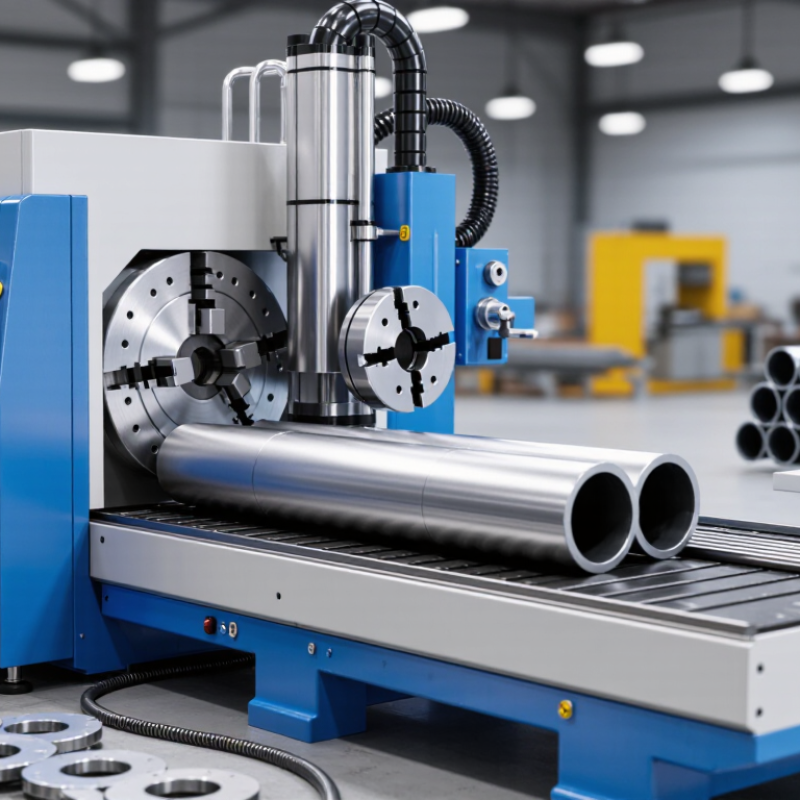
A pipe profile cutting machine is a computer-controlled system for cutting round tubes, square pipes, and shaped sections. It uses a programmed cutting head to create accurate openings, notches, slots, and angled ends. It is not just a saw. The machine may use fiber laser, plasma, or another thermal cutting method, depending on material thickness and production needs.
During operation, a loading system positions the tube on rotating supports. The control software reads a digital drawing and coordinates movement along several axes. The pipe can rotate while the cutting head travels around its surface. This process helps produce joints for frames, railings, industrial structures, and mechanical assemblies. For example, a square tube may receive a precise side opening for another tube to fit inside. Less manual grinding is usually required.
Good results depend on more than advertised power. Operators must check tube diameter, wall thickness, material grade, and cutting speed. A small alignment error can affect the final joint. Small errors matter. In practice, no machine is perfect, and settings often need adjustment after test cuts. Dust removal, lens inspection, calibration, and software updates also support stable performance. When comparing manufacturers in China, buyers should request sample cuts, accuracy records, service details, and operator training. A reliable supplier should explain limitations clearly, not only show polished videos.
China’s leading pipe profile cutting machine manufacturers focus on accuracy, speed, and dependable production. Their machines commonly use fiber laser sources for clean cuts on steel, stainless steel, and aluminum profiles. Rotary chucks support round, square, rectangular, and irregular tubes. This flexibility matters in construction, machinery, furniture, and industrial fabrication.
Experienced manufacturers add automatic loading, nesting software, and real-time positioning systems. These features reduce material waste and limit manual handling. Strong suppliers also test cutting accuracy, repeatability, and thermal stability before shipment. In factory evaluations, I look closely at weld quality, cable protection, and the rigidity of the machine bed. Small details often affect long-term reliability. A glossy brochure is not enough. Even capable manufacturers may offer uneven software support or unclear maintenance guidance.
Tips: Request sample cuts using your actual tube sizes and materials. Check edge quality, piercing time, and corner accuracy. Ask for calibration records, spare-parts availability, training plans, and service response times. Review technical documents carefully, including applicable safety and quality certifications. A supplier should explain limitations honestly, not promise perfect results for every profile.
China’s pipe profile cutting machine market covers several machine types. Fiber laser tube cutters suit carbon steel, stainless steel, and aluminum profiles. They produce narrow kerfs and clean edges, especially on thin and medium-wall tubes. A rotary chuck must hold the tube firmly without crushing it. That detail affects accuracy more than many buyers expect.
Plasma cutting machines handle thicker steel efficiently and tolerate some surface scale. However, they create a wider heat-affected zone and may require edge cleaning. Oxy-fuel systems remain useful for heavy carbon steel, though they are slower and less suitable for stainless steel. For complex structures, five-axis laser heads can cut bevels, slots, and angled joints in one setup. The machine costs more. It also demands better programming skills.
Cutting technology should match the workshop, not just the material list. A high-power laser can waste money when production mainly involves small batches and simple round tubes. Automatic loading, nesting software, and measuring sensors can reduce handling time and material waste. Yet automation is not always trouble-free. Dust, poor tube straightness, and incorrect cutting parameters still cause rejects. Experienced operators check the first piece with calipers before releasing a full batch. They also review burrs, hole positions, and joint fit. That practical inspection often reveals weaknesses that brochures do not show.
When comparing China’s top pipe profile cutting machine manufacturers, evaluate the machine before the sales presentation. Ask for test cuts using your actual steel grade, wall thickness, and tube diameter. Inspect the cut edge under bright light. A clean contour should show limited dross, stable kerf width, and consistent corners.
Precision depends on more than the advertised tolerance. Check calibration records, linear guide quality, chuck alignment, and the control system’s repeatability. Request measurements from several parts, not one perfect sample. A reliable supplier should provide inspection reports, electrical diagrams, maintenance schedules, and operator training details. I once trusted a polished demonstration too quickly. The sample was excellent, but the production settings were not clearly explained.
Automation should reduce handling errors, not simply add complex features. Review loading, unloading, automatic nesting, collision protection, and communication with your production software. Observe the machine during a longer cycle. Watch for vibration, heat buildup, delayed movement, or frequent manual corrections. These small signs matter. Ask how faults are recorded and how remote support works across time zones. Factory experience is valuable, but transparent evidence is stronger. Also examine spare-parts availability and response procedures before signing. A lower purchase price can become expensive when downtime, retraining, or unstable cutting quality appears later.
A practical, non-brand evaluation model for comparing machine quality, precision, and automation during supplier selection. The scores represent recommended procurement weights rather than manufacturer claims.
Quality includes edge finish, heat-affected-zone control, and structural stability. Precision covers positioning accuracy, repeatability, and dimensional consistency. Automation covers automatic loading, tube rotation, nesting, sensing, and production monitoring.
Selecting a pipe profile cutting machine requires more than comparing laser power or purchase price. Grand View Research reports that the global CNC machine market reached approximately USD 88.6 billion in 2023. This growth reflects stronger demand for automated, repeatable production. Buyers should check tube diameter ranges, wall thickness, material compatibility, and cutting tolerances. A machine that performs well on six-millimeter carbon steel may struggle with reflective stainless steel.
Accuracy matters on the factory floor. Ask for sample cuts using your actual profiles, including square tubes, channels, and angled joints. Examine edge quality, hole roundness, slag, and heat distortion. Cutting speed alone can mislead. The International Federation of Robotics recorded 541,302 industrial robot installations worldwide in 2023, showing how quickly automated lines are expanding. Therefore, software compatibility, loading systems, and data communication deserve careful review.
Service can decide the real cost. Confirm spare-part availability, remote diagnostics, operator training, warranty coverage, and local technical support before signing. Calculate electricity, assist gas, lenses, nozzles, maintenance, and downtime over five years. Do not trust impressive demonstrations alone. They may use ideal materials and experienced operators. One practical weakness remains easy to miss: poor ventilation or unstable power can reduce performance, even with a capable machine. A factory audit is worth the effort.
It is a computer-controlled system for cutting round, square, rectangular, and shaped tubes.
Fiber laser systems commonly cut carbon steel, stainless steel, and aluminum profiles.
It usually creates narrow kerfs and clean edges on thin and medium-wall tubes.
Rotary chucks can hold round, square, rectangular, and irregular tubes.
Plasma suits thicker steel and tolerates some surface scale.
Tube diameter, wall thickness, material grade, and cutting speed all affect results.
Request sample cuts using your actual tube sizes and materials.
No. Dust, poor alignment, and incorrect parameters can still cause rejected parts.
They can cut bevels, slots, and angled joints in one setup.
A Pipe Profile Cutting Machine is an industrial system designed to cut round, square, rectangular, and specially shaped tubes with high speed and consistency. China’s leading manufacturers typically focus on rigid machine structures, reliable motion systems, advanced control software, and efficient cutting heads. Depending on production needs, users may choose laser, plasma, or other suitable cutting technologies, with options for automatic loading, unloading, beveling, drilling, and marking.
When evaluating a machine, global industrial users should consider cutting precision, repeatability, processing speed, material compatibility, energy efficiency, and ease of operation. Automation level, software integration, maintenance requirements, safety functions, and technical support are also important factors. Buyers should compare the manufacturer’s quality control, customization capabilities, delivery arrangements, training services, and long-term spare-part availability. A careful assessment of these elements can help companies select a cost-effective solution that improves productivity while meeting demanding fabrication requirements.