
Choosing a Multiprocess GMAW MIG Welder for 2026 takes more than comparing amperage numbers. The right machine must suit the work, the power supply, and the person holding the torch. A compact unit may fit a crowded repair bay, while a heavier model can offer steadier capacity for longer shop runs. Small details matter.
Welding educator Jody Collier’s practical teaching can be paraphrased this way: match the process and settings to the joint, rather than expecting machine features to compensate for poor setup. That is useful advice, but it does not replace checking a model’s manual or testing it on your actual material. Wire-feed consistency, arc control, duty cycle, spool-gun support, and setup clarity all deserve attention. A bright display is helpful. It is not proof of weld quality.
This guide compares ten machines across those practical measures, including MIG, flux-cored, stick, and TIG capabilities where available. It also considers portability, included accessories, and the limits behind advertised output ratings. Specifications can vary by configuration, so confirm them with the manufacturer before buying. No single welder fits every shop. Even a strong shortlist has trade-offs, and real-world fit can be harder to judge from product pages alone. Use these comparisons as a starting point, then weigh them against your materials, workload, and available power.
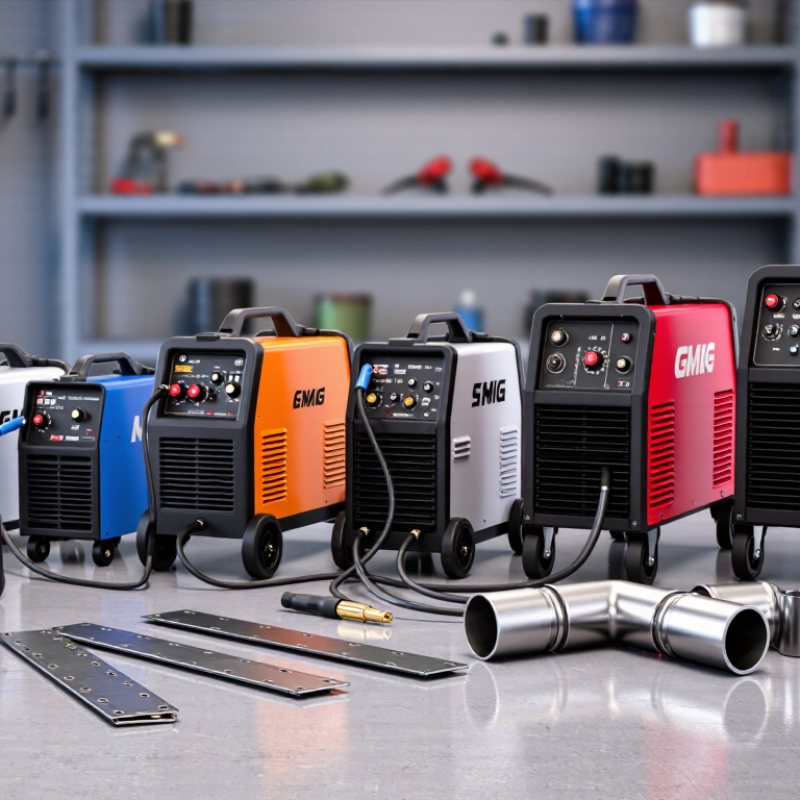
GMAW, commonly called MIG welding, feeds a continuous wire electrode through a gun. An electric arc melts the wire and the workpiece, while shielding gas helps protect the molten weld pool from contamination. The process is often run with direct-current electrode-positive polarity. In a multiprocess welder, one power source can also support processes such as stick or TIG, depending on the machine and its accessories. The controls can feel fussy. Each process still needs the right setup.
The American Welding Society’s workforce outlook has projected a need for about 360,000 new welding professionals in the United States by 2027. That forecast is about labor demand, not machine performance, but it reflects why flexible welding skills matter. A multiprocess unit can suit a small fabrication shop that repairs a steel gate one day and joins thinner sheet the next. However, changing processes takes setup time, and one machine may not match a dedicated unit’s output or duty cycle. Check the manufacturer’s rated output at the amperage you actually plan to use.
Tips: Match wire diameter and shielding gas to the metal and joint. Clean the workpiece, then test settings on scrap of similar thickness. Listen for a steady arc and inspect the bead; appearance alone does not prove weld quality. Small detail, big effect.
Multiprocess welders combine GMAW (MIG) with other welding processes. The chart compares four common capability configurations by the number of processes each includes; it is not a model-specific ranking.
How to read it: FCAW is flux-cored arc welding, SMAW is stick welding, and GTAW is TIG welding. Actual process support varies by machine; check its specifications before choosing a welder.
A strong multiprocess GMAW MIG welder should match the work, not just advertise a high amperage number. Check its usable output range, duty cycle, and input-voltage requirements. A machine rated for higher output may still need a suitable circuit and cooling time during long welds. Short jobs are different.
For MIG work, examine wire-feed stability at low and high settings. Smooth feeding matters when joining thin sheet metal, where a small speed change can burn through the edge. Confirm which wire diameters and spool-gun options the machine supports. Also check polarity settings and whether switching processes is straightforward. A clear control panel helps, but a confusing menu can waste time with gloves on. I would not judge a welder by its display alone.
Tips: Before buying, compare the duty cycle at the amperage you expect to use. Check the cost and availability of compatible drive rolls, liners, and contact tips. If possible, test a short bead on scrap of similar thickness. That small trial can reveal issues a spec sheet misses.
Top 10 Multiprocess GMAW MIG Welders for 2026 at a Glance
A useful comparison starts with the work each machine can handle, not its feature count. Compact 120-volt units suit light repairs and thin sheet, while dual-voltage models offer more flexibility near a workshop outlet. Higher-output machines can better serve thicker steel, but check rated output and duty cycle before relying on them for long welds. Ten useful profiles include compact, dual-voltage, higher-amperage, synergic, manual-control, spool-gun-ready, pulse-capable, shop-oriented, portable, and general-purpose machines. These are comparison categories, not a performance ranking.
For GMAW, inspect the wire-feed range, compatible wire diameters, polarity options, and included gun. A steady feed matters when joining thin panels; poor feeding can leave uneven beads, even with careful technique. Look for clear setup instructions and accessible drive rolls. Helpful, not glamorous. A multiprocess label may cover MIG, flux-cored, stick, or TIG functions, but included accessories and processes vary. Read the specification sheet closely, and confirm input voltage, output range, and duty-cycle test conditions. I would not choose by advertised amperage alone; that shortcut can disappoint. Also consider where the machine will sit, how often you will move it, and whether your usual work needs a spool gun or specialized torch. A little uncertainty remains until you test-feed your wire and make practice beads on matching material.
The ten selected welders should be judged by how smoothly they move between GMAW, stick, and TIG—not by process count alone. For MIG work, check stable wire feeding, adjustable inductance or arc control, and clear voltage and wire-speed settings. A steady arc matters when welding thin sheet; on thicker plate, adequate output and a usable duty cycle matter more. Small details count. A stiff torch cable or awkward spool access can slow a real job.
The American Welding Society’s 2023 workforce outlook estimated that U.S. employers would need 330,000 additional welding professionals by 2028. That estimate makes straightforward setup and repeatable controls especially relevant for busy shops and training environments. Compare rated output at a stated duty cycle, not peak amperage alone. Also check whether the machine supports the wire diameter and shielding-gas combinations your work requires. The AWS Welding Handbook notes that GMAW deposition depends on transfer mode, current, wire size, and position; one headline speed cannot describe every weld.
In side-by-side evaluation, listen for smooth wire-feed starts and watch the bead edges for consistent fusion. Short-circuit transfer can suit thinner material, while spray transfer generally calls for higher current and suitable gas. A multiprocess unit may save floor space, but changing leads and settings still takes time. That trade-off is easy to overlook. Verify the input-power needs and actual duty-cycle rating before choosing; published specifications do not show how a machine behaves on every shop circuit.
Anonymized comparison of representative multiprocess welder configurations. Output, duty cycle, included accessories, and process availability vary by exact model and market; verify the machine’s specification sheet before purchase.
| Rank | Anonymized welder | Typical input | Processes | MIG output class | Typical strengths | Best suited to |
|---|---|---|---|---|---|---|
| 1 | Compact Dual-Voltage Unit A | 120/230–240 V | MIG, flux-cored, DC TIG, stick | About 200–215 A maximum | Portable format; useful low-voltage operation; broad process coverage | Home workshops, repair, and light fabrication |
| 2 | Compact Dual-Voltage Unit B | 120/230–240 V | MIG, flux-cored, DC TIG, stick | About 200–230 A maximum | Flexible household or shop power; multiple welding modes | General-purpose maintenance and hobby fabrication |
| 3 | Advanced Dual-Voltage Unit C | 120/230–240 V | MIG, flux-cored, DC TIG, stick | About 200–240 A maximum | Synergic or preset controls on some versions; supports a wide range of tasks | Users wanting guided setup and process versatility |
| 4 | Mid-Range Dual-Voltage Unit D | 120/230–240 V | MIG, flux-cored, DC TIG, stick | About 150–200 A maximum | Manageable size; practical output for common steel repairs | Occasional repair and light-to-medium shop work |
| 5 | High-Output Dual-Voltage Unit E | 120/230–240 V | MIG, flux-cored, DC TIG, stick | About 200–220 A maximum | Higher output when connected to suitable 230–240 V supply | Fabrication with occasional thicker-material work |
| 6 | 230–240 V Shop Unit F | 230–240 V | MIG, flux-cored, DC TIG, stick | About 200–250 A maximum | Designed around shop power; often offers greater sustained output than compact units | Regular fabrication and heavier repair work |
| 7 | Portable Dual-Voltage Unit G | 120/230–240 V | MIG, flux-cored, DC TIG, stick | About 180–210 A maximum | Transport-friendly design; can operate from more than one supply voltage | Mobile repair and small workshop use |
| 8 | Entry-Level Dual-Voltage Unit H | 120/230–240 V | MIG, flux-cored, DC TIG, stick | About 150–200 A maximum | Straightforward controls; useful entry point to multiprocess welding | Beginners, household projects, and occasional repairs |
| 9 | Higher-Capacity Shop Unit I | 230–240 V | MIG, flux-cored, DC TIG, stick | About 200–250 A maximum | Higher-capacity power source; check duty cycle and input-current needs | Frequent shop use and larger steel assemblies |
| 10 | Value-Focused Dual-Voltage Unit J | 120/230–240 V | MIG, flux-cored, DC TIG, stick | About 150–200 A maximum | Broad process selection in a compact package; included torch and accessories vary | Budget-conscious owners needing several welding processes |
GMAW is commonly called MIG welding. Compare rated output at the stated input voltage, duty cycle at the intended amperage, wire-feed capability, spool-gun compatibility, and required circuit capacity—not maximum amperage alone.
Choosing a multiprocess GMAW MIG welder starts with the metal, thickness, and joint—not the feature list. For thin sheet steel, look for stable low-amperage control and compatible small-diameter wire; excessive heat can burn through a panel before the bead looks convincing. For thicker steel, compare rated output with the material and weld position. Aluminum needs a suitable wire-feeding setup, often a spool gun, and the correct shielding gas. Check consumable availability, too.
Power supply and duty cycle shape what a machine can do on a real project. A duty-cycle rating describes welding time within a ten-minute period at a stated output; compare ratings at the amperage you expect to use. Confirm whether your workspace has the required input voltage. A powerful welder on an unsuitable circuit is not a practical upgrade. Easy to overlook.
Use data as context, not as a substitute for checking specifications. The American Welding Society’s workforce data projected a need for 360,000 additional welding professionals by 2027, while the U.S. Bureau of Labor Statistics projected about 45,800 annual openings for welders, cutters, solderers, and brazers from 2023 to 2033. Those figures describe workforce demand, not machine performance. For a shortlist, compare output range, duty cycle, wire-feed control, input power, and process settings against your actual materials. It is tempting to buy extra capacity “just in case”; that can mean paying for features your projects rarely use. The right fit may be less impressive on paper.
It feeds continuous wire through a gun and uses an electric arc to join metal. Some units also support stick or TIG welding.
Match output and duty cycle to your usual material and weld length. Advertised peak amperage alone can mislead.
Match wire diameter and shielding gas to the metal and joint. Clean the surface, then test settings on similar scrap. Small details matter.
Uneven feeding can produce inconsistent beads, even when your hand movement is steady. Check the drive rolls and feed range.
No. Included torches, guns, and supported processes vary. Check the specifications before assuming a spool gun or TIG torch is included.
Compact 120-volt machines can suit light repairs and thin sheet. Higher-output models may handle thicker steel better, but verify their rated output and duty cycle.
Current, wire size, transfer mode, and welding position all matter. Short-circuit transfer can suit thinner metal; spray transfer usually needs higher current and suitable gas.
Not always. Changing leads and settings takes time, and a multiprocess unit may not match a dedicated machine’s output. I would still test-feed the wire before trusting it on a long job.
This guide explains what a Multiprocess GMAW MIG Welder is and how it combines gas metal arc welding with other welding processes in one machine. It outlines how the equipment operates and reviews the practical criteria to consider in 2026, including process range, output, duty cycle, power needs, controls, portability, and ease of setup. A concise overview of ten selected welder types introduces the options before examining their features and performance.
Use the comparison to match a welder to your materials, project size, working environment, and experience level. Consider the metals and thicknesses you expect to work with, the processes you need, and whether the machine’s capabilities and power requirements suit your workspace. By weighing these factors together, readers can make a more informed choice for home, workshop, or job-site tasks.