
For global buyers, choosing the right Industrial Welding Positioner can influence weld quality, production speed, operator safety, and long-term maintenance costs. A suitable machine should rotate heavy workpieces smoothly, hold accurate angles, and support consistent welding parameters. Buyers must examine load capacity, table diameter, rotation speed, tilting range, control methods, and compatibility with robotic or manual welding systems.
Dr. John C. Lippold, a recognized welding metallurgy expert, offers a useful principle: “Welding is a process, not merely a finished joint.” His statement highlights an often-missed point. A positioner is not just a rotating table. It affects heat distribution, access, arc stability, and operator movement. In practical workshops, these details matter. A poorly matched unit may cause awkward torch angles, uneven penetration, or unnecessary repositioning. Small errors become expensive at production scale.
This 2026 guide reviews leading Industrial Welding Positioner options for international buyers. It considers industrial capacity, control precision, durability, service support, and integration potential. It also looks beyond attractive specifications. A high load rating means little if the gearbox overheats during repeated cycles. A compact design may save floor space, yet limit fixture access. That trade-off deserves attention.
Some recommendations remain imperfect. Supplier data can be incomplete, and real workshop conditions differ. Buyers should verify technical claims through demonstrations, drawings, sample welds, and reference installations. The strongest choice is not always the most advanced model. It is the positioner that reliably matches the workpiece, welding process, production rhythm, and available maintenance skills.
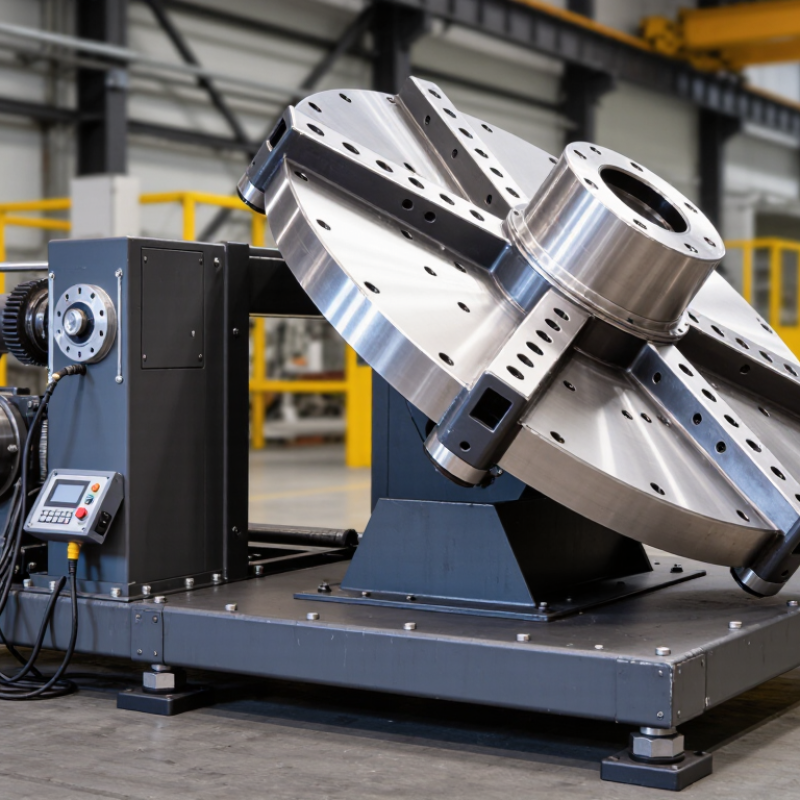
Industrial welding positioners are mechanical systems that rotate, tilt, or index a workpiece during welding. They use a motor, gearbox, mounting table, chuck, and control panel. The operator loads the component, sets the welding angle, and adjusts rotation speed. The positioner then presents the joint within a more stable working range.
It does not replace the welding power source. It improves access, bead consistency, and operator ergonomics. A horizontal turning table may rotate a pipe section continuously, while a tilt-rotate model moves between vertical and horizontal positions. Load capacity, center-of-gravity limits, backlash, and table runout require careful checking. Small errors matter. An overloaded fixture can create unsafe movement and poor weld alignment.
Automation demand is rising. The International Federation of Robotics reported 541,302 industrial robot installations worldwide in 2023, showing stronger interest in repeatable production systems. A 2024 MarketsandMarkets report estimated the global welding equipment market at about USD 18.5 billion in 2023, although research firms use different scopes and methods. That difference deserves attention. In practice, a positioner’s value depends less on advertised speed than on duty cycle, torque at the working radius, control accuracy, and fixture design. The U.S. Bureau of Labor Statistics also projects a 2% decline in welding employment from 2023 to 2033, increasing pressure to make skilled labor more productive. Yet automation is not automatically better. Poor setup still produces poor welds.
Industrial welding positioners control part orientation, weld access, and operator posture. Rotary table positioners suit flanges, rings, and compact frames. Their controlled rotation can reduce manual repositioning during circumferential welding. Tilt-rotate models handle heavier assemblies, such as tanks, brackets, and structural weldments. Headstock-tailstock positioners support long shafts and pressure-vessel sections with balanced end loading. Turning rolls are different. They rotate cylindrical workpieces continuously, using adjustable rollers beneath the shell.
Demand for better positioning follows wider factory automation. The International Federation of Robotics reported 541,302 industrial robots installed worldwide in 2023 in World Robotics 2024. This does not measure positioners directly. However, it shows why synchronized fixtures and repeatable movement matter.
ISO 10218 and AWS welding guidance also emphasize controlled equipment integration, guarding, and qualified procedures. A positioner that rotates smoothly but lacks accurate load data can still create defects. That mistake is easy to miss.
2026 Top Industrial Welding Positioners for Global Buyers
Key Specifications for Evaluating Welding Positioner Performance
A reliable welding positioner begins with load capacity, torque, and table size. Confirm the rated load includes fixtures, clamps, and the workpiece. A 2,000-kilogram rating may fall short when the load sits far from the center. Check the allowable eccentric load carefully. Rotation speed also matters, but higher speed is not always better. Low-speed control should remain smooth during root welding. Useful ranges often begin below 1 rpm and extend above 5 rpm. Review tilt angles, locking strength, and indexing accuracy. A practical test uses a dial indicator on a reference plate. Noticeable runout can create uneven weld profiles.
Controls should support repeatable operation, including forward and reverse rotation, speed adjustment, and emergency stopping. Inspect the duty cycle at the intended current and production rhythm. A positioner working near its limit may overheat during long seams. Ask for motor torque curves, gearbox backlash data, electrical protection ratings, and maintenance instructions. These documents reveal more than a polished product photograph. I have seen specifications omit fixture weight, which makes comparisons unreliable. That detail deserves attention.
Tips: Test the positioner with your actual fixture. Measure vibration at low speed. Check cable routing during full tilt. Leave safety margin above the calculated load. If the table hesitates, investigate before purchase. Small alignment errors become expensive rework.
Top Industrial Welding Positioners for Global Buyers in 2026
Industrial welding positioners are becoming essential for safer, more consistent fabrication. They rotate, tilt, and hold workpieces during demanding welding cycles. In 2026, global buyers should assess load capacity, rotation speed, and positioning accuracy together. A heavy table is not automatically the better choice. It may reduce flexibility on smaller production lines.
Look for positioners with adjustable speed control, stable torque, and reliable clamping systems. Foot controls can improve operator movement around large assemblies. Proper guarding and emergency stops remain critical in every workshop. Buyers should also check input voltage, control compatibility, and local electrical requirements. For outdoor or humid facilities, sealed components and corrosion-resistant surfaces can reduce maintenance problems. These details matter.
Ask for test records, dimensional drawings, duty-cycle data, and clear operating manuals. Factory acceptance testing can reveal vibration, uneven rotation, or weak braking before shipment. Spare-part availability and remote technical support deserve equal attention. A low purchase price may become expensive when a small sensor delays production. Still, technical documents are not proof of perfect performance. Real weld trials are necessary. We have seen well-specified equipment need adjustment after installation. That is normal, but it should be planned. Global buyers should compare service response, operator training, and inspection procedures before approving the final order.
This chart presents representative rated load-capacity bands commonly specified for industrial welding positioners in 2026, ranging from compact 100 kg units to heavy-duty 6,000 kg systems. Actual capacity depends on workpiece center of gravity, eccentric load, table diameter, speed, and tilt requirements.
How to Select Reliable Welding Positioner Suppliers Worldwide
Global buyers should evaluate welding positioner suppliers through evidence, not attractive catalogues. The International Federation of Robotics reported 541,302 industrial robot installations worldwide in 2023. This growth increases demand for stable positioning, accurate synchronization, and dependable service support.
Request test records for payload capacity, rotation speed, torque, repeatability, and duty cycle. A supplier should explain how its positioner handles heat, vibration, and uneven workpieces. Ask for load-test videos using a similar fixture, not an empty table. Check gear backlash, braking performance, cable protection, and emergency-stop functions. Safety documentation should match the destination market and the machine’s actual configuration.
A polished catalogue is not evidence. In my experience, reliable suppliers provide serial-numbered inspection reports, spare-parts lists, maintenance instructions, and clear warranty limits. The Deloitte 2024 Global Smart Manufacturing Survey found that 86% of manufacturers view smart manufacturing as important for competitiveness. Therefore, ask whether the positioner supports data feedback, fault logging, and integration with welding controls.
Supplier audits matter. Review factory quality procedures, calibration methods, and final inspection photographs. Confirm response times across time zones. A low quotation can hide expensive installation delays. I would not trust promised accuracy without a witnessed test. Even then, one weakness remains: real production fixtures may behave differently. Require acceptance testing with your actual workpiece, welding cycle, and expected operating temperature before shipment.
Technical comparison of common industrial positioner configurations and supplier-evaluation criteria
| Positioner configuration | Typical load range* | Typical rotation range | Typical speed range | Recommended applications | Key selection checks | Supplier evidence to request |
|---|---|---|---|---|---|---|
| Horizontal rotary table | 50–10,000 kg | Continuous 360° | Approximately 0.1–6 rpm | Flanges, rings, pipe spools, circular frames and short cylindrical parts | Rated load must include fixture weight; verify eccentric load, table diameter, center-of-gravity height and required welding speed | Load chart, allowable overturning moment, speed-torque curve, runout test and duty-cycle rating |
| Tilting rotary positioner | 100–5,000 kg | Typically 0–360° rotation; approximately 0–90° tilt | Rotation approximately 0.05–3 rpm; tilt commonly 0.2–1 rpm | Structural frames, brackets, vessels and components requiring access to multiple welding positions | Check combined center of gravity, tilt-axis moment, self-locking or brake performance and cable routing | Static stability calculation, brake-holding test, tilt-limit protection and emergency-stop test report |
| Headstock–tailstock positioner | 500–50,000 kg | Continuous 360° rotation | Approximately 0.02–2 rpm | Long pipes, pressure-vessel shells, beams and large weldments supported at both ends | Confirm distance between centers, spindle height, tailstock travel, synchronized drives and workpiece deflection | Centerline alignment report, synchronization test, maximum moment data and dimensional inspection record |
| L-type or elbow positioner | 100–10,000 kg | Continuous 360° rotation; tilt commonly up to 90° | Approximately 0.1–4 rpm | Offset weldments, valve bodies, pipe fittings and assemblies with a high or uneven center of gravity | Evaluate offset distance, overturning moment, fixture clearance and low-speed stability | Moment-capacity calculation, low-speed smoothness test and fixture-interference drawing |
| Self-centering chuck positioner | 50–3,000 kg | Continuous 360° rotation | Approximately 0.1–10 rpm | Pipe-to-flange work, concentric components and repeat production with variable diameters | Check chuck diameter, gripping range, jaw capacity, clamping force and compatibility with hollow shafts | Clamping-force test, concentricity measurement, jaw material specification and replacement-part availability |
| Pipe rotator set | 500–100,000 kg per set, depending on configuration | Continuous 360° rotation | Approximately 0.05–2 m/min surface speed | Long cylindrical vessels, tanks, pipe sections and circumferential welds | Verify diameter range, roller spacing, load per roller, self-aligning function and surface condition of the workpiece | Capacity calculation by diameter, slip test, roller-contact details and control synchronization record |
| Robotic welding positioner | 100–10,000 kg | Typically 360° continuous rotation with programmable tilt axes | Application-specific; commonly selected for synchronized motion with robot travel | Repeatable production cells, multi-axis welding and coordinated robot-positioner applications | Check controller communication, axis accuracy, repeatability, payload inertia and safety-cell integration | Robot communication protocol, accuracy and repeatability test, risk assessment and complete cycle demonstration |
| Evaluation dimension | Minimum information to compare | Practical acceptance target | Recommended verification method |
|---|---|---|---|
| Load and moment capacity | Rated payload, eccentric load, overturning moment, inertia and fixture mass | Capacity calculated for the actual workpiece, fixture and operating orientation, not payload alone | Submit a dimensioned load diagram and require a signed calculation from the supplier |
| Rotation performance | Speed range, torque, acceleration, low-speed smoothness and stopping accuracy | Stable travel at the required welding speed without visible hunting, slip or abrupt stopping | Witness a loaded test using representative workpiece dimensions |
| Runout and alignment | Table or spindle radial runout, axial runout, centerline alignment and fixture repeatability | Tolerance agreed in the purchase specification and measured with calibrated instruments | Request inspection records and repeat the measurement during factory acceptance testing |
| Electrical compatibility | Supply voltage, frequency, control voltage, grounding, motor protection and plug requirements | Designed for the destination country’s electrical supply and documented in the wiring diagram | Review nameplate, electrical drawings and insulation or protective-conductor test records |
| Safety and guarding | Emergency stop, travel limits, overload protection, guards, braking and restart behavior | Documented risk assessment and functional safety checks suitable for the complete work cell | Perform a safety-function test before shipment and again after installation |
| Welding-current path | Rated welding current, duty cycle, grounding arrangement, brush or slip-ring design and cable routing | Welding current is isolated from bearings and drive components, with specified duty-cycle limits | Request a current-path schematic and verify temperature rise during a loaded welding trial |
| Environmental suitability | Ambient temperature, humidity, dust, spatter, ingress protection and corrosion protection | Enclosure and protective treatment match the actual workshop environment | Confirm enclosure rating, coating specification and maintenance requirements in writing |
| Documentation and service | Manuals, drawings, spare-parts list, warranty terms, response time and remote-support capability | Complete English technical file delivered before shipment with clear service escalation terms | Review document samples and include response-time obligations in the purchase contract |
It rotates or tilts a workpiece for better weld access and operator posture. This can reduce manual repositioning. Better access often improves consistency.
A rotary table positioner usually suits these parts. It provides controlled rotation during circumferential welding. Check table size, fixture weight, and eccentric loading before purchase.
Choose one for tanks, brackets, and structural weldments. It combines rotation with controlled tilting. Confirm brake holding force and locking strength. Heavy assemblies can shift unexpectedly.
A headstock-tailstock positioner supports long parts from both ends. Balanced end loading helps reduce deflection. Measure the full part length and center of gravity. Do not rely on weight alone.
Turning rolls rotate cylindrical workpieces with adjustable rollers beneath the shell. They suit tanks, pipes, and similar round sections. They do not replace every tilting or indexing function.
Check rated capacity, torque, table size, rotation speed, and tilt range. Include fixtures and clamps in the load calculation. A load far from the center creates extra torque. This detail matters.
No. Smooth low-speed movement is often more important during root welding. Useful operation may begin below one revolution per minute. Higher speed can help later, but it is not automatically safer. I would test both speeds.
Use a dial indicator on a reference plate to measure table runout. Test forward and reverse rotation at low speed. Watch for hesitation, vibration, and uneven movement. Small errors become costly rework.
Review duty-cycle data at the intended welding current and production rhythm. Ask about motor torque, gearbox backlash, electrical protection, and maintenance. Inspect cable routing through the full tilt range. Catalog figures can feel optimistic.
Use the actual fixture and the largest awkward assembly. Measure vibration during slow rotation. Check clamps, torch angles, cleaning access, and emergency stopping. Leave a safety margin above the calculated load. Test it properly.
This guide explains what an Industrial Welding Positioner is, how it rotates, tilts, and supports workpieces, and why it is essential for improving weld quality, operator safety, and production efficiency. It reviews major types used in industrial applications, including rotary, tilting, headstock-tailstock, and customized systems, while highlighting how each design fits different workpiece sizes, weights, and welding processes.
For global buyers, the article outlines key specifications such as load capacity, rotation speed, positioning accuracy, working range, control options, duty cycle, and safety features. It also presents practical considerations for evaluating top Industrial Welding Positioner solutions in 2026 and selecting reliable suppliers worldwide. Buyers are encouraged to compare engineering quality, customization capability, product testing, technical support, spare-parts availability, delivery performance, and long-term service value before making a purchasing decision.